
The Complete Guide to Solar Panels in Hampshire
Solar panels have moved far beyond being a niche technology for environmentally focused homeowners. Across Hampshire, more households are now viewing solar energy as part of a wider long-term energy strategy that includes battery storage, EV charging, heat pumps and greater energy independence. Rising electricity prices, increasing EV adoption and the shift toward home electrification are all changing how people think about energy consumption and generation. This guide explains how solar panels work, what they cost, how battery storage fits into the picture, whether planning permission is required and how integrated renewable energy systems can support long-term operational flexibility and resilience.
Key Takeaways
- Solar panels should be planned around future electricity demand, not just current usage.
- Battery storage can improve self-consumption and reduce grid reliance.
- EV charging, heat pumps and smart tariffs should be considered as part of long-term system design.
What Are Solar Panels?
Solar panels convert daylight into usable electricity using photovoltaic (PV) cells. When sunlight hits the cells inside the panel, an electrical current is generated and converted into usable power for the home through an inverter. Unlike older assumptions, solar panels do not require constant direct sunshine or hot weather to operate effectively. Modern systems continue generating electricity throughout the year whenever daylight is available, including during cloudy conditions and winter months.
Most residential systems in Hampshire are roof-mounted and designed around factors such as household electricity usage, roof orientation, shading levels, available roof space and future electrification plans. Increasingly, homeowners are not simply installing solar panels to reduce electricity bills in the short term, but to support wider long-term energy strategies involving battery storage, EV charging and heat pumps.
Modern solar systems also provide homeowners with far greater visibility and control over energy usage than traditional grid-only electricity consumption. Monitoring platforms can track generation, battery charging, household demand and grid imports or exports in real time. This allows households to better understand how electricity flows through the property and optimise when energy is generated, stored and consumed.
In practice, many Hampshire homes are now approaching solar as part of a broader shift toward energy resilience and electrification rather than as a standalone technology purchase. A well-designed system should therefore consider not only current household consumption, but how energy demand may evolve over the next decade as transport, heating and smart home technologies increasingly transition toward electricity dependence.
How Solar Panels Work
Modern solar PV systems operate continuously throughout daylight hours and integrate with both the property and the wider electricity grid. While the technology itself is relatively straightforward, the way electricity flows through a modern solar and battery system is becoming increasingly sophisticated as households adopt EV charging, smart tariffs and wider electrification strategies.
- Solar panels generate DC electricity from daylight using photovoltaic cells mounted on the roof
- An inverter converts generated DC electricity into usable AC power for the property
- The home uses available solar electricity first before importing additional electricity from the grid
- Excess electricity can either be exported to the grid or stored within a battery system for later use
- Battery systems can discharge stored energy during the evening or during higher electricity tariff periods
- Smart monitoring platforms track generation, battery charging, household consumption and grid imports or exports in real time
Visual Guide: How Solar Energy Flows Through The Home
Why More Homes Are Installing Solar
Energy Cost Reduction
Generating electricity on-site helps reduce reliance on imported electricity and can lower long-term household energy costs
Energy Independence
Battery storage and smart energy management allow households to reduce exposure to volatile electricity pricing
Future-Proofing The Home
Solar systems increasingly form part of wider electrification strategies involving EV charging, heat pumps and smart home energy management
Typical Solar System Sizes For UK Homes
Solar system size should be matched to both current and future electricity demand rather than roof space alone. Smaller households with modest daytime usage may benefit from systems around 3–4kWp, while homes planning EV charging or heat pump installation often require larger systems to support future electrification. In practice, many modern residential installations now fall between 4kWp and 8kWp depending on property size, roof layout, occupancy patterns and long-term energy goals.
A common mistake we frequently see is systems being designed purely around current electricity usage without considering how household demand may evolve over time. Homes that later adopt EV charging, battery storage or heat pumps often discover their original systems were undersized for long-term requirements. Designing around future electrification from the outset can provide significantly greater operational flexibility and reduce the need for expensive retrofit expansion later.
Roof orientation, shading, inverter selection and battery integration can all influence how effectively a system performs in practice. South-facing roofs often maximise annual generation, while east-west systems can better spread generation across the morning and evening when many households consume the most electricity. This means the most effective system is not always the one with the highest theoretical output, but the one best aligned with how the property actually uses energy.
Most Hampshire homes now approach solar system sizing as part of a broader energy strategy involving self-consumption, battery charging, smart tariffs and long-term resilience rather than simply maximising exported electricity generation.
Typical Residential Solar System Examples
| Household Type | Typical System Size | Approximate Annual Generation | Typical Use Case |
|---|---|---|---|
| Smaller Household | 3–4kWp | 2,500–3,500kWh | Lower daytime electricity demand |
| Family Home | 4–6kWp | 3,500–5,500kWh | Growing households and partial EV charging |
| Electrified Household | 6–8kWp+ | 5,500–7,500kWh+ | EV charging, batteries and heat pumps |
How Many Solar Panels Do You Need?
One of the most common questions homeowners ask is how many solar panels are required to meaningfully offset electricity usage. The answer depends on annual consumption, roof orientation, shading, available roof space and future electrification plans such as EV charging or heat pump installation. Our dedicated guide on how many solar panels you need explains this in more detail.
In practice, there is no universal 'correct' system size because every property uses electricity differently. Two homes with similar annual consumption may require very different solar system designs depending on occupancy patterns, daytime usage, battery storage integration and future energy goals. Some households prioritise reducing imported electricity as much as possible, while others focus more heavily on battery charging, EV charging or long-term operational flexibility.
A common mistake we frequently see is homeowners sizing systems purely around current electricity bills without considering how quickly household demand may increase over time. Once EV charging, battery storage or heat pumps are introduced, electricity usage can rise significantly. Designing around future electrification from the outset often creates a far more effective long-term solution than attempting to retrofit additional panels later when roof space or inverter capacity may already be constrained.
Roof layout also plays an important role. South-facing systems often maximise annual generation, while east-west systems can better align generation with morning and evening household usage patterns. Shading from chimneys, trees or neighbouring buildings may further influence how many panels can realistically perform efficiently on the roof.
For many Hampshire homes, the most effective systems are not necessarily those with the highest theoretical generation figures, but those carefully designed around how electricity is actually consumed throughout the property over the long term.
Example Electricity Usage Profiles
Understanding annual electricity consumption is one of the most important stages in solar system design. However, future energy demand is becoming increasingly important as households adopt EVs, batteries and electric heating systems. A home currently using relatively modest amounts of electricity may see demand increase significantly over the coming years as transport and heating systems transition toward electrification.
In practice, electricity usage patterns often matter just as much as total annual consumption. Two households with similar annual usage figures may behave very differently operationally depending on occupancy, working patterns and how electricity is consumed throughout the day. Homes with higher daytime occupancy may naturally use more directly generated solar electricity, while properties that are empty during working hours may benefit more heavily from battery storage and smart tariff optimisation.
Many Hampshire households are now planning beyond simple annual consumption figures alone. Increasingly, homeowners are evaluating how future EV charging, heat pumps, battery systems and smart home technologies may alter demand patterns over the next decade. Designing systems around these longer-term operational changes can create significantly more flexibility and resilience than focusing solely on current utility bills.
One of the most common implementation mistakes we see is systems being designed around historic electricity consumption without accounting for future electrification. Once EV charging or electric heating is introduced, demand profiles can change rapidly. A properly designed solar and battery system should therefore support how the property may operate in the future, not simply how it functions today.
Typical Annual Household Electricity Usage
Actual consumption varies significantly depending on occupancy, heating systems and transport electrification.
- Smaller households often use approximately 2,000–3,000kWh annually
- Average family homes may use approximately 3,500–5,000kWh annually
- Homes with EV charging frequently exceed 6,000kWh annually
- Properties with heat pumps and EV charging may require significantly higher annual electricity consumption
Do Solar Panels Work In Winter?
Yes. Solar panels continue generating electricity throughout winter because they operate from daylight rather than heat. A common misconception is that solar panels require hot weather to function effectively, when in reality modern photovoltaic systems generate electricity whenever daylight reaches the panels. Cold temperatures can actually improve panel efficiency under certain conditions.
However, generation levels are naturally lower during winter months because days are shorter, the sun sits lower in the sky and weather conditions are often more variable. This seasonal variation is completely normal and forms an important part of realistic system design and expectation management.
In practice, many Hampshire homeowners still generate meaningful amounts of electricity throughout winter, particularly during clear daylight conditions. While winter generation rarely matches summer output, solar systems can continue offsetting daytime household demand and reducing imported electricity consumption year-round.
Battery storage is increasingly important during winter because it allows available daytime generation to be stored and used later during evening peak demand periods. Homes using EV charging or heat pumps may see significantly higher winter electricity consumption, making integrated system design and realistic generation modelling especially important.
One of the biggest mistakes we commonly see is homeowners evaluating solar generation only against peak summer performance expectations. A properly designed system should instead be assessed across full annual operating behaviour, including how generation, storage and household demand interact throughout changing seasonal conditions.
Roof Orientation, Pitch & Shading
South-facing roofs are often considered ideal for solar panels in the UK because they typically maximise annual electricity generation. However, modern solar system design is far more flexible than many homeowners realise. In practice, many Hampshire homes with east-west roof layouts achieve excellent operational performance when systems are designed around self-consumption and battery charging strategies rather than simply maximising annual export generation.
East-west systems can often spread generation more evenly across the morning and evening when many households consume the most electricity. This broader generation profile may actually align more effectively with real household demand patterns than a system producing a large midday peak when occupants are away from the property.
Roof pitch also influences generation performance because it affects how directly sunlight reaches the panels throughout the year. However, modern solar systems can still perform very effectively across a wide range of roof angles. Small differences in theoretical generation are often less important in practice than overall system design quality, battery integration and how electricity is actually consumed within the home.
Shading is another important consideration. Chimneys, nearby trees, dormers and neighbouring buildings can all influence system performance depending on how shadows move across the roof throughout the day. One of the most common mistakes we see is homeowners underestimating the operational impact of partial shading on poorly designed systems. Modern technologies such as power optimisers and microinverters can help reduce the impact of shading by allowing panels to operate more independently rather than limiting the performance of the entire array.
In practice, careful survey work and accurate modelling are significantly more important than simplistic assumptions about roof direction alone. Many Hampshire properties that homeowners initially assume are unsuitable for solar can often support highly effective systems when designed properly around the property's real operational characteristics.
Visual Guide: Roof Orientation & Generation Profile
Understanding Inverters, Optimisers & Microinverters
The inverter is one of the most important components within a solar PV system because it converts the DC electricity generated by the solar panels into usable AC electricity for the property. While solar panels often receive the most attention, the inverter architecture plays a major role in determining how efficiently the overall system performs, how it responds to shading and how easily it can integrate with battery storage, monitoring platforms and future expansion.
Traditional string inverters remain common across many residential installations and are often highly effective for simpler unshaded roof layouts. In these systems, multiple panels are connected together into strings which feed electricity into a single central inverter. However, one of the limitations of traditional string systems is that shading or underperformance affecting one panel can sometimes reduce the performance of the wider string.
This is where power optimisers and microinverters become increasingly valuable. Optimisers allow individual panels to operate more independently, helping reduce the impact of partial shading caused by chimneys, trees or neighbouring buildings. Microinverters go even further by placing an individual inverter directly beneath each panel, allowing full panel-level optimisation and monitoring.
In practice, many Hampshire homes with complex roof layouts, dormers or variable shading conditions benefit significantly from optimiser or microinverter technologies. One of the most common implementation mistakes we see is systems being designed purely around lowest upfront equipment cost without properly evaluating long-term operational behaviour, shading characteristics or future expansion flexibility.
Modern inverter systems increasingly integrate with battery storage, EV charging and smart monitoring platforms to coordinate how electricity is generated, stored and consumed throughout the property. As homes become more electrified, inverter selection is no longer simply a technical specification decision — it forms a central part of the property's wider long-term energy management strategy.
String Inverters vs Optimisers vs Microinverters
| System Type | Typical Advantages | Potential Limitations | Best Suited For |
|---|---|---|---|
| String Inverters | Lower upfront cost and simpler installation architecture | Partial shading can affect wider string performance | Simple unshaded roof layouts with consistent panel orientation |
| Power Optimisers | Improved panel-level optimisation and better shading management | Additional component complexity compared with basic string systems | Complex roofs with partial shading or multiple roof aspects |
| Microinverters | Excellent panel-level monitoring and maximum panel independence | Higher upfront equipment cost | Highly complex, shaded or multi-directional roof designs |
How Long Does A Solar Installation Take?
Most residential solar installations can be completed within a relatively short on-site timeframe once design work, approvals and scaffolding arrangements have been finalised. However, the overall project timeline often involves several separate stages including consultation, technical survey, system design, equipment specification, DNO applications and installation scheduling.
For a straightforward residential installation, the physical installation process itself may only take a few days depending on system size, roof complexity and whether battery storage or EV charging integration is included. More complex projects involving listed buildings, multiple roof elevations, battery systems or wider electrification upgrades may require additional planning and coordination.
In practice, one of the biggest misconceptions we commonly encounter is homeowners assuming installation speed is the primary indicator of project quality. In reality, careful design work, accurate modelling, proper cable routing, electrical testing and commissioning are significantly more important than simply completing the installation as quickly as possible.
Scaffolding is usually installed shortly before the solar installation begins and removed shortly afterwards once commissioning has been completed. Monitoring platforms, battery systems and inverter configuration are then tested to ensure the system is operating correctly and safely.
Many Hampshire properties now combine solar installations with battery storage, EV charging or future heat pump planning. These integrated systems often require more detailed electrical design and long-term infrastructure planning than traditional standalone solar installations. A properly designed system should therefore be evaluated not only on installation timescales, but on how effectively it supports the property's long-term operational requirements.
Typical Residential Solar Installation Timeline
| Project Stage | Typical Activities | Key Considerations |
|---|---|---|
| Initial Planning | Consultation, electricity usage review and feasibility assessment | Future EV charging, battery storage and heat pump plans should be considered early |
| Survey & Design | Technical roof survey, shading analysis, system modelling and DNO application | Accurate design work strongly influences long-term system performance |
| Installation Phase | Scaffolding erection, panel installation, inverter setup and electrical works | Roof access, weather conditions and electrical complexity can affect installation duration |
| Battery & Smart Integration | Battery installation, monitoring configuration and smart tariff setup | Integrated systems increasingly form part of wider home energy management strategies |
| Commissioning & Handover | System testing, monitoring setup, certification and customer guidance | Proper commissioning is critical for safe long-term operation and performance validation |
Visual Guide: Installation Timeline
Suggested visual: a horizontal installation timeline showing consultation, survey, system design, DNO application, scaffolding, installation, commissioning, monitoring setup and handover.
Solar Monitoring & Smart Energy Apps
Most modern solar and battery systems now include detailed monitoring platforms that allow homeowners to track generation, electricity usage, battery charging behaviour and grid imports in real time. These systems are becoming increasingly important because modern renewable energy installations are no longer simply passive electricity generators — they are active energy management systems that help coordinate how electricity is generated, stored and consumed throughout the property.
Monitoring platforms typically provide live and historical visibility into solar generation, household consumption, battery charging activity and grid imports or exports. Many systems also allow homeowners to monitor EV charging behaviour, optimise charging schedules around off-peak tariffs and track long-term operational performance trends.
In practice, one of the biggest operational advantages of modern monitoring systems is visibility. Many homeowners are surprised how dramatically electricity usage patterns vary throughout the day once detailed monitoring data becomes available. This often helps households better understand when electricity is being consumed, when batteries are charging and how effectively solar generation aligns with actual demand.
Modern smart energy platforms increasingly integrate with battery systems, EV chargers and dynamic electricity tariffs to automate energy management decisions. Some systems can automatically prioritise battery charging during cheap overnight tariffs, increase self-consumption during high-rate periods or intelligently coordinate EV charging around available solar generation.
We commonly see homeowners initially focusing heavily on panel efficiency or generation figures while underestimating the long-term value of monitoring visibility and operational control. In reality, smart monitoring platforms are increasingly becoming one of the most important parts of a modern electrified home energy system because they allow households to actively optimise how electricity is used over time.
As homes across Hampshire continue adopting EVs, battery storage and heat pumps, smart monitoring and integrated energy management are becoming central parts of long-term energy resilience and operational flexibility strategies rather than optional add-ons.
Visual Guide: Monitoring & Smart Energy Management
Hampshire Solar Generation Expectations
Hampshire generally offers favourable solar generation conditions relative to many parts of the UK due to its southern location and relatively strong annual daylight exposure. While generation levels vary depending on roof orientation, shading, system size and installation quality, Hampshire homes can often achieve very effective long-term solar performance when systems are designed properly around the property's operational characteristics.
South-facing roofs typically produce the highest annual generation figures because they receive the most direct sunlight throughout the day. However, modern solar design is increasingly focused not only on maximising theoretical annual output, but also on aligning generation more effectively with real household electricity demand patterns. In practice, many Hampshire homes with east-west roof layouts perform extremely well because generation is spread more evenly across the morning and evening periods when electricity consumption is often highest.
Seasonal variation is also completely normal. Summer months usually produce significantly higher generation due to longer daylight hours and more direct sunlight, while winter generation naturally reduces as daylight hours shorten and the sun sits lower in the sky. However, solar panels continue generating electricity throughout the year whenever daylight is available.
One of the most common misconceptions we see is homeowners comparing systems purely on headline annual generation estimates without considering how effectively that electricity is actually used within the property. In reality, self-consumption behaviour, battery storage integration and smart energy management can often influence operational value more significantly than relatively small differences in total annual generation figures alone.
Shading conditions, roof pitch, inverter architecture and system design quality can all substantially affect real-world performance. Chimneys, nearby trees, neighbouring buildings and complex roof geometries may influence how generation behaves throughout the day, which is why careful survey work and accurate modelling are critically important.
As more Hampshire homes adopt battery storage, EV charging and heat pumps, solar generation is increasingly being evaluated as part of a wider electrification strategy rather than simply as a standalone electricity-saving measure. The most effective systems are usually those designed around long-term operational flexibility, future household energy demand and integrated energy management rather than maximum theoretical output alone.
For many properties across Hampshire, modern solar systems now represent not just an opportunity to reduce imported electricity usage, but a broader long-term investment in energy resilience, electrification readiness and greater control over how electricity is generated, stored and consumed throughout the home.
Approximate Hampshire Residential Generation Ranges
Generation figures are illustrative only and vary significantly depending on roof orientation, shading conditions, roof pitch, weather patterns, equipment specification and how effectively the system has been designed around the property's operational behaviour. While Hampshire generally offers favourable solar generation conditions relative to many parts of the UK, real-world performance can still vary considerably between properties. In practice, annual generation figures should not be viewed in isolation. Self-consumption behaviour, battery integration, EV charging and wider household electrification strategies can often influence operational value more significantly than relatively small differences in total annual output alone.
- 3–4kWp systems may generate approximately 2,500–3,500kWh annually under typical Hampshire conditions
- 4–6kWp systems may generate approximately 3,500–5,500kWh annually depending on roof orientation and shading characteristics
- 6–8kWp+ systems may exceed 6,000–7,500kWh annually under favourable installation and operating conditions
- South-facing roofs often maximise annual generation, while east-west systems may better align generation with real household demand patterns
- Battery storage and smart energy management can significantly improve how effectively generated electricity is used within the property
Solar Panels & Listed Buildings In Hampshire
Hampshire contains a large number of listed properties, conservation areas and architecturally sensitive buildings where solar installation requires careful consideration. While many homeowners initially assume listed buildings are automatically unsuitable for solar panels, this is often not the case. In practice, many historic and rural Hampshire properties can still accommodate carefully designed renewable energy systems when planning considerations, visual impact and installation methods are approached appropriately.
Listed buildings and properties within conservation areas are typically assessed more closely by local planning authorities because of their architectural or historical significance. Factors such as roof visibility, panel positioning, mounting methods and the wider visual impact on the building and surrounding area may all influence whether planning approval is required.
One of the most common misconceptions we encounter is homeowners assuming planning restrictions make renewable energy impossible on older properties. In reality, many installations can proceed successfully when systems are designed sympathetically around the building's architectural character and long-term preservation requirements.
In practice, early-stage consultation and careful system design are especially important for these projects. Roof orientation, structural considerations, cable routing and panel visibility may all require more detailed assessment than on standard residential installations. Some properties may benefit from lower-profile mounting systems, discreet panel positioning or alternative array layouts designed to reduce visual impact.
Battery storage can also play an increasingly valuable role on historic properties because it allows homeowners to maximise self-consumption without necessarily requiring very large visible panel arrays. Smart energy management strategies can further improve operational performance while minimising the overall scale of rooftop installations.
Many rural Hampshire homes are now transitioning away from oil-based heating systems and exploring wider electrification strategies involving solar panels, battery storage, EV charging and heat pumps. As energy costs continue evolving, carefully integrated renewable energy systems are becoming increasingly important even within historically sensitive properties.
The most successful listed building projects are usually those approached collaboratively from the outset, balancing heritage considerations, planning requirements, operational performance and long-term energy resilience together rather than treating them as competing objectives.
Understanding Solar Payback Periods
Payback periods are one of the most commonly discussed aspects of solar installations, but simple calculations can often be misleading. For a dedicated breakdown, see our guide to solar panel payback periods in the UK. While many homeowners understandably focus on how quickly a system may recover its installation cost, real-world financial outcomes depend on a wide range of operational factors.
Electricity prices, export tariffs, battery integration, household occupancy patterns and future electrification plans can all significantly influence long-term value. Two homes with similar system sizes may experience very different financial performance depending on how much electricity is consumed directly within the property versus exported back to the grid.
In practice, many of the strongest long-term outcomes now come from systems designed around self-consumption rather than export generation alone. Battery storage, EV charging and smart tariff optimisation can all help households use more of their generated electricity internally, reducing imported electricity reliance and improving operational flexibility over time.
One of the most common mistakes we see is homeowners evaluating solar systems purely around simple short-term payback calculations while overlooking wider strategic benefits such as energy resilience, tariff flexibility and future electrification support. As transport and heating increasingly transition toward electricity dependence, many Hampshire homeowners are now approaching solar as part of a broader long-term infrastructure investment rather than simply a standalone bill-saving exercise.
Payback calculations should therefore be viewed as part of a wider operational picture that includes future electricity demand, system scalability, battery integration and how effectively the property may adapt to changing energy usage patterns over the coming decade.
Simple Payback vs Long-Term Energy Value
| Approach | Primary Focus | Typical Assumptions | Long-Term Considerations |
|---|---|---|---|
| Simple Payback Thinking | Short-term electricity bill reduction | Assumes relatively stable electricity pricing and household demand | Often overlooks future EV charging, battery integration or heat pump adoption |
| Long-Term Energy Value Thinking | Operational flexibility, resilience and electrification readiness | Assumes household energy usage will evolve over time | Supports battery storage, EV charging, tariff optimisation and reduced long-term grid dependency |
| Integrated Energy Strategy | Whole-home energy management and future scalability | Treats solar as part of a wider electrified infrastructure strategy | Designed around long-term adaptability, resilience and operational optimisation |
Example Savings & Self-Consumption Scenarios
Financial outcomes from solar installations vary significantly depending on electricity prices, export rates, occupancy patterns and how effectively generated electricity is used within the property. While annual generation figures are important, the operational behaviour of the household often has an even greater influence on long-term value.
Homes that consume a larger proportion of generated electricity directly within the property typically achieve stronger long-term financial performance than homes exporting large amounts of surplus generation back to the grid. This is because imported electricity prices are usually substantially higher than export payment rates under most Smart Export Guarantee (SEG) tariffs.
In practice, households with daytime occupancy, battery storage or EV charging often achieve significantly higher self-consumption rates than properties where occupants are absent throughout most daylight hours. Battery systems are particularly valuable because they allow excess daytime generation to be stored and used later during evening demand periods when electricity usage is often highest.
One of the biggest misconceptions we commonly encounter is homeowners assuming financial performance depends purely on total annual generation. In reality, two properties generating similar amounts of electricity may experience very different operational outcomes depending on how effectively the system aligns with real household consumption patterns.
As more Hampshire homes adopt EV charging, heat pumps and smart tariff optimisation, solar systems are increasingly being evaluated not simply around direct bill savings, but around wider operational flexibility, energy resilience and reduced long-term exposure to electricity price volatility. Many homeowners now view solar and battery systems as long-term infrastructure investments that support broader electrification strategies rather than purely short-term financial return calculations.
Illustrative Solar & Battery Usage Scenarios
The operational value of solar depends heavily on how electricity is consumed and managed throughout the property. Two homes with similar solar generation figures may experience very different outcomes depending on occupancy patterns, battery integration, EV charging behaviour and how effectively electricity is used internally rather than exported to the grid. In practice, battery storage increasingly changes how households interact with solar generation because it allows surplus daytime electricity to be shifted into evening usage periods when demand is often highest. As electricity tariffs become more dynamic and homes become more electrified, operational flexibility is becoming just as important as annual generation figures alone.
Solar Without Battery Storage
- Higher daytime self-consumption during occupied periods
- Greater export dependency when the property is empty during daylight hours
- Lower upfront installation cost and simpler system architecture
- Typically relies more heavily on imported electricity during evening peak demand periods
Solar With Battery Storage
- Stores excess daytime solar generation for evening and overnight usage
- Improves self-consumption and reduces imported electricity reliance
- Supports smart tariff optimisation and operational flexibility
- Can better support EV charging and long-term electrification strategies
Integrated Electrified Home System
- Coordinates solar generation, battery storage, EV charging and heat pump demand together
- Supports advanced smart energy management and tariff optimisation
- Provides greater operational resilience and long-term flexibility
- Designed around future household electrification and evolving energy usage patterns
Bespoke PV Insight
In practice, one of the biggest mistakes we commonly see is homeowners sizing systems purely around current electricity usage without considering how household demand may evolve over the next decade. Many Hampshire households now adopt EV charging, battery storage or heat pumps far sooner than originally expected, which can rapidly increase electricity demand beyond the capabilities of an undersized system.
We frequently encounter properties where roof space, inverter capacity or electrical infrastructure later becomes restrictive because the original installation was designed only around short-term consumption patterns rather than long-term electrification planning. Expanding systems retrospectively is often more complex and costly than designing with future flexibility in mind from the outset.
The most effective solar installations are usually those that treat renewable energy as part of a broader long-term infrastructure strategy rather than simply a short-term electricity-saving exercise. Careful planning around battery integration, inverter scalability, EV charging capability and future operational flexibility can significantly improve how effectively the property adapts as household energy usage evolves over time.
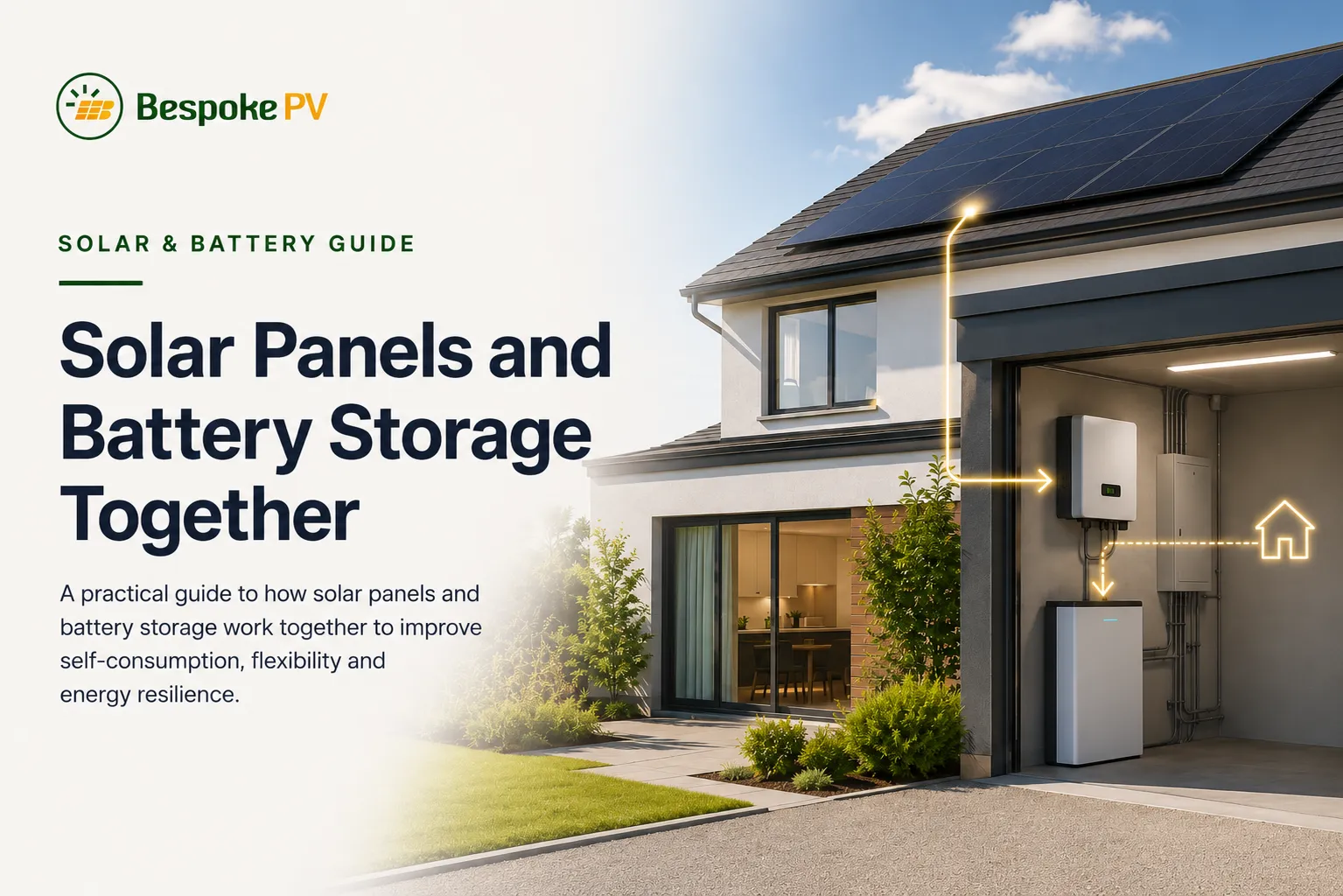
Battery Storage & Solar Panels
Battery storage allows excess solar generation to be stored and used later rather than immediately exported to the grid. For a deeper comparison of storage options, see our guide to the best battery storage systems in the UK. While early residential solar systems were often designed primarily around exporting surplus electricity, modern battery systems increasingly allow households to use far more of their generated electricity internally.
In practice, battery storage changes how households interact with solar energy because electricity generated during the middle of the day can be stored and used later during evening peak demand periods when generation has reduced or stopped entirely. This can significantly improve self-consumption and reduce reliance on imported electricity from the grid.
Modern battery systems are also becoming central parts of wider home energy management strategies. Many Hampshire homeowners now integrate battery storage alongside EV charging, smart tariffs and future heat pump planning to improve operational flexibility and reduce long-term exposure to volatile electricity pricing.
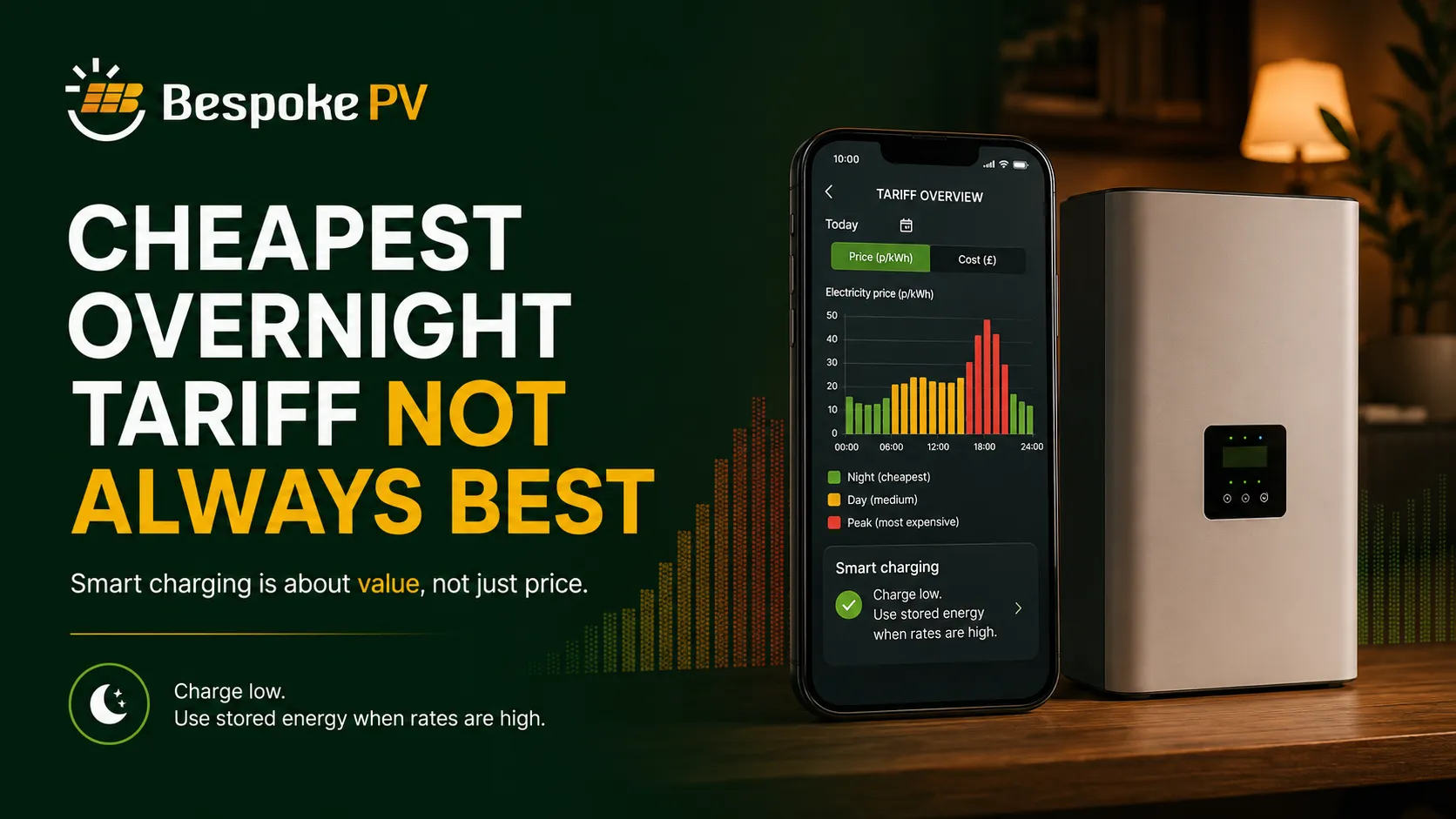
One of the biggest misconceptions we commonly encounter is homeowners assuming batteries exist purely to store 'extra' solar electricity. In reality, modern systems increasingly coordinate battery charging behaviour around electricity tariffs, household demand patterns and future energy usage strategies. Some systems can automatically charge overnight during cheaper tariff periods and discharge during higher-cost peak-rate periods.
Battery sizing is also critically important. Oversized systems without sufficient daily cycling demand may provide poor financial efficiency, while undersized systems can limit operational flexibility and self-consumption benefits. The most effective battery installations are usually those carefully designed around how electricity is actually consumed throughout the property over time.
As homes across Hampshire continue transitioning toward wider electrification, battery storage is increasingly viewed not simply as an optional add-on, but as an important part of long-term energy resilience, operational flexibility and smart home energy management.
Typical Battery Storage Capacities
Battery sizing should align with how and when electricity is consumed within the property rather than simply maximising storage capacity. The most effective battery systems are usually those carefully matched to household demand patterns, solar generation behaviour and future electrification plans such as EV charging or heat pump adoption.
Smaller battery systems may be highly effective for homes primarily seeking to shift excess daytime solar generation into evening usage periods. Larger systems can provide greater operational flexibility, support overnight EV charging strategies and improve resilience during periods of high electricity demand or dynamic tariff pricing.
In practice, one of the biggest mistakes we commonly see is homeowners assuming larger battery capacity automatically creates better long-term value. Oversized systems without sufficient daily cycling demand may provide relatively poor operational efficiency and longer payback periods. Conversely, undersized systems may restrict self-consumption benefits and reduce flexibility as household energy demand evolves over time.
Battery capacity requirements can also change significantly once wider electrification is introduced. Homes using EV charging, electric heating or heat pumps often require substantially different storage strategies compared with properties using relatively modest daytime electricity demand alone. This is why future energy usage planning is becoming increasingly important during battery system design.
Modern battery systems are also increasingly integrated with smart tariffs and energy management platforms. Some systems can automatically charge during low-cost overnight tariff periods and discharge during higher-rate daytime periods, helping optimise how electricity is consumed throughout the property.
For many Hampshire households, battery storage is now viewed less as a simple solar accessory and more as part of a wider long-term energy infrastructure strategy involving resilience, operational flexibility and greater control over how electricity is generated, stored and used.
Typical Residential Battery Storage Examples
| Battery System Type | Typical Capacity Range | Common Operational Behaviour | Typical Use Case |
|---|---|---|---|
| Smaller Battery Systems | 5–8kWh | Primarily shifts excess daytime solar generation into evening usage periods | Moderate household demand and improved solar self-consumption |
| Medium Battery Systems | 8–13kWh | Balances daytime solar storage, overnight usage and tariff optimisation | Family homes with higher electricity demand and growing electrification plans |
| Larger Battery Systems | 13kWh+ | Supports EV charging, heat pumps, resilience strategies and advanced smart energy management | Highly electrified homes with larger long-term operational requirements |
AC-Coupled vs DC-Coupled Battery Systems
Battery system architecture affects installation flexibility, efficiency, system integration and future expansion capability. While both AC-coupled and DC-coupled systems can perform extremely effectively when designed properly, each approach offers different operational advantages depending on the property's existing infrastructure and long-term energy strategy. In practice, AC-coupled systems are often popular for retrofit projects where battery storage is being added to an existing solar installation. DC-coupled systems are increasingly common on fully integrated new installations where solar panels, batteries and smart energy management are designed together from the outset.
AC-Coupled Batteries
- Often easier to retrofit onto existing solar systems
- Greater flexibility for phased installations and future upgrades
- Can operate more independently from existing inverter architecture
- Commonly used where battery storage is added after the original solar installation
DC-Coupled Batteries
- Typically provides a more efficient energy conversion pathway
- Allows tighter integration between solar generation and battery charging
- Often used on fully integrated new-build or whole-home electrification systems
- Can support more unified system-level energy management strategies
Visual Guide: Battery Storage Energy Flow
Smart Export Guarantee (SEG) Explained
The Smart Export Guarantee (SEG) allows homeowners to receive payment for surplus electricity exported back to the grid. Under the scheme, licensed electricity suppliers offer export tariffs that pay households for excess solar generation that is not consumed within the property. However, export rates, tariff structures and operational benefits can vary significantly between providers.
When residential solar first became widely adopted, many systems were designed primarily around maximising exported electricity generation. Today, the operational approach is increasingly changing. Many Hampshire homeowners now achieve greater long-term value by increasing self-consumption through battery storage, [EV charging](/blog/can-solar-panels-charge-an-ev/ and smart energy management rather than relying heavily on export payments alone.
In practice, imported electricity prices are usually substantially higher than export payment rates. This means households often gain greater financial benefit from using generated electricity internally rather than exporting large volumes back to the grid. Battery systems are particularly valuable because they allow excess daytime generation to be stored and used later during evening peak demand periods.
Modern smart tariffs are also changing how many homeowners approach energy management. Some systems now coordinate solar generation, battery charging, EV charging and off-peak tariff periods together to optimise how electricity flows throughout the property.
One of the biggest misconceptions we commonly encounter is homeowners assuming export tariffs alone determine whether solar installations are financially worthwhile. In reality, long-term operational value increasingly comes from how effectively solar generation integrates with wider household electrification strategies, self-consumption behaviour and future energy flexibility.
As homes across Hampshire continue transitioning toward EV charging, battery storage and electric heating systems, the role of solar energy is evolving from simple electricity generation toward fully integrated home energy management and resilience planning.
Exporting Electricity vs Maximising Self-Consumption
| Energy Strategy | Typical Operational Behaviour | Potential Advantages | Long-Term Considerations |
|---|---|---|---|
| Export-Focused Strategy | Higher proportion of generated electricity exported back to the grid | Can benefit from favourable SEG export tariffs and simpler system design | More dependent on supplier tariff structures and imported electricity pricing |
| Self-Consumption Focused Strategy | Prioritises using generated electricity within the property | Improves operational flexibility and reduces imported electricity reliance | Typically integrates battery storage, EV charging and smart energy management |
| Integrated Smart Energy Strategy | Coordinates solar generation, batteries, EV charging and tariff optimisation together | Supports advanced operational control and long-term electrification planning | Designed around resilience, future scalability and evolving household energy demand |
Why Integrated Energy Planning Matters
The transition toward electrified homes means renewable energy systems should increasingly be planned holistically rather than individually. This is why Bespoke PV designs solar panel systems, battery storage and EV charging as connected parts of a long-term energy strategy rather than isolated technologies.
Historically, many residential renewable energy systems were installed independently with relatively little consideration for how household energy demand might evolve over time. Today, however, transport, heating and home energy management are increasingly becoming interconnected. EV charging, battery storage, heat pumps and smart tariffs all influence how electricity is generated, stored and consumed throughout the property.
In practice, one of the biggest mistakes we commonly encounter is homeowners designing systems purely around current electricity usage without considering how rapidly household demand may increase once wider electrification begins. A property that currently uses relatively modest electricity volumes can quickly require substantially larger energy infrastructure once EV charging or electric heating is introduced.
Integrated planning allows systems to be designed with future scalability, operational flexibility and long-term resilience in mind from the outset. Inverter capacity, battery architecture, electrical infrastructure, monitoring platforms and tariff optimisation strategies all become increasingly important as homes become more electrified.
Battery storage, for example, is no longer simply about storing excess solar electricity. Modern systems increasingly coordinate charging behaviour around household demand patterns, EV charging schedules and dynamic electricity tariff conditions. Smart energy management platforms can automatically optimise how electricity flows throughout the property based on real-time operational conditions.
Heat pumps further reinforce the importance of integrated planning because they can significantly increase household electrical demand during colder months. Similarly, EV charging can dramatically alter electricity consumption behaviour depending on mileage, charging schedules and whether multiple vehicles are present at the property.
Many Hampshire households are now approaching renewable energy not simply as a way to reduce electricity bills, but as part of a broader long-term infrastructure strategy focused on resilience, electrification readiness and greater control over energy usage. The most effective systems are usually those designed around how the property may operate over the next decade rather than how it functions today.
As energy systems continue evolving, integrated energy planning is becoming increasingly important not only for operational efficiency, but for ensuring homes remain adaptable, scalable and resilient as technology, tariffs and household energy demand continue changing over time.
Visual Guide: Whole-Home Electrification
Solar Panels & EV Charging
Integrated solar and EV charging systems allow households to use self-generated electricity to charge vehicles where possible. For more detail, read our guide on whether solar panels can charge an electric vehicle. As electric vehicle adoption continues accelerating across Hampshire, many homeowners are now designing solar systems specifically around future transport electrification rather than current household electricity usage alone.
EV charging can significantly increase household electricity demand depending on vehicle mileage, charging behaviour and whether multiple vehicles are present at the property. In practice, many households discover that EV charging rapidly changes how electricity is consumed throughout the home, making integrated solar and battery planning increasingly important.
Modern smart EV charging systems can increasingly coordinate charging behaviour around available solar generation, battery storage and electricity tariff conditions. Some systems prioritise charging vehicles directly from surplus daytime solar generation, while others intelligently combine solar charging with off-peak overnight tariff periods to reduce overall charging costs.
Battery storage also plays an important operational role because it can help shift excess daytime generation into evening charging periods when vehicles return home. As homes become more electrified, many Hampshire homeowners are now viewing solar panels, battery systems and EV charging infrastructure as interconnected parts of a wider long-term energy strategy rather than isolated technologies.
One of the most common mistakes we see is systems being designed purely around current electricity consumption without accounting for future EV charging demand. A household that currently uses relatively modest electricity volumes can see consumption increase dramatically once one or more electric vehicles are introduced.
The most effective solar and EV charging systems are usually those designed around real household behaviour, charging patterns and future scalability. In many cases, operational flexibility, battery integration and smart energy management become just as important as headline generation figures alone.
Solar Panels & Heat Pumps
Heat pumps and solar panels often work extremely well together because both support the transition away from fossil fuel dependency. As more Hampshire homes move away from gas and oil-based heating systems, many homeowners are now exploring how solar generation, battery storage and electric heating can operate together as part of a fully integrated home energy strategy.
Unlike traditional gas boilers, heat pumps operate using electricity to transfer heat into the property. This means homes installing heat pumps often experience a significant increase in electrical demand, particularly during colder winter periods when heating requirements are highest. Solar generation can help offset a proportion of this additional electricity usage, especially during daylight hours.
In practice, one of the biggest misconceptions we commonly encounter is homeowners assuming solar panels alone will fully power a heat pump year-round. While solar can meaningfully reduce imported electricity usage, winter heating demand and winter solar generation do not always align perfectly. This is why battery storage, smart tariff optimisation and careful system design are becoming increasingly important for homes combining solar and heat pump technologies.
Battery systems can help store daytime solar generation for later heating demand periods, while smart energy management platforms increasingly coordinate heating behaviour around electricity pricing, solar generation and occupancy patterns. Some systems can automatically prioritise heat pump operation during periods of high solar generation or lower electricity tariff rates.
Heat pumps also influence how solar systems should be sized. One of the most common implementation mistakes we see is homeowners designing solar installations purely around historic electricity usage before accounting for future electric heating demand. Once a heat pump is introduced, annual electricity consumption can increase significantly depending on property insulation levels, heating design temperatures and occupancy behaviour.
The most effective integrated systems are usually those planned holistically from the outset. Careful consideration of insulation quality, battery integration, inverter capacity, electrical infrastructure and long-term electrification goals can dramatically improve operational efficiency and future scalability.
As homes across Hampshire continue transitioning toward low-carbon heating and transport, solar panels and heat pumps are increasingly being viewed not as isolated technologies, but as connected components within a broader long-term electrification and energy resilience strategy.
Warranties & Long-Term Reliability
Solar systems typically include multiple warranty structures covering panels, inverters, batteries and workmanship separately. While warranty terms vary between manufacturers and installation providers, modern residential solar systems are generally designed to operate reliably for decades when installed and maintained correctly.
Solar panel manufacturers commonly provide both product warranties and long-term performance warranties. Product warranties typically cover manufacturing defects and material failures, while performance warranties usually guarantee that panels retain a minimum percentage of their original generation capability over time. Inverters and battery systems often carry separate warranty structures with different operational conditions and coverage periods.
In practice, one of the biggest misconceptions we commonly encounter is homeowners focusing almost entirely on headline panel efficiency figures while underestimating the importance of installation quality, system architecture and long-term support capability. Even premium equipment can experience avoidable operational problems if systems are poorly designed or incorrectly installed.
Long-term reliability depends heavily on careful installation standards, appropriate inverter selection, effective cable management, weatherproofing and correct commissioning procedures. Roof layout complexity, shading behaviour, ventilation and battery operating conditions can all influence how systems perform over time.
Battery systems introduce additional considerations because operational lifespan is often linked to usage patterns, charging behaviour, temperature management and cycling frequency. Modern smart battery systems increasingly include advanced monitoring and management platforms that help optimise long-term operational performance.
One of the most important factors in long-term reliability is future scalability and support. As many Hampshire households continue adopting EV charging, heat pumps and wider electrification strategies, renewable energy systems increasingly need to adapt alongside changing household demand. Systems designed with future expansion flexibility often provide stronger long-term operational value than installations focused purely on minimising upfront costs.
In practice, the most reliable solar systems are usually those approached as long-term infrastructure investments rather than short-term technology purchases. Careful design, high-quality installation standards and strong ongoing support arrangements typically influence operational performance far more significantly than small differences in headline equipment specifications alone.
Common Solar Installation Mistakes
One of the most common mistakes we see is systems being designed around maximising panel count alone without properly evaluating how electricity is actually used within the property. While increasing generation capacity can appear attractive on paper, the most effective solar systems are usually those carefully aligned with real household consumption patterns, future electrification plans and long-term operational behaviour.
In practice, many underperforming systems are not caused by poor solar panel technology, but by weak overall system design. Homes may install large arrays without considering battery integration, EV charging demand, shading characteristics or how electricity usage may evolve over time. This can result in systems that generate strong theoretical output figures but operate inefficiently in real-world conditions.
Another common issue is systems being sized purely around historic electricity bills without accounting for future changes such as EV charging, heat pumps or wider electrification. Many Hampshire homeowners now transition toward electric transport and heating far more quickly than originally anticipated, which can rapidly increase electricity demand beyond the capabilities of an undersized installation.
Shading analysis is another area frequently underestimated. Chimneys, nearby trees, dormers and neighbouring buildings can all influence how solar generation behaves throughout the day. One poorly shaded panel within a traditional string inverter system can sometimes reduce the performance of multiple connected panels if the system architecture has not been designed appropriately.
We also commonly encounter installations where inverter selection, battery sizing or future expansion capability has not been properly considered. In some cases, homeowners later discover that adding battery storage, EV charging or additional panels requires substantial retrofit work because the original infrastructure was not designed with scalability in mind.
Installation quality itself is equally important. Careful cable routing, weatherproofing, roof integrity protection, electrical testing and commissioning all play major roles in long-term reliability and operational safety. A fast installation is not necessarily a good installation.
The most effective solar systems are usually those designed holistically around long-term operational flexibility rather than simply short-term generation figures or lowest upfront cost. As homes across Hampshire continue moving toward wider electrification, integrated planning around solar generation, battery storage, EV charging and smart energy management is becoming increasingly important for long-term performance and resilience.
Related Solar & Battery Guides
Explore more Bespoke PV articles covering solar panels, battery storage, EV charging, smart energy management and long-term electrification strategies. These guides provide more detailed insight into system sizing, financial performance, battery technologies and how integrated renewable energy systems can support future household energy flexibility.

Planning Solar Panels, Battery Storage or EV Charging?
Bespoke PV designs integrated renewable energy systems tailored around long-term electrification, operational flexibility and energy resilience. Whether you are exploring solar panels for the first time, considering battery storage, planning EV charging infrastructure or evaluating how heat pumps may fit into your property's future energy strategy, our team can help design a system aligned with your long-term operational requirements.
We work with homeowners across Hampshire to develop carefully planned renewable energy systems that consider not only current electricity usage, but how household demand may evolve over the coming years as transport and heating continue transitioning toward electrification. Our approach focuses on integrated system design, future scalability and long-term performance rather than simply maximising short-term generation figures alone.
Every property behaves differently. Roof orientation, shading, occupancy patterns, battery integration, EV charging demand and future expansion capability can all significantly influence the most effective system design. We therefore approach each project holistically, ensuring solar generation, storage, monitoring and smart energy management work together as part of a coordinated long-term energy strategy.
If you are considering solar panels, battery storage, EV charging or wider home electrification, Bespoke PV can help you evaluate the most suitable approach for your property, operational goals and future energy requirements.
The Complete Guide to Solar Panels in Hampshire FAQs
Answers to common questions about this guide and related renewable energy planning.
Are solar panels worth installing in Hampshire?
For many Hampshire homes, solar panels can be a strong long-term investment when the system is designed around real electricity usage, roof suitability and future energy plans. The best results usually come from considering not only current bills, but also battery storage, EV charging, heat pumps, smart tariffs and how household demand may change over time.
Learn more about The Complete Guide to Solar Panels in Hampshire →
How many solar panels does a Hampshire home need?
The right number of solar panels depends on electricity usage, roof size, roof orientation, shading, inverter design and future plans such as EV charging or heat pump installation. A smaller household may need a modest system, while a larger or more electrified home may benefit from a larger solar array designed around long-term demand.
Learn more about The Complete Guide to Solar Panels in Hampshire →
Do solar panels work during winter in Hampshire?
Yes. Solar panels work from daylight rather than heat, so they continue generating electricity during winter and cloudy conditions. Winter generation is lower because days are shorter and the sun is lower in the sky, but a well-designed system can still reduce grid imports and support daytime household demand.
Learn more about The Complete Guide to Solar Panels in Hampshire →
Does a roof need to face south for solar panels to be worthwhile?
No. South-facing roofs often maximise annual generation, but east-west roof layouts can also work very well. East-west systems can spread generation across the morning and evening, which may better match household electricity usage. The best design depends on roof layout, shading, battery storage and how the home uses power.
Learn more about The Complete Guide to Solar Panels in Hampshire →
Can solar panels work on shaded roofs?
Solar panels can still be suitable on some partially shaded roofs, but shading must be assessed carefully. Chimneys, trees, dormers and neighbouring buildings can affect performance. Optimisers or microinverters may help in certain situations by allowing panels to operate more independently, but the right approach depends on the survey and roof design.
Learn more about The Complete Guide to Solar Panels in Hampshire →
What size solar system is typical for a Hampshire home?
Many residential solar installations fall somewhere between 3kWp and 8kWp, but the right size depends on the property. Smaller households may suit a 3–4kWp system, while family homes or properties planning EV charging, battery storage or heat pumps may need a larger system designed around future electricity demand.
Learn more about The Complete Guide to Solar Panels in Hampshire →
Do solar panels in Hampshire need planning permission?
Many domestic solar panel installations fall under permitted development, but this should always be checked for the specific property. Planning permission or additional consent may be needed for listed buildings, some conservation areas, unusual roof layouts, ground-mounted systems or properties affected by specific local restrictions.
Learn more about The Complete Guide to Solar Panels in Hampshire →
Can listed buildings in Hampshire have solar panels?
Potentially, but listed buildings need careful assessment and usually require additional consent before solar panels can be installed. The design may need to consider visibility, roof material, heritage impact and alternative locations such as outbuildings or less prominent roof slopes. It is important to check requirements before committing to a design.
Learn more about The Complete Guide to Solar Panels in Hampshire →
Can conservation area homes in Hampshire install solar panels?
Many conservation area homes can still install solar panels, but the design and location may need more care. Visibility from highways, roof slope, Article 4 directions and local planning rules can all affect what is allowed. A proper assessment should be carried out before installation, especially on older or visually sensitive properties.
Learn more about The Complete Guide to Solar Panels in Hampshire →
Should solar panels be installed with battery storage?
Battery storage is not essential, but it can significantly improve how much solar electricity a home can use. Without a battery, surplus daytime generation may be exported. With a battery, some of that energy can be stored for evening use, peak-rate periods or wider smart tariff strategies.
Learn more about The Complete Guide to Solar Panels in Hampshire →
Is it better to add battery storage now or later?
It depends on the property, budget and future plans. Installing solar and battery storage together can create a cleaner integrated design, but adding a battery later can also work if the original solar system is planned with future compatibility in mind. Inverter choice, cable routes and battery location should be considered early.
Learn more about The Complete Guide to Solar Panels in Hampshire →
Can solar panels charge an electric car?
Yes, solar panels can contribute to EV charging when the car is at home during generation hours and the system is designed appropriately. However, most EV batteries are much larger than typical home solar output on a given day, so solar charging is usually part of a wider strategy involving grid charging, smart tariffs and load management.
Learn more about The Complete Guide to Solar Panels in Hampshire →
Should EV charging be considered before installing solar panels?
Yes. EV charging can significantly increase household electricity demand and may change the best solar system size, inverter specification, battery strategy and tariff choice. Even if an EV is not being installed immediately, it is sensible to consider likely future charging needs during the solar design stage.
Learn more about The Complete Guide to Solar Panels in Hampshire →
Can solar panels help power a heat pump?
Solar panels can help offset some electricity used by a heat pump, but heat pump demand is often highest in winter when solar generation is lower. This does not make solar unsuitable. It means the system should be designed around seasonal generation, winter demand, smart tariffs, battery storage and the property’s heat loss.
Learn more about The Complete Guide to Solar Panels in Hampshire →
Do solar panels need to be designed around future electrification?
Yes. Homes that later add EV charging, heat pumps, electric cooking or battery storage may use far more electricity than they do today. Designing a solar system only around current bills can lead to undersizing. A future-ready design considers how electricity demand may change over the next decade.
Learn more about The Complete Guide to Solar Panels in Hampshire →
How long does a residential solar installation usually take?
The physical installation is often completed within a few days for a straightforward residential system, but the overall project involves more than roof work. Survey, system design, scaffolding, DNO notification or application, battery integration, commissioning and monitoring setup can all affect the full timeline.
Learn more about The Complete Guide to Solar Panels in Hampshire →
What affects the cost of solar panels in Hampshire?
Solar panel cost depends on system size, panel specification, inverter choice, roof complexity, scaffolding, battery storage, EV charging integration, monitoring, electrical works and any planning or heritage considerations. The lowest upfront price is not always the best long-term value if the system is difficult to expand or poorly matched to future demand.
Learn more about The Complete Guide to Solar Panels in Hampshire →
How is solar payback calculated?
Solar payback depends on installation cost, electricity prices, solar generation, self-consumption, export payments, battery storage, smart tariffs and future electricity demand. Simple payback can be useful, but it does not capture the full value of resilience, energy flexibility, EV charging support or protection from future price changes.
Learn more about The Complete Guide to Solar Panels in Hampshire →
What is the Smart Export Guarantee?
The Smart Export Guarantee is a mechanism through which eligible small-scale generators can be paid for exporting electricity to the grid. Export value should be considered alongside self-consumption and battery storage, because the best strategy may differ depending on the export tariff, import tariff and how the household uses electricity.
Learn more about The Complete Guide to Solar Panels in Hampshire →
Should solar energy be exported or stored in a battery?
The best choice depends on the tariff, household demand and battery capacity. If export payments are strong, exporting surplus solar can still create value. If peak import rates are high, storing energy for evening use may be better. Some systems can also use batteries to shift export into higher-value periods.
Learn more about The Complete Guide to Solar Panels in Hampshire →
Do smart tariffs affect solar and battery design?
Yes. Smart tariffs can change how a battery is charged, when stored energy is used and whether a smaller or larger battery makes sense. A system designed around one tariff alone may become less suitable if tariffs change, so good design should preserve flexibility wherever possible.
Learn more about The Complete Guide to Solar Panels in Hampshire →
Read our guide: Why the Cheapest Overnight Tariff Is Not Always the Cheapest Overall Tariff →
What is the difference between string inverters, optimisers and microinverters?
A string inverter connects groups of panels to one central inverter. Optimisers allow individual panels to perform more independently while still using a central inverter. Microinverters place inverter technology at each panel. The best option depends on roof complexity, shading, monitoring needs, battery integration and future expansion plans.
Learn more about The Complete Guide to Solar Panels in Hampshire →
Can solar panels provide backup power during a power cut?
Solar panels do not automatically keep a home powered during a grid outage. Many standard solar systems shut down for safety when the grid fails. Backup power requires suitable battery storage, inverter capability, wiring design, reserve settings and a clear decision about whether critical loads or wider household circuits should be supported.
Learn more about The Complete Guide to Solar Panels in Hampshire →
Read our guide: What Can a Home Battery Actually Power During a Power Cut? →
What should be checked during a solar survey?
A good solar survey should assess roof condition, orientation, pitch, shading, available space, cable routes, inverter location, electrical capacity, battery options, monitoring requirements and future upgrades. It should also consider whether the property may later need EV charging, heat pump support, battery expansion or backup power.
Learn more about The Complete Guide to Solar Panels in Hampshire →
What are common solar installation mistakes?
Common mistakes include sizing the system only around current bills, ignoring shading, choosing the cheapest inverter without considering future battery storage, overlooking EV or heat pump demand, failing to plan cable routes and treating solar panels as a standalone purchase rather than part of a wider home energy system.
Learn more about The Complete Guide to Solar Panels in Hampshire →
Why choose an MCS certified solar installer in Hampshire?
An MCS certified installer helps ensure the solar PV system is designed and installed to recognised standards. Certification can also be important for consumer protection, documentation and access to export arrangements. Homeowners should also look for careful design, clear communication, good commissioning and long-term support.
Learn more about The Complete Guide to Solar Panels in Hampshire →
Does Bespoke PV install solar panels across Hampshire?
Yes. Bespoke PV works with homeowners across Hampshire and the surrounding region to design solar PV, battery storage, EV charging and integrated home energy systems. Each project should be designed around the property’s roof, electricity usage, future electrification plans and long-term energy objectives.
Learn more about The Complete Guide to Solar Panels in Hampshire →
In Summary
Solar PV and battery storage should be planned around future electricity usage, energy resilience and long-term flexibility rather than simple payback calculations alone.
Further Reading
Explore related Bespoke PV articles covering this topic in more detail.
Related Installations
Explore renewable energy systems designed and installed by Bespoke PV.

Planning a renewable energy system?
Speak with Bespoke PV about solar PV, battery storage and long-term energy planning.