Pool and spa systems
Pumps, filtration, heating and controls can create recurring demand, particularly in warmer months.

Large homes often use energy in places homeowners rarely think about. Monitoring helps reveal the background loads that should shape solar, battery and EV charging design.
A high electricity bill in a large home is not always caused by one obvious appliance. It is often the result of many smaller systems running quietly in the background. A pool pump, a hot tub, a plant room, electric gates, security equipment, outdoor lighting, network equipment, refrigeration and an annex can all add to the load.
This matters because solar and battery systems should be designed around the whole property. If the design only considers the main house and ignores the garage, pool house, stable block, staff accommodation or garden office, it may miss the loads that actually shape the energy profile.
For premium homes, the question is not simply whether solar panels will reduce the bill. It is whether the system has been designed around the real energy behaviour of the property.
An always-on load is electricity demand that continues even when the household is not actively using equipment. Some always-on demand is normal. Fridges, freezers, routers, alarm systems and heating controls all use electricity in the background.
In larger properties, always-on load can be much higher. There may be CCTV recorders, access control systems, Wi-Fi equipment spread across multiple buildings, pumps, control panels, outdoor lighting circuits, AV racks and plant room equipment. Individually, some of these loads may look modest. Over 24 hours a day and 365 days a year, they can become significant.
Energy monitoring is useful because it makes the background visible. A steady overnight load may be legitimate, but it may also point to equipment that is running longer than necessary or a system that deserves further investigation.
Pools and spas are one of the clearest examples of lifestyle-led electricity demand. The energy use may come from pumps, filtration, controls, heating, covers, lighting and related plant room equipment. The pattern can also be seasonal, which means a winter electricity bill may not show the full summer picture.
For solar design, this can be an opportunity. If pool equipment runs during daylight, more solar generation may be used directly. If the pool load extends into the evening or overnight, battery storage may play a role, but only if the design is based on realistic usage.
This is why Bespoke PV would treat pool systems as part of the design conversation rather than an afterthought. The most useful question is not simply “how big is the pool?” but “when does the pool equipment actually use electricity?”
High-value homes often have more security and access equipment than a standard property. Electric gates, CCTV, alarm systems, intercoms, exterior lighting and remote access controls can all contribute to the property’s base load. Some of these systems need to be reliable during outages, which also makes them relevant to battery backup discussions.
Monitoring can show whether external systems are a small background detail or a meaningful part of the home’s consumption. It can also reveal scheduled lighting loads or equipment that is drawing power at unexpected times.
For solar and battery design, these details matter because essential loads are different from discretionary loads. A lighting circuit that can be shifted or reduced is not the same as a security system that the homeowner expects to keep running.
An annex can behave like a small home attached to the main property. It may have its own appliances, heating controls, hot water demand, lighting and occupancy pattern. If guests, family members or staff use the space at different times from the main house, the property’s energy pattern becomes more complex.
A whole-home energy review should ask how these spaces are supplied and used. Are they occupied every day or only occasionally? Do they have electric heating or hot water? Are they on the same meter? Could solar generation from another roof area help support them?
These questions are especially relevant where the annex is near a suitable roof, garage or outbuilding. A technically simple solar layout is not always the one that best fits the way the property uses energy.
For large homes, the most valuable energy saving may not come from finding one wasteful appliance. It often comes from understanding the full pattern: what runs all day, what starts at night, what changes seasonally and what the homeowner plans to add next.
A practical way to use this topic is to turn it into a design conversation rather than a yes-or-no answer. The monitoring data should be reviewed alongside the property layout, roof options, cable routes, existing consumer units, battery location options and future plans. That is especially important for larger homes, where the main house is often only one part of the energy picture.
For example, a homeowner may see one issue in isolation: a high bill, a confusing solar app, a new EV charger or a battery that does not behave as expected. A monitoring-led review looks for the pattern behind that issue. It asks whether the behaviour is consistent, seasonal, linked to a particular part of the property or caused by a new load.
This approach supports better decisions. It can show when a bigger system is justified, when a smaller but better-targeted system is more appropriate, or when the first step should be improving visibility before adding more equipment.
A useful review should connect energy data to the physical property and the customer’s future plans.
The main risk is treating monitoring data as either unnecessary or absolute. It is not unnecessary, because it can reveal patterns that a bill cannot show. It is also not absolute, because monitoring still needs interpretation and must be combined with survey findings.
A second risk is focusing only on headline energy use. Peak demand, timing, base load and future changes often matter just as much as total kWh. A home that uses a lot of energy at the wrong time may need a very different design from a home with the same annual usage but a better match to daylight generation.
The best outcome is a design that explains its assumptions. Where the data is clear, it should shape the specification. Where the data is incomplete, the proposal should say what has been assumed and what could change if the homeowner adds an EV, heat pump, battery, pool equipment or additional outbuilding load later.
Continue exploring Bespoke PV guides on monitoring-led solar, battery and EV design.
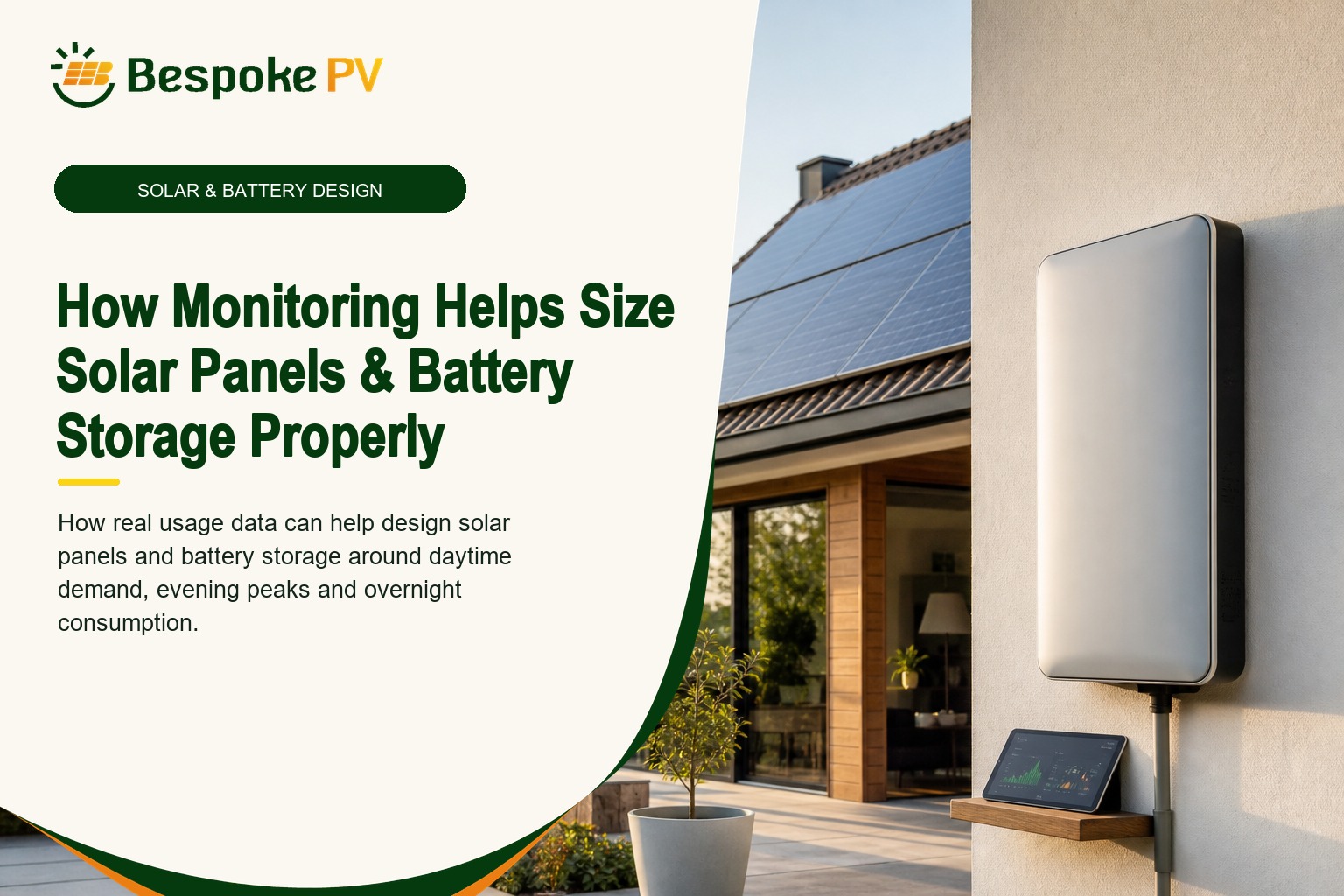

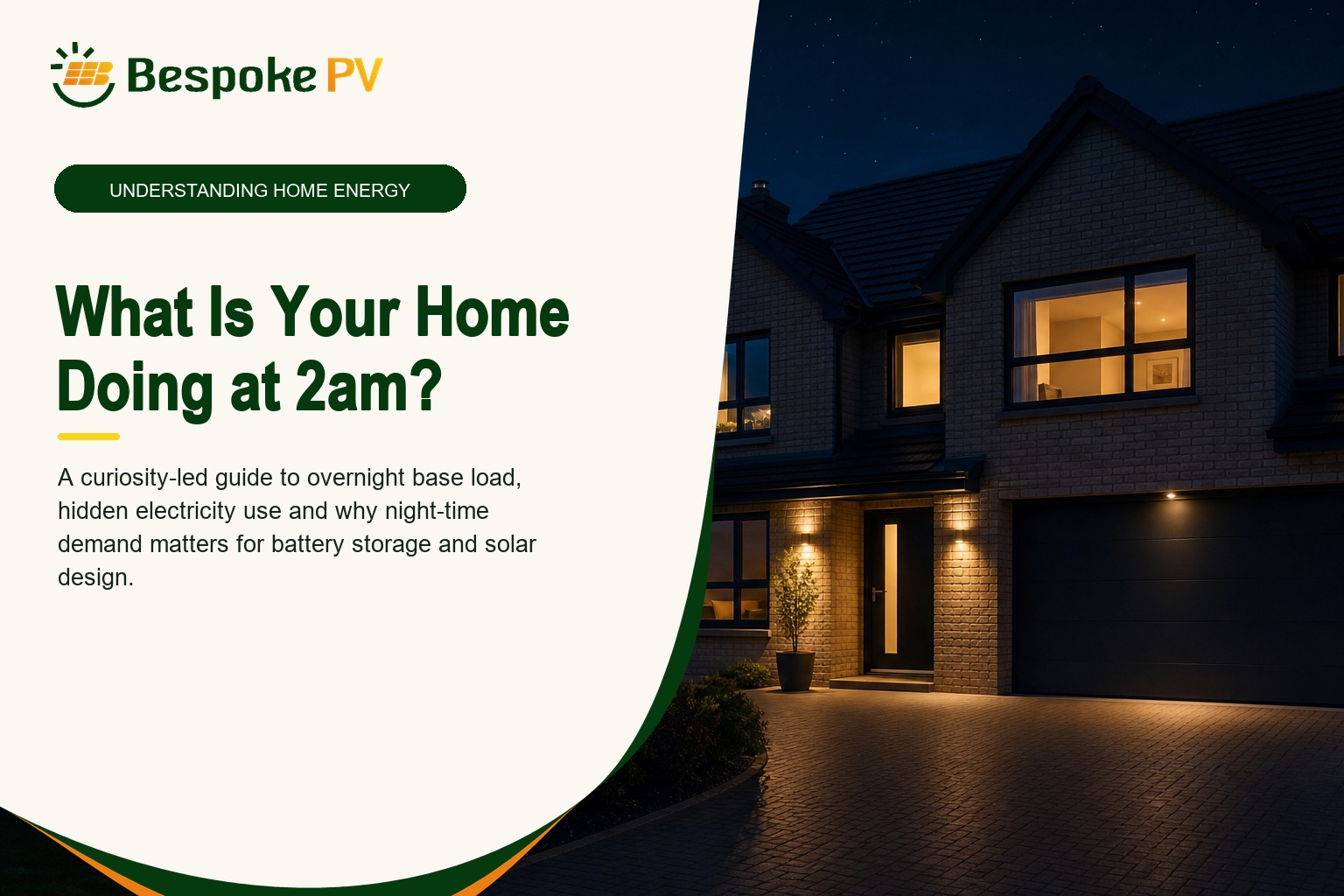
Bespoke PV can assess usage patterns across the main house, annexes, outbuildings and lifestyle systems before designing solar, battery storage or EV charging.
An always-on load is electricity demand that continues in the background even when the household is not actively using appliances. Examples include refrigeration, routers, alarms, CCTV, heating controls, pumps and network equipment. In larger homes these loads can be more significant because there may be multiple systems running across the property.
High overnight usage may be caused by background systems such as security, refrigeration, pumps, network equipment, hot tubs, pool plant, heating controls or EV charging. Energy monitoring can help show whether the load is steady, scheduled or unusual.
Yes, solar panels can help offset pool electricity use, especially where pumps, filtration or controls operate during daylight. The best design depends on when the pool equipment uses electricity and whether battery storage is also being considered.
Battery storage can support background loads after solar generation falls, but it should be sized around real usage. If a home has a high overnight base load, monitoring can help estimate whether a battery will be used effectively.
Yes. Annexes, garages, stables, garden offices and outbuildings can significantly affect electricity use. They may also influence solar panel location, cable routes, battery placement and EV charger design.
Explore related Bespoke PV articles and renewable energy insights.
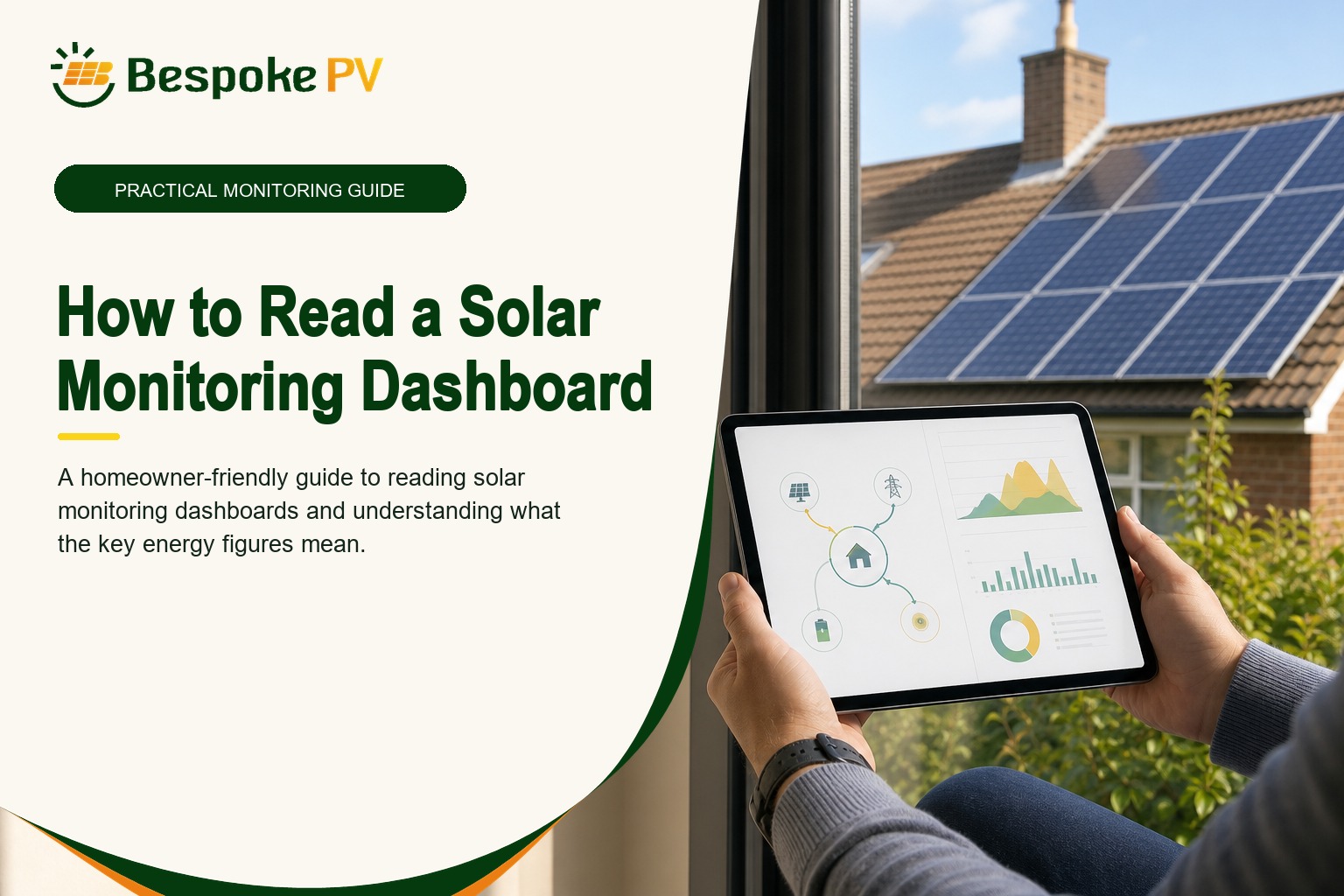
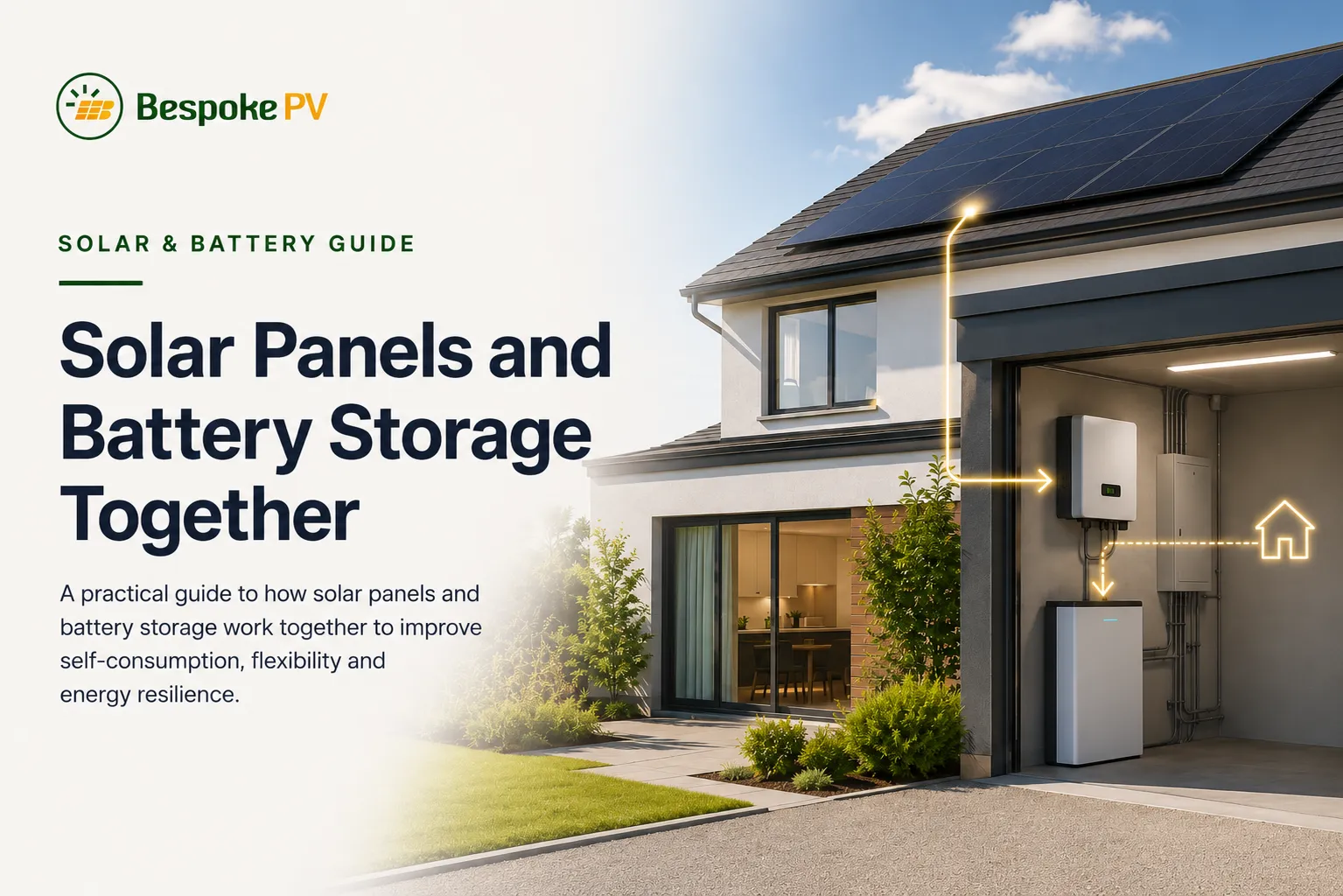
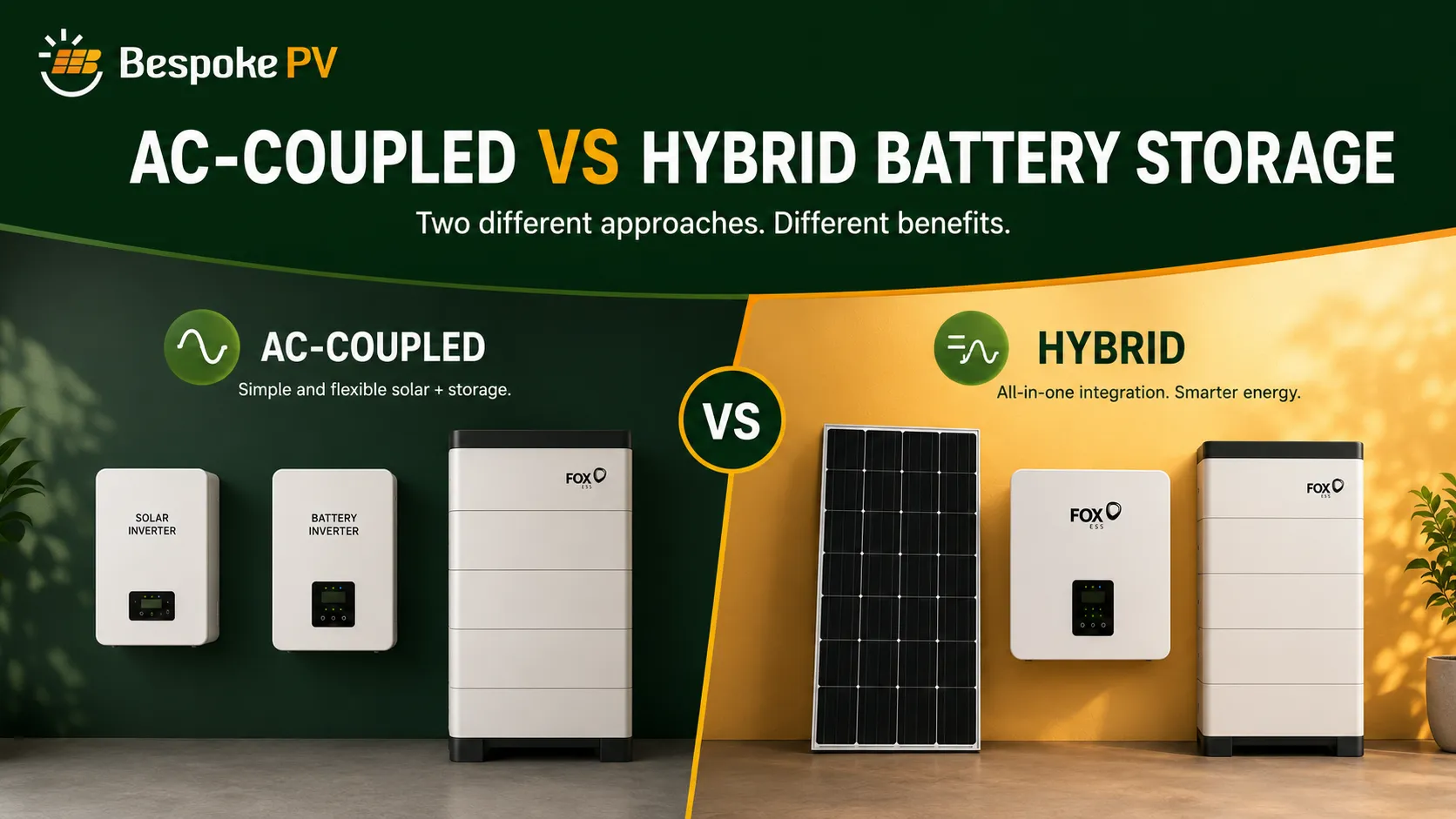
Explore renewable energy systems designed and installed by Bespoke PV.
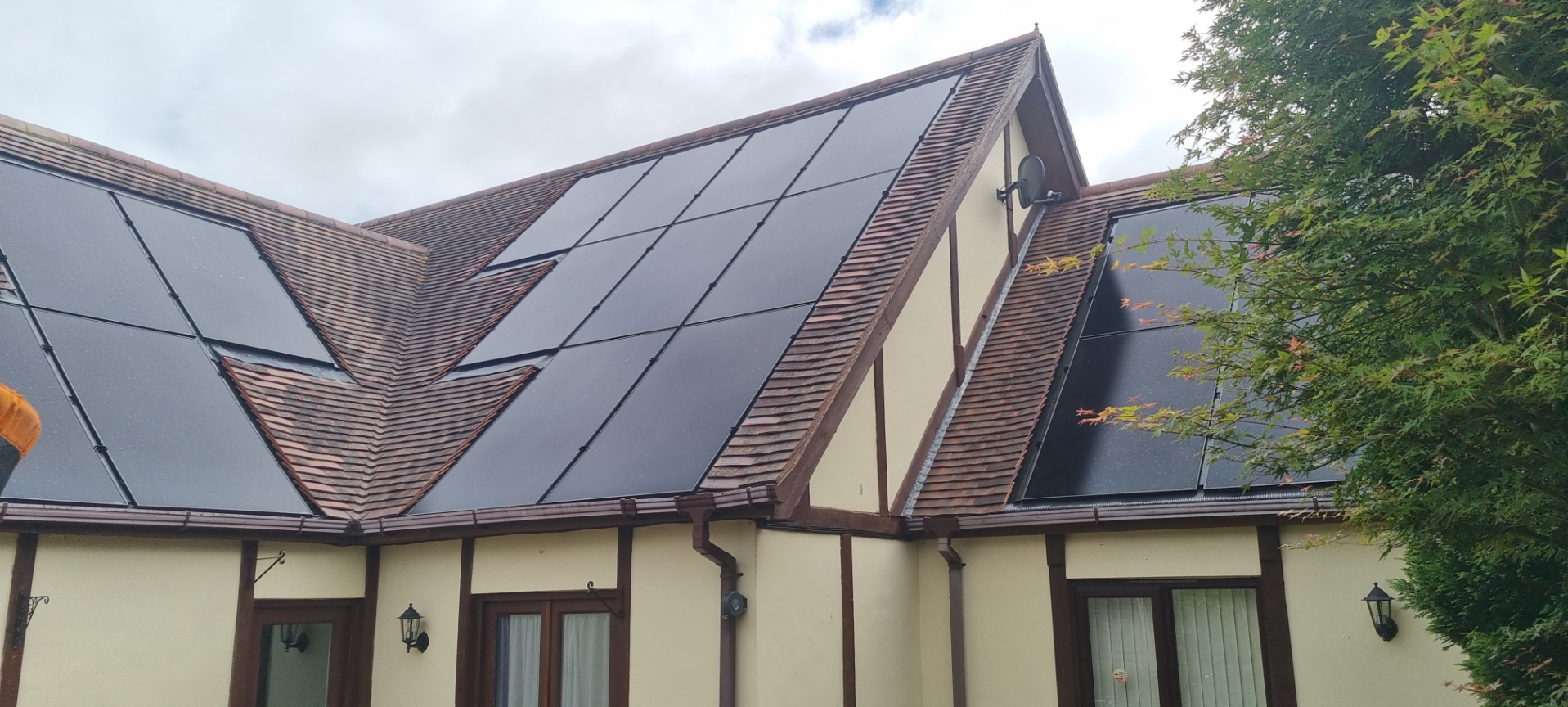

Bespoke PV designs solar PV, battery storage and EV charging systems across Hampshire, Dorset and the South Coast.
Bespoke solar PV, battery storage and EV charging systems for Southampton homes and businesses, designed around roof space, usage and future energy plans.
Solar panels in Southampton →Bespoke solar PV, battery storage and EV charging systems for homes and businesses across Winchester and Hampshire.
Solar panels in Winchester →Solar PV, battery storage and EV charging systems for homes and businesses across Portsmouth and the South Coast.
Solar panels in Portsmouth →Solar PV, battery storage and EV charging systems for homes and businesses across Bournemouth and the South Coast.
Solar panels in Bournemouth →Bespoke PV designs solar PV, battery storage and EV charging systems across Hampshire, Dorset, Wiltshire and the South Coast.
Bespoke PV can review your usage, property layout and future plans before recommending solar, battery storage or EV charging.