Direct Daytime Charging
EVs can charge directly from solar generation while the panels are producing electricity.

Yes. Solar panels can contribute toward charging an electric vehicle, helping households reduce imported electricity usage and improve long-term energy flexibility.
Electric vehicles are significantly increasing household electricity consumption.
Many homes that previously used relatively modest amounts of electricity are now planning for much larger long-term electricity demand due to EV charging, battery storage, heat pumps and wider household electrification.
Because of this, solar PV is increasingly being viewed as part of a broader home energy strategy rather than a standalone electricity-saving technology.
As EV adoption continues increasing across the UK, more homeowners are beginning to rethink how electricity is generated, stored and managed within the property.
Electricity demand patterns are changing rapidly across modern households.
Modern homes are becoming increasingly dependent on electricity.
EVs can charge directly from solar generation while the panels are producing electricity.
Battery systems can store surplus solar electricity for later EV charging.
Some smart chargers can prioritise surplus solar generation automatically.
Potentially yes in some situations, although it depends heavily on driving habits, vehicle mileage, solar generation levels, battery storage and charging behaviour.
During sunny periods, a well-sized solar PV system may contribute significantly toward EV charging demand.
However, during winter months or periods of high vehicle mileage, imported electricity may still be required.
This is why professionally designed systems increasingly focus on overall energy flexibility and intelligent energy management rather than unrealistic expectations of complete energy independence.
Every property and driving pattern is different.
Several factors influence how effectively solar can support EV charging.
Increasingly, homeowners are designing complete energy ecosystems around solar PV, battery storage, EV charging and future electrification.
Long-term flexibility and energy resilience are becoming just as important as simple financial payback.
Solar generation often peaks during daytime hours, while many EVs are charged later in the evening.
Battery systems can store surplus solar generation during the day for later use.
This may help reduce imported electricity usage during evening vehicle charging.
Battery storage also improves self-consumption, meaning more solar electricity is used directly within the property rather than exported to the grid.
As electricity prices evolve, battery systems are becoming increasingly important within modern EV charging strategies.
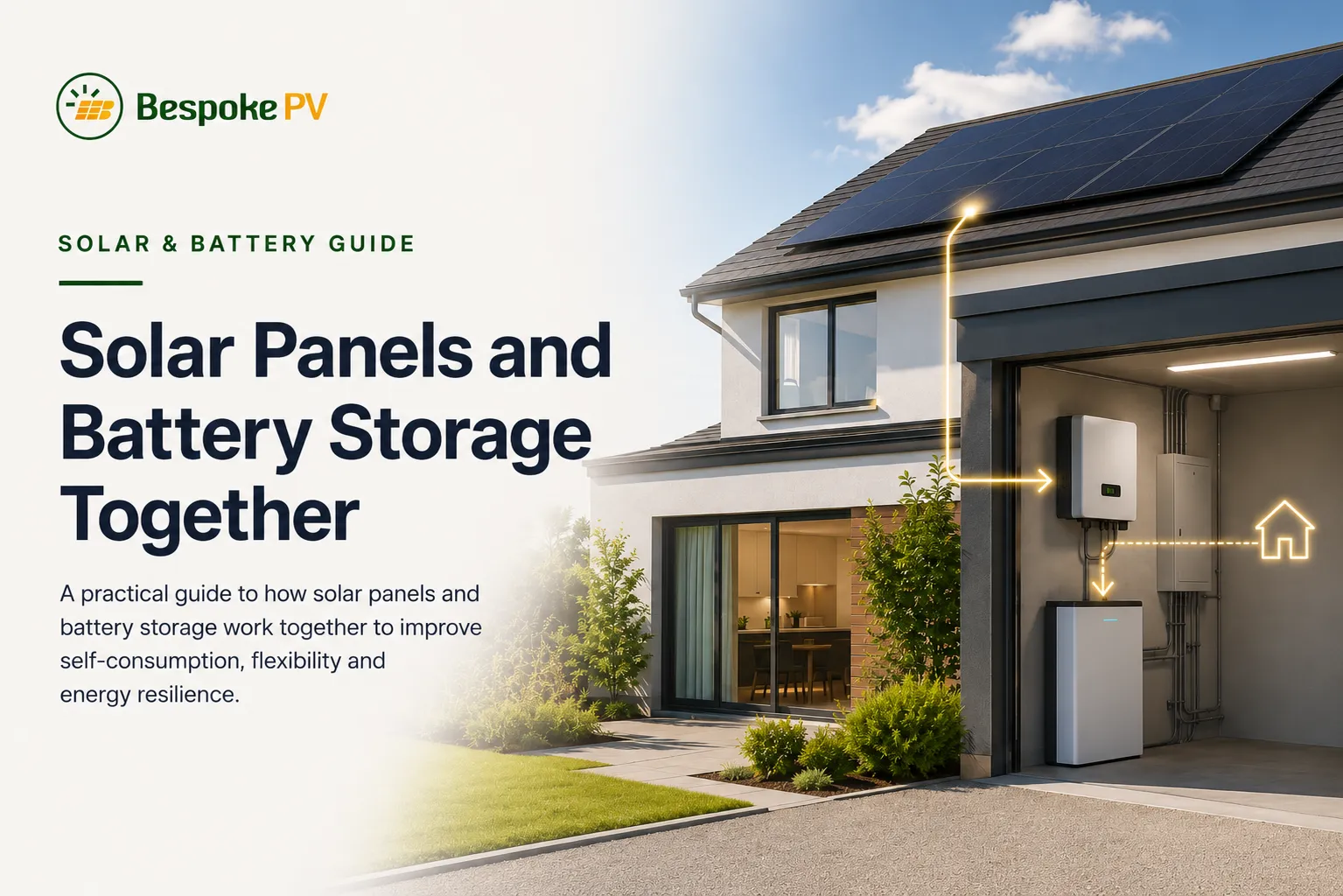
Read our guide: Solar Panels and Battery Storage Together
Battery storage significantly changes how solar electricity can be used.
Modern smart EV chargers can increasingly integrate directly with solar PV and battery systems.
Some chargers can prioritise surplus solar generation automatically, dynamically adjust charging speed and optimise charging around smart tariffs.
This intelligent integration is becoming increasingly important as homes adopt battery storage, electrified heating and wider smart energy systems.
Modern EV charging increasingly forms part of a wider integrated home energy ecosystem rather than operating independently.
Integration quality depends on charger compatibility and overall system design.
Smart charging technology is becoming increasingly sophisticated.
Future EV ownership should ideally be considered during solar PV system planning.
A professionally designed system should consider future household electrification, not simply current electricity usage.
This may influence solar system sizing, battery storage capacity, inverter selection, monitoring systems, roof space usage and long-term scalability planning.
Many homeowners now design systems around future household evolution rather than present-day demand alone.
Household energy systems are evolving rapidly.
Electric vehicles are not the only technology increasing household electricity demand.
Heat pumps are also driving significant electrification across many properties.
This means solar PV systems increasingly need to support much broader household energy requirements than in previous years.
Battery storage, monitoring systems and smart tariffs are therefore becoming increasingly important within overall system design.
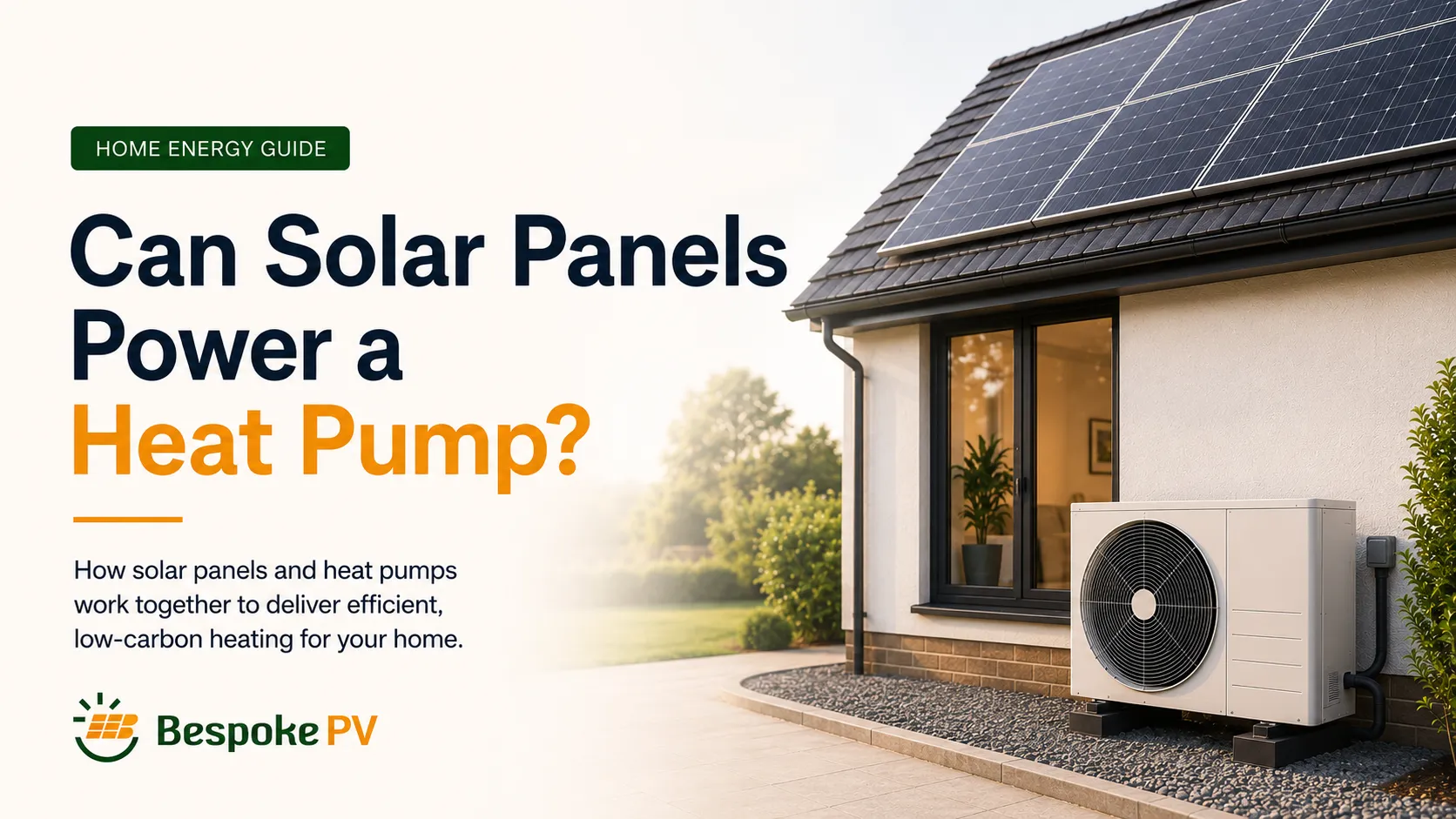
Read our guide: Can Solar Panels Power a Heat Pump?
Solar generation may help reduce future exposure to rising electricity prices.
Battery systems can improve how electricity is stored and used.
Integrated systems may support future electrification and changing household energy demand.
Rising electricity prices, global instability and increasing electrification have changed how many homeowners think about energy.
For some households, solar PV and battery storage are increasingly viewed as part of a wider resilience strategy rather than simply a way to reduce electricity bills.
Long-term energy flexibility, operational resilience and future electricity control are becoming increasingly important considerations.
Read our article: Why Solar Payback Is the Wrong Question
Energy planning increasingly involves broader long-term thinking.
Many households are increasingly planning around future energy uncertainty and electrification.
Businesses across the UK are increasingly exploring integrated EV charging and solar infrastructure.
Commercial fleets, employee charging, operational cost reduction and sustainability planning are all driving increased interest in solar-supported EV charging.
Commercial systems may also include larger battery storage systems, intelligent monitoring platforms and wider energy optimisation strategies.
Read our guide: Solar Panels for Businesses
Modern energy systems increasingly operate together.
Integrated energy systems require careful planning.
Bespoke PV designs solar PV and battery systems around real-world energy usage, future flexibility and long-term resilience.
Professionally designed systems should consider driving patterns, vehicle charging requirements, solar generation forecasts, battery storage integration, heat pump compatibility, smart tariff opportunities and long-term scalability.
As homes become increasingly electrified, intelligent system design is becoming more important than ever.
Integrated energy systems benefit from careful long-term planning.
Every household has different energy requirements and long-term goals.
Explore more Bespoke PV guides covering battery storage, electrification and long-term energy resilience.
Yes. Solar generation can contribute toward EV charging during daylight hours.
It depends on solar generation, driving habits, system size and seasonal conditions.
Yes. Battery systems can store daytime solar generation for later vehicle charging.
Smart chargers can prioritise surplus solar generation and optimise charging behaviour automatically.
Yes. EV charging can significantly increase household electricity demand and should be considered during system design.
Explore related Bespoke PV articles and renewable energy insights.
Explore renewable energy systems designed and installed by Bespoke PV.
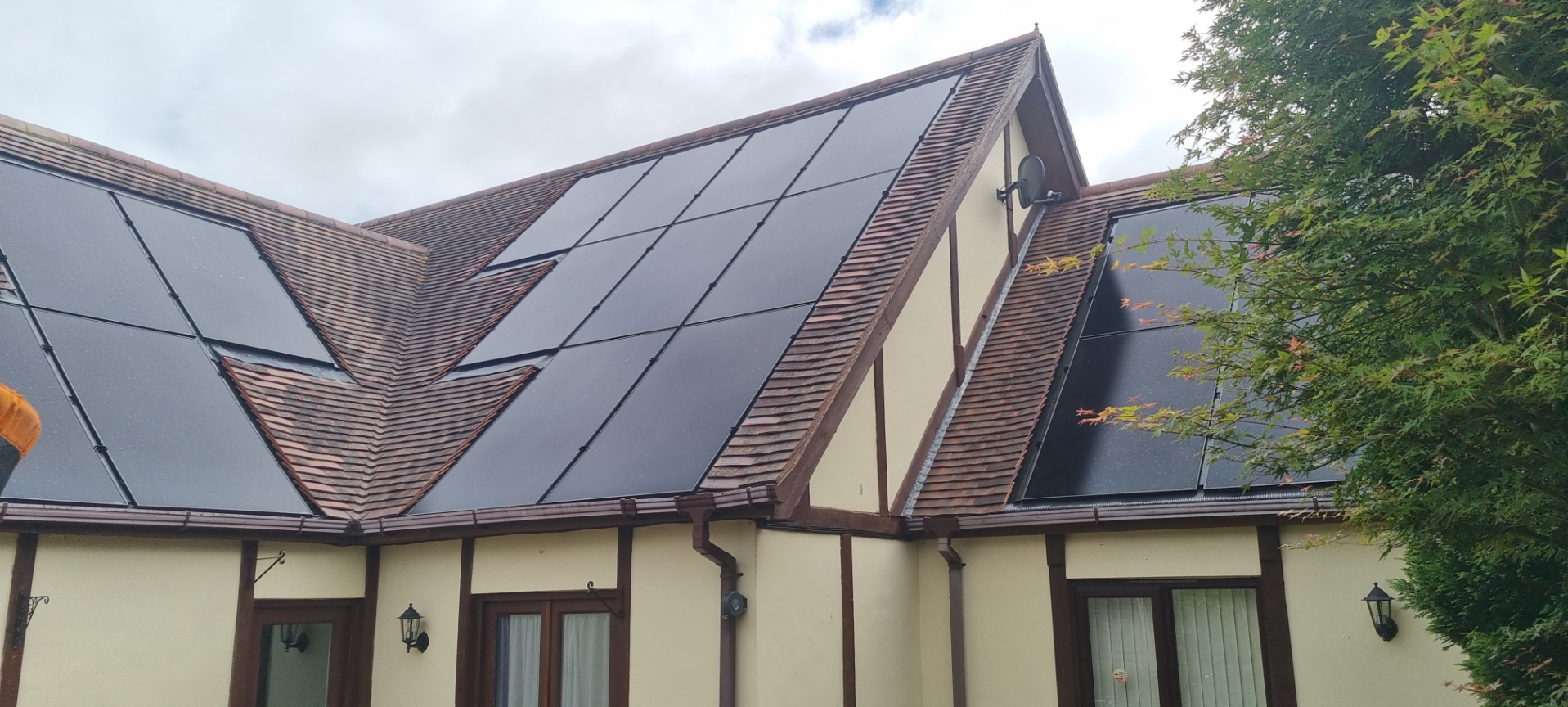

Bespoke PV designs solar PV, battery storage and EV charging systems across Hampshire, Dorset and the South Coast.
Bespoke solar PV, battery storage and EV charging systems for Southampton homes and businesses, designed around roof space, usage and future energy plans.
Solar panels in Southampton →Bespoke solar PV, battery storage and EV charging systems for homes and businesses across Winchester and Hampshire.
Solar panels in Winchester →Solar PV, battery storage and EV charging systems for homes and businesses across Portsmouth and the South Coast.
Solar panels in Portsmouth →Solar PV, battery storage and EV charging systems for homes and businesses across Bournemouth and the South Coast.
Solar panels in Bournemouth →Bespoke PV designs solar PV, battery storage and EV charging systems across Hampshire, Dorset, Wiltshire and the South Coast.
Contact Bespoke PV for tailored EV charging, solar PV and battery storage advice.