Battery Capacity (kWh)
How much energy can be stored.

When comparing home battery storage systems, many homeowners focus on battery capacity. However, power output can be just as important. Understanding the difference between kWh and kW is essential when choosing a battery that will perform properly in the real world.
Most home batteries are advertised using their storage capacity, usually measured in kilowatt-hours.
This figure tells you how much energy the battery can store.
However, it does not tell you how quickly that energy can be delivered to the home.
That second figure is battery power, usually measured in kilowatts.
Capacity and power are related, but they are not the same thing. Confusing the two can lead to unrealistic expectations about what a battery system can actually do.
How much energy can be stored.
How quickly energy can be delivered.
How much battery power can be converted for use in the home.
How much of the home's demand can be supplied at any given moment.
kWh stands for kilowatt-hour.
It is a measure of energy capacity.
In battery storage, kWh tells you how much electricity can be stored in the battery.
For example, a 10kWh battery can store roughly twice as much energy as a 5kWh battery.
A useful way to think about kWh is as the size of the fuel tank. A larger tank can hold more energy, but it does not necessarily mean that energy can be delivered quickly.
kW stands for kilowatt.
It is a measure of power.
In a battery system, kW tells you how quickly energy can be charged into the battery or discharged back into the home.
A useful way to think about kW is as the size of the pipe or the power of the engine.
A battery may contain plenty of stored energy, but if the system can only deliver a limited amount of power at once, the home may still need to import electricity from the grid during high-demand periods.
Both are important, but they describe different things.
A large battery can sound impressive on paper.
For example, a 20kWh battery may appear capable of supporting a home for a long period.
However, if that battery system can only discharge at 5kW, it can only supply up to 5kW of household demand at any one time.
If the property is using 8kW, 10kW or more, the remaining demand may still need to be imported from the grid.
This can happen even when the battery still contains stored energy.
Real homes do not use electricity in a perfectly smooth pattern.
Instead, demand rises and falls throughout the day.
A kettle, oven, hob, dishwasher, tumble dryer, washing machine, electric shower, heat pump or EV charger can all create significant short-term demand.
If several appliances are operating at the same time, total household demand can quickly exceed the output capability of some battery systems.
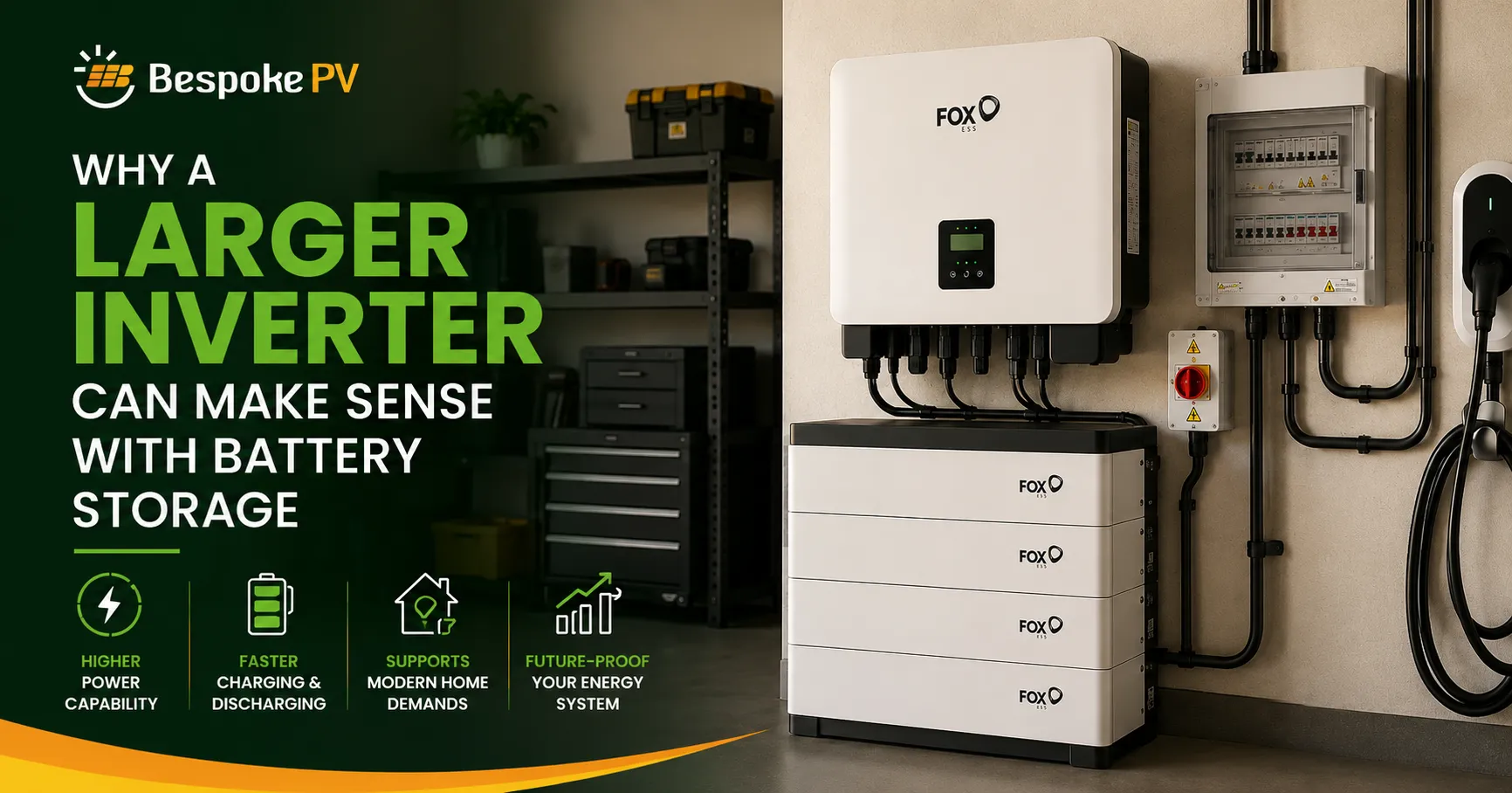
This is why battery power output and inverter sizing are so important.
These loads can significantly influence how useful a battery feels in everyday operation.
Consider two homes with the same 20kWh battery capacity.
The first system has a 5kW discharge limit.
The second system has a 10kW discharge limit.
Both systems store the same amount of energy, but they will feel very different in use.
The 5kW system may cover background loads and moderate household demand, but it may still import from the grid when several appliances are running.
The 10kW system can support a much higher level of demand before grid imports are required.
This is why two batteries with the same kWh capacity can perform very differently.
A 20kWh battery can behave very differently depending on power capability.
Power is not only important when discharging the battery.
It also affects charging speed.
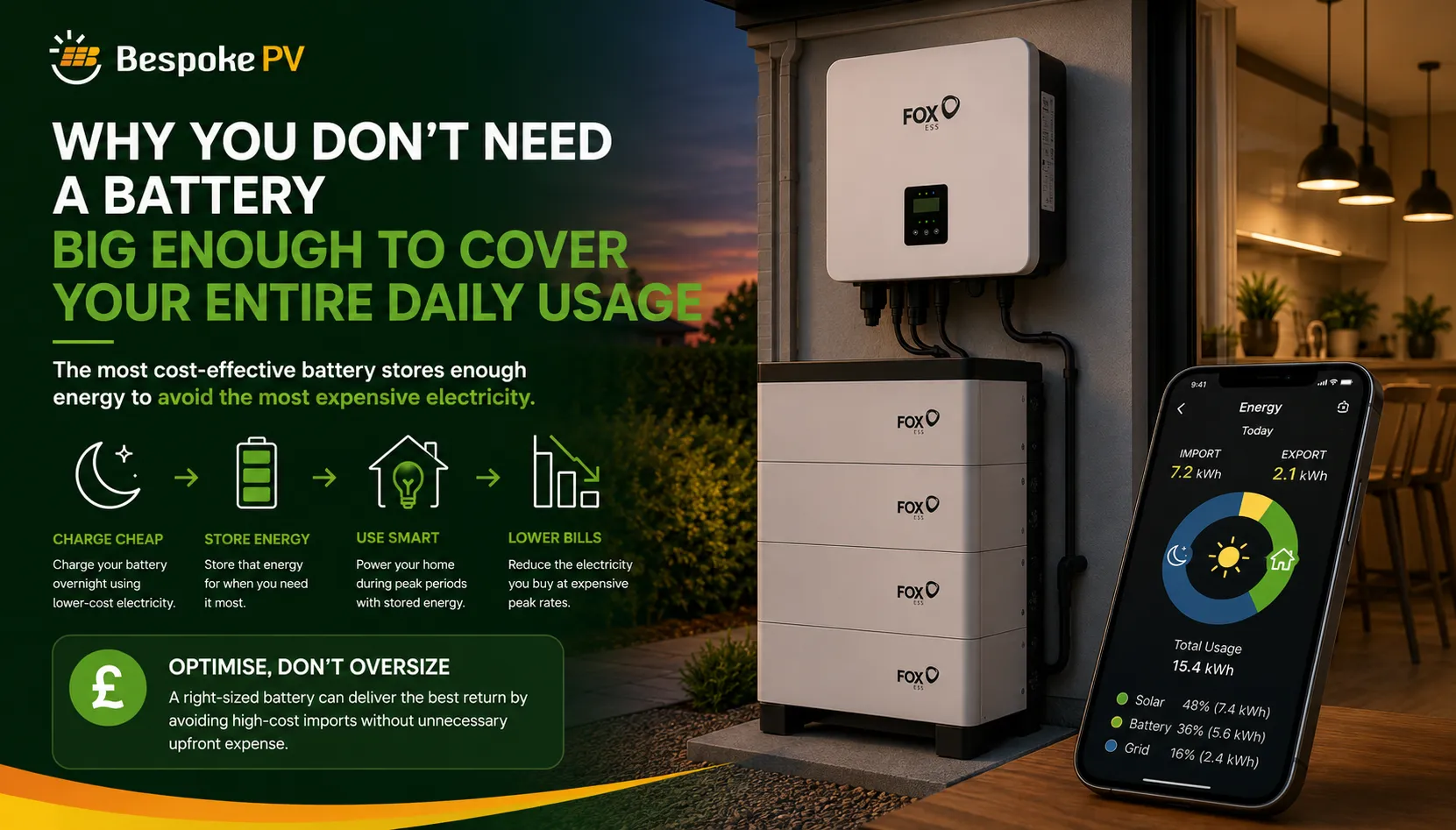
This is particularly important for homeowners using time-of-use tariffs.
If a low-cost overnight charging window only lasts a few hours, a battery with limited charge power may not be able to fully charge before the cheap rate ends.
A higher charge rate can allow more energy to be stored during low-cost periods, improving the usefulness of the battery.
The battery is only one part of the system.
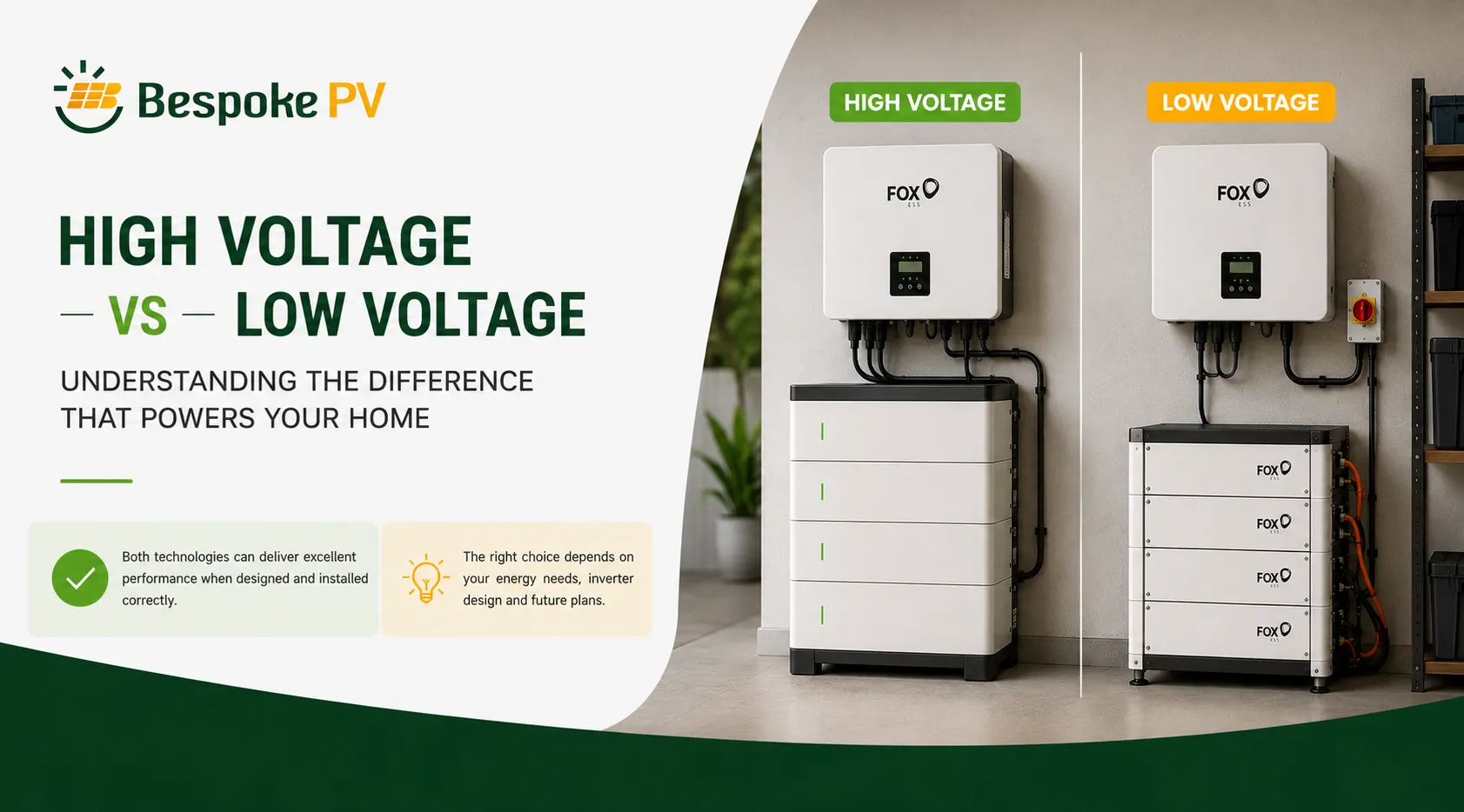
The inverter also plays a major role in determining real-world performance.
The inverter converts stored battery energy into usable household electricity and controls how much power can move into or out of the battery.
This means a large battery connected to an undersized inverter may be restricted by the inverter's power rating.
For this reason, battery capacity and inverter size should always be considered together.
We often see homeowners compare batteries by capacity alone.
In practice, the combination of battery capacity, battery power, inverter rating and household usage pattern determines how well the system will perform.
A well-designed system is not simply the one with the largest battery. It is the one that can store and deliver energy at the right times and at the right rate.
Time-of-use tariffs can make battery storage more attractive by allowing homeowners to charge during low-cost periods and discharge during higher-cost periods.
However, the system must be able to charge and discharge quickly enough to make the most of those tariff windows.
If charge power is too low, the battery may not fill during the cheap period.
If discharge power is too low, the home may still import expensive electricity during peak demand.
This is why power capability can have a direct impact on tariff optimisation.
Battery power also matters when a system is designed to provide backup power during a grid outage.
A battery may contain enough stored energy to support essential loads for several hours, but the inverter and battery must also be capable of delivering enough power at the moment those loads are required.
Critical loads backup may only require modest power output if it is supporting selected circuits such as lighting, refrigeration, internet equipment and heating controls.
Whole-home backup is usually more demanding because it may need to support larger appliances and higher simultaneous loads.
Backup design depends on both capacity and power.
Household electricity demand is increasing as homes move away from fossil fuels.
Electric vehicles, heat pumps, electric cooking and electric hot water systems can all increase both daily consumption and peak demand.
This means future battery systems need to be designed around more than today's electricity usage.
A system that looks adequate for current background loads may feel limited once an EV charger, heat pump or other high-power appliance is added.
A strong battery design considers the complete energy system.
A larger battery can be useful, but capacity alone does not guarantee better performance.
In some homes, improving power output or inverter capability may be more valuable than simply adding more kWh of storage.
For other homes, additional capacity may be justified because of backup requirements, high daily consumption or future electrification plans.
The right answer depends on how the property uses electricity and what the battery system is expected to achieve.
When comparing battery storage systems, homeowners should ask three questions.
How much energy can the battery store?
How quickly can it charge and discharge?
Can the inverter deliver enough power to support the property's real-world loads?
These questions provide a much more useful picture than capacity alone.
Understanding the difference between kWh and kW helps ensure the battery system is designed around real performance rather than headline storage figures.
Explore more Bespoke PV articles covering battery performance, inverter sizing and smart energy design.
kWh measures how much energy a battery can store, while kW measures how quickly that energy can be charged or discharged.
Battery capacity is the amount of energy a battery can store. It is usually measured in kilowatt-hours, or kWh.
Battery power describes how quickly energy can flow into or out of the battery. It is usually measured in kilowatts, or kW.
Not necessarily. A larger battery can store more energy, but power output, inverter size and household demand also affect real-world performance.
Yes. A battery may contain plenty of stored energy but still be unable to supply all household demand if its discharge power is limited.
Discharge rate determines how much power the battery can supply at one time. This affects how much of the home can be powered from stored energy.
Charge rate affects how quickly the battery can store energy from solar panels or low-cost electricity tariff periods.
Yes. Two batteries with the same storage capacity may have different charge rates, discharge rates and inverter limitations.
The inverter controls how much battery power can be converted into usable household electricity and can limit charge and discharge performance.
Yes. A large battery connected to a smaller inverter may be unable to charge or discharge at its full potential.
Both are important. kWh affects how much energy can be stored, while kW affects how much power can be delivered at any given moment.
Yes. If household demand exceeds the battery or inverter discharge capability, the home may still import electricity from the grid.
A 20kWh battery may still import from the grid if the home's demand at a given moment exceeds the system's discharge power.
Electric hobs, ovens, kettles, showers, dishwashers, washing machines, tumble dryers, heat pumps and EV chargers can all create high power demand.
Yes. Higher charge and discharge capability can help a battery make better use of limited low-cost tariff windows and reduce peak-rate imports.
Yes. A backup system must have enough stored energy and enough power output to support the required loads during a grid outage.
Critical loads backup supports selected essential circuits, while whole-home backup is designed to support most or all household circuits during a power cut.
Whole-home backup may need to support larger appliances and higher simultaneous loads, so it usually requires greater inverter and battery power capability.
EV charging, heat pumps, electric cooking and electric hot water can increase both daily electricity consumption and peak power demand.
No. Battery design should also consider peak demand, charge and discharge rates, inverter capacity, tariffs, backup requirements and future electrification.
Yes. Battery capacity is often compared to fuel tank size because it describes how much energy can be stored.
Yes. Battery power can be compared to pipe size because it describes how quickly energy can flow into or out of the battery.
In some systems, a larger inverter may improve charge and discharge capability, provided the battery is also designed to support higher power flows.
kW determines how much power the battery can deliver at one time, which affects whether the system can support several appliances running simultaneously.
Homeowners should compare battery capacity, charge rate, discharge rate, inverter size, backup capability, future expansion options and real household usage patterns.
Explore related Bespoke PV articles and renewable energy insights.

Explore renewable energy systems designed and installed by Bespoke PV.
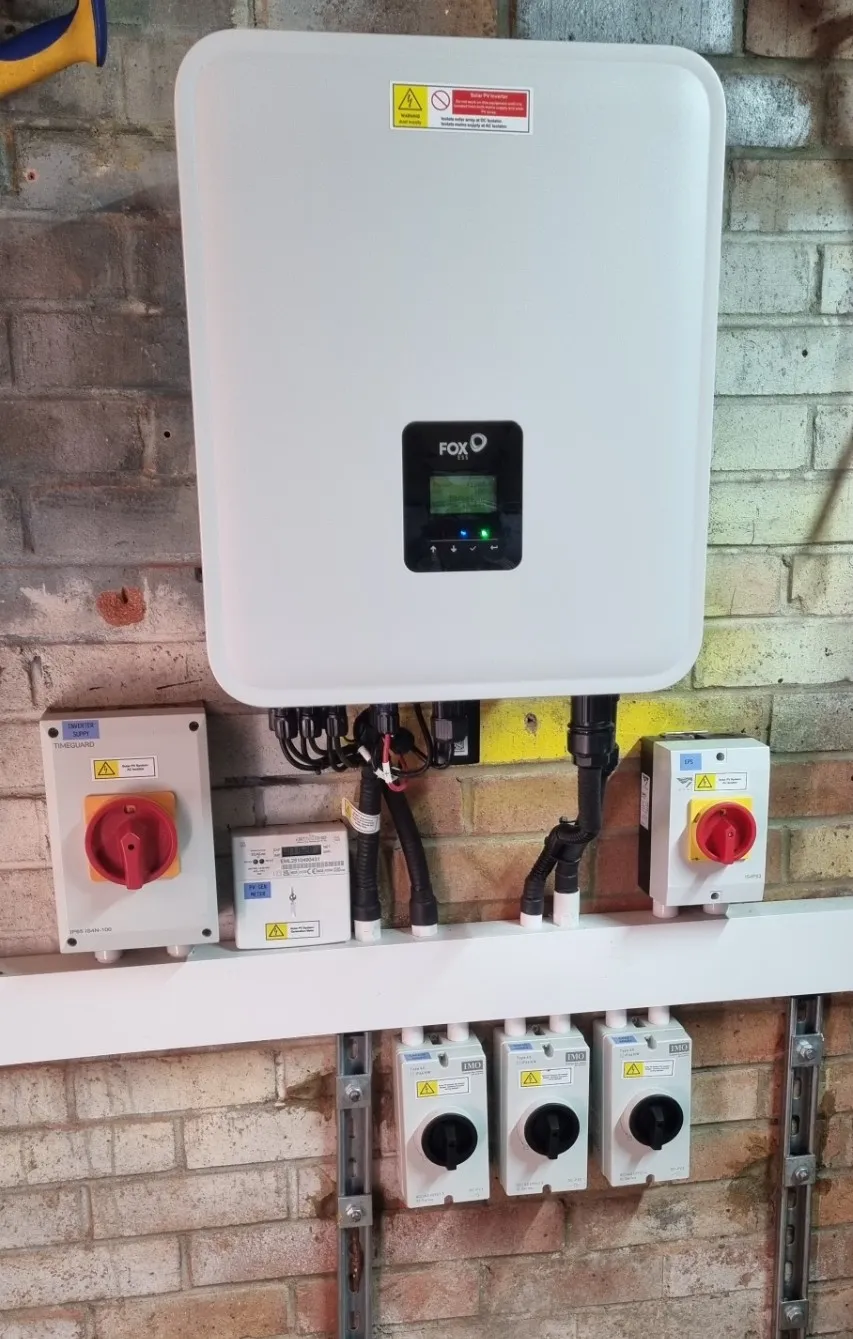
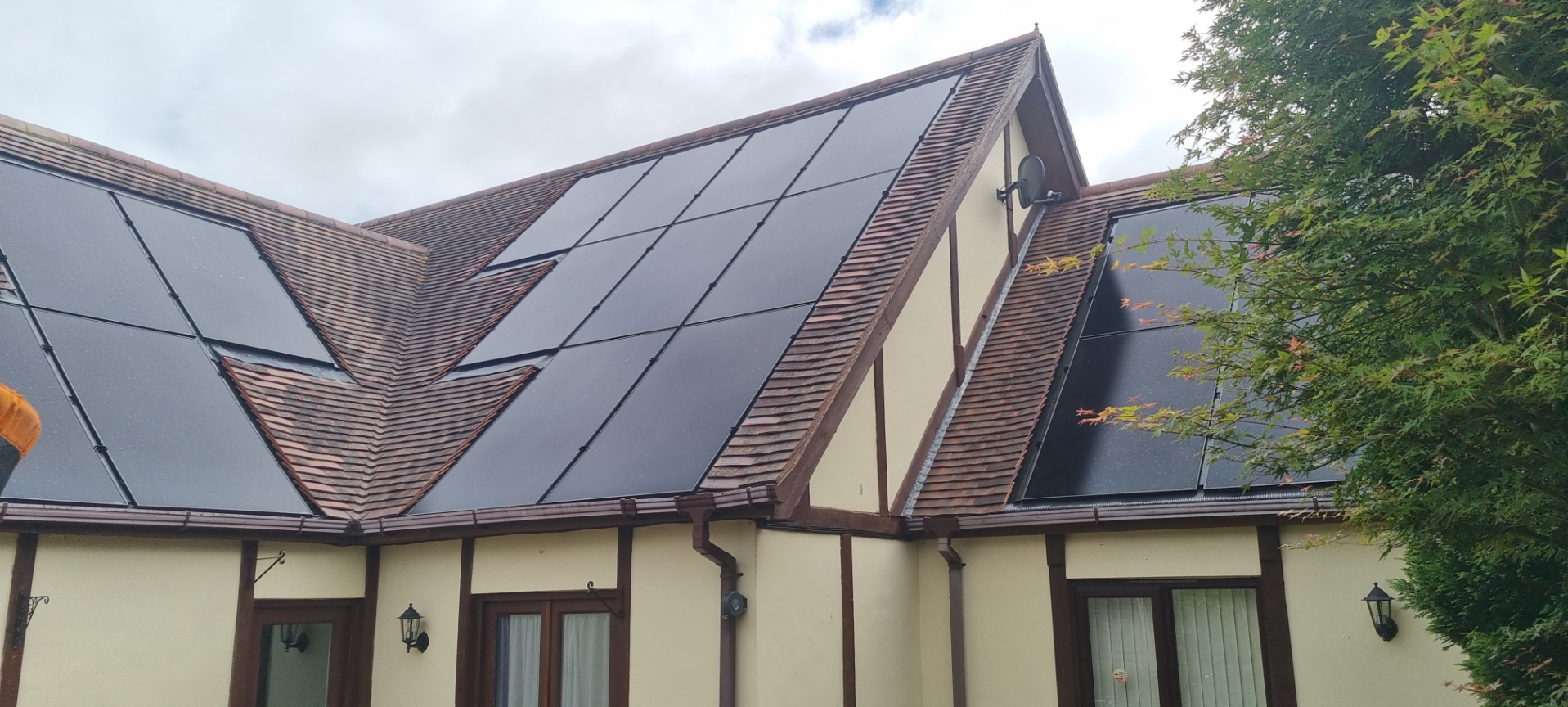
Bespoke PV designs solar PV, battery storage and EV charging systems across Hampshire, Dorset and the South Coast.
Bespoke solar PV, battery storage and EV charging systems for Southampton homes and businesses, designed around roof space, usage and future energy plans.
Solar panels in Southampton →Bespoke solar PV, battery storage and EV charging systems for homes and businesses across Winchester and Hampshire.
Solar panels in Winchester →Solar PV, battery storage and EV charging systems for homes and businesses across Portsmouth and the South Coast.
Solar panels in Portsmouth →Solar PV, battery storage and EV charging systems for homes and businesses across Bournemouth and the South Coast.
Solar panels in Bournemouth →Bespoke PV designs solar PV, battery storage and EV charging systems across Hampshire, Dorset, Wiltshire and the South Coast.
Speak with Bespoke PV about battery capacity, inverter sizing and designing a system around your home's real energy requirements.