Battery Storage
Energy is increasingly stored and shifted throughout the day.

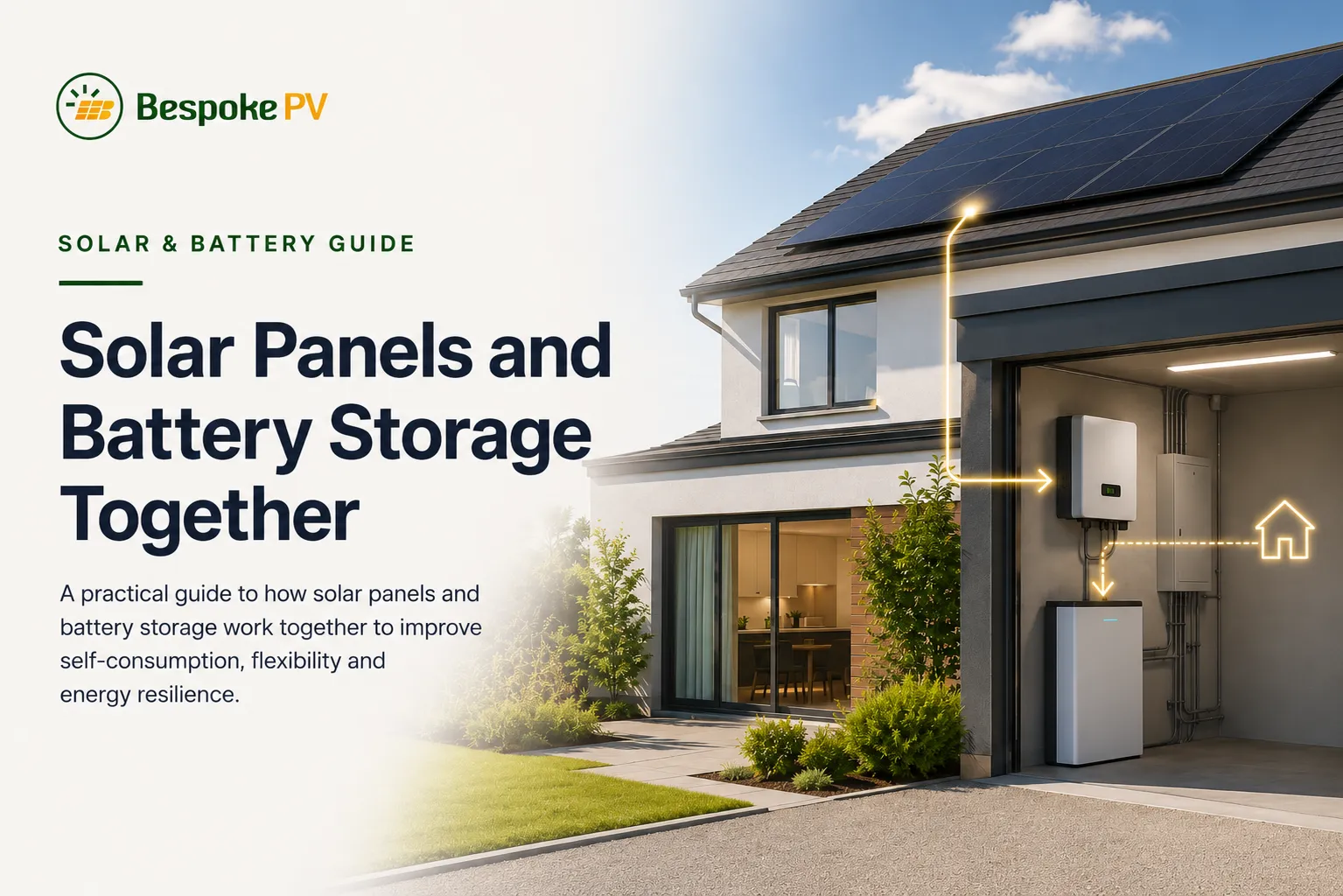
Traditional solar design often focused on matching inverter size to solar panel capacity. Modern battery storage systems change that equation entirely, making larger hybrid inverters a sensible choice in many situations.
Historically, inverter sizing was largely driven by the size of the solar array.
The inverter's primary role was to convert solar generation into usable AC electricity, with excess energy often exported to the grid.
Under this approach, closely matching inverter capacity to expected solar output made sense.
However, modern energy systems are increasingly built around battery storage, smart tariffs, EV charging and wider electrification rather than solar generation alone.
Energy is increasingly stored and shifted throughout the day.
Electric vehicles can dramatically increase household electricity demand.
Low-carbon heating often requires greater electrical capacity.
Energy is increasingly imported and exported strategically rather than passively.
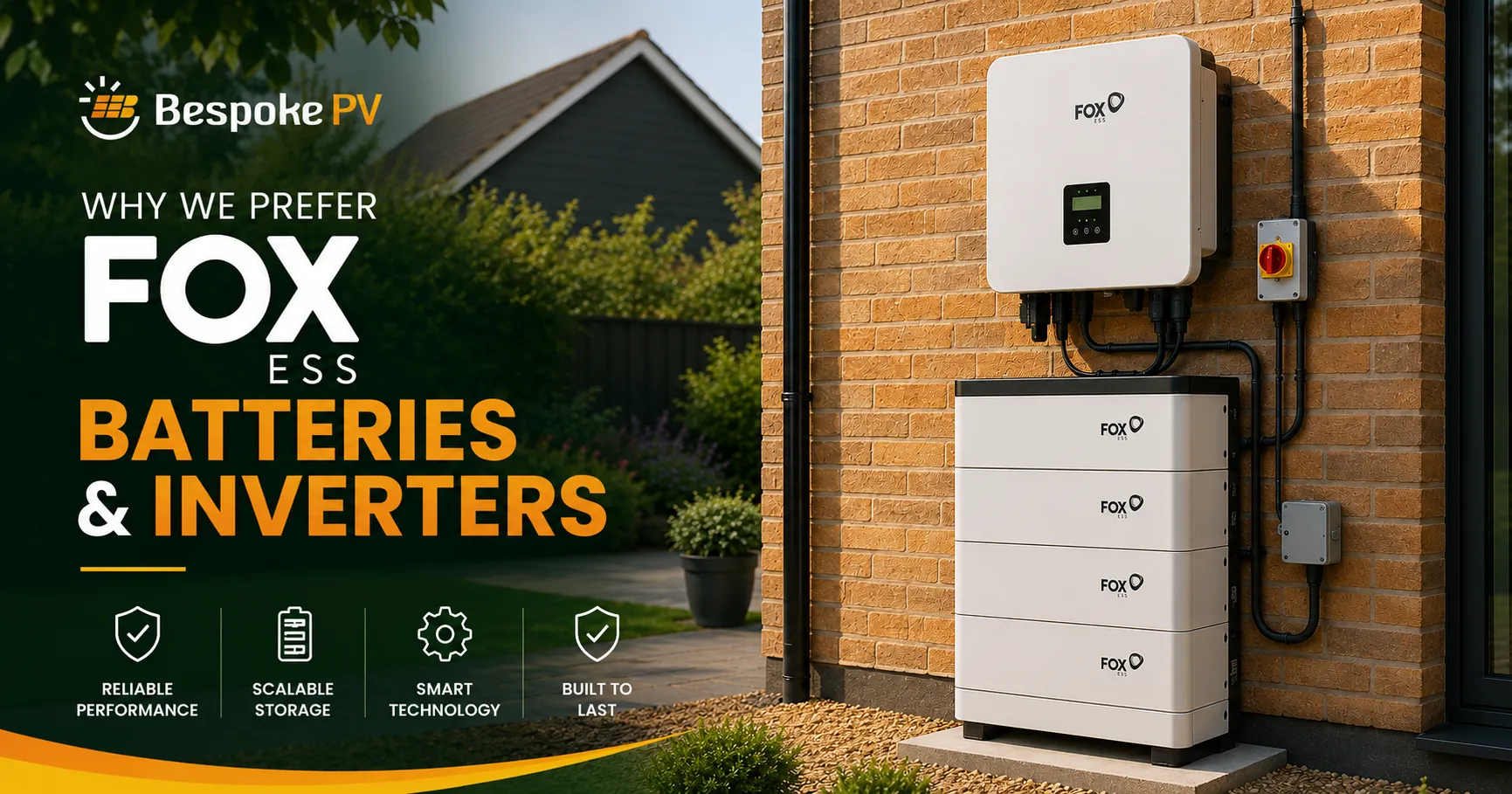
In a modern battery storage system, the hybrid inverter becomes the central energy management device for the property.
It controls battery charging and discharging, manages solar generation, coordinates grid imports and exports, supports smart tariff strategies and increasingly forms the foundation of the home's energy ecosystem.
As a result, inverter sizing should often be based on total energy flows rather than solar panel capacity alone.
Battery storage is changing how systems are designed.
One of the most common limitations we see in smaller hybrid inverter systems is restricted battery charging and discharging power.
Many homeowners focus on battery capacity measured in kilowatt-hours (kWh), but charging and discharge rates are equally important.
A large battery connected to an undersized inverter may be unable to charge or discharge at the rate the household actually requires.
This can reduce the system's ability to respond effectively to changing household demand and tariff opportunities.
These are often confused but represent different characteristics.
Many battery owners now take advantage of smart electricity tariffs that offer cheaper off-peak charging periods.
The ability to rapidly charge a battery during these lower-cost windows can have a significant impact on system economics.
A larger inverter may allow more energy to be imported and stored during limited low-cost periods, increasing flexibility and potentially improving overall savings.
Traditional solar sizing assumptions often fail to account for future electrification.
An electric vehicle, heat pump or both can substantially increase household electricity demand.
A larger inverter may help support these future loads more effectively and avoid creating bottlenecks within the energy system.
Designing purely around today's electricity usage can sometimes limit future flexibility.
Every project should be assessed individually, but larger inverters can be advantageous in many scenarios.
We increasingly design systems around long-term energy strategy rather than simply maximising solar generation.
The inverter should be viewed as part of the home's future energy infrastructure rather than merely a component sized around the solar panels installed today.
Most battery storage systems are expected to remain in service for many years.
Over that period, household energy requirements may change significantly.
EV ownership, heat pump adoption, battery expansion, changing tariff structures and increasing electrification can all alter how a system is used.
Selecting an inverter based solely on today's solar array size may not always represent the most flexible long-term approach.
Solar panels remain an important part of system design, but they are no longer the only consideration.
For many modern battery storage systems, the inverter's role extends far beyond simply converting solar power.
By considering battery charging rates, future electricity demand, smart tariff opportunities and wider electrification plans, homeowners can often achieve a more capable and future-proof energy system.
That's why inverter sizing should increasingly be viewed through the lens of whole-home energy management rather than solar generation alone.
Explore more Bespoke PV articles covering battery storage, smart tariffs and future energy planning.
Not necessarily. Modern battery storage systems are often designed around whole-home energy requirements rather than solar generation alone.
A larger inverter may provide greater battery charging and discharge capability, support future electrification and improve overall system flexibility.
Yes. In many systems, inverter capacity can influence how quickly a battery can charge and discharge.
Battery capacity is measured in kilowatt-hours (kWh) and describes how much energy can be stored. Battery power is measured in kilowatts (kW) and describes how quickly energy can be charged or discharged.
Yes. A battery with substantial storage capacity may be unable to charge or discharge at its full potential if connected to an undersized inverter.
Potentially. Larger inverters may allow batteries to charge more quickly during low-cost tariff periods, depending on system design.
Yes. Electric vehicles can significantly increase household electricity demand and may influence inverter and battery system design.
Yes. Heat pumps often increase electricity consumption and should be considered when designing future-proof energy systems.
No. Inverter sizing may also be influenced by battery storage, future electrification plans, backup requirements and smart energy strategies.
In some cases, yes. Greater inverter capacity can improve charging and discharge capability, helping the battery respond more effectively to household demand.
Potentially. Higher charging power may allow more energy to be stored during limited off-peak tariff windows.
Not always. Future electricity demand from EVs, heat pumps and battery expansion may justify a different approach.
A hybrid inverter manages solar generation, battery charging and discharging, grid imports and exports, and wider energy flows throughout the property.
Most energy systems remain in service for many years. Future-proofing can help accommodate changing energy demands, technologies and tariff structures.
Solar generation, battery storage, charging and discharge requirements, EV charging, heat pumps, smart tariffs, backup power requirements and future expansion plans should all be considered.
Explore related Bespoke PV articles and renewable energy insights.
Explore renewable energy systems designed and installed by Bespoke PV.
Bespoke PV designs solar PV, battery storage and EV charging systems across Hampshire, Dorset and the South Coast.
Bespoke solar PV, battery storage and EV charging systems for Southampton homes and businesses, designed around roof space, usage and future energy plans.
Solar panels in Southampton →Bespoke solar PV, battery storage and EV charging systems for homes and businesses across Winchester and Hampshire.
Solar panels in Winchester →Solar PV, battery storage and EV charging systems for homes and businesses across Portsmouth and the South Coast.
Solar panels in Portsmouth →Solar PV, battery storage and EV charging systems for homes and businesses across Bournemouth and the South Coast.
Solar panels in Bournemouth →Bespoke PV designs solar PV, battery storage and EV charging systems across Hampshire, Dorset, Wiltshire and the South Coast.
Speak with Bespoke PV about designing a future-proof solar and battery storage system around your home's long-term energy requirements.