Daytime Generation Peaks
Solar generation is often highest during midday hours when many households use less electricity.

Solar panels often generate more electricity than a property is using at certain times of the day. Understanding what happens to that excess energy is important when planning solar PV and battery storage systems.
This means excess solar energy does not automatically go to waste.
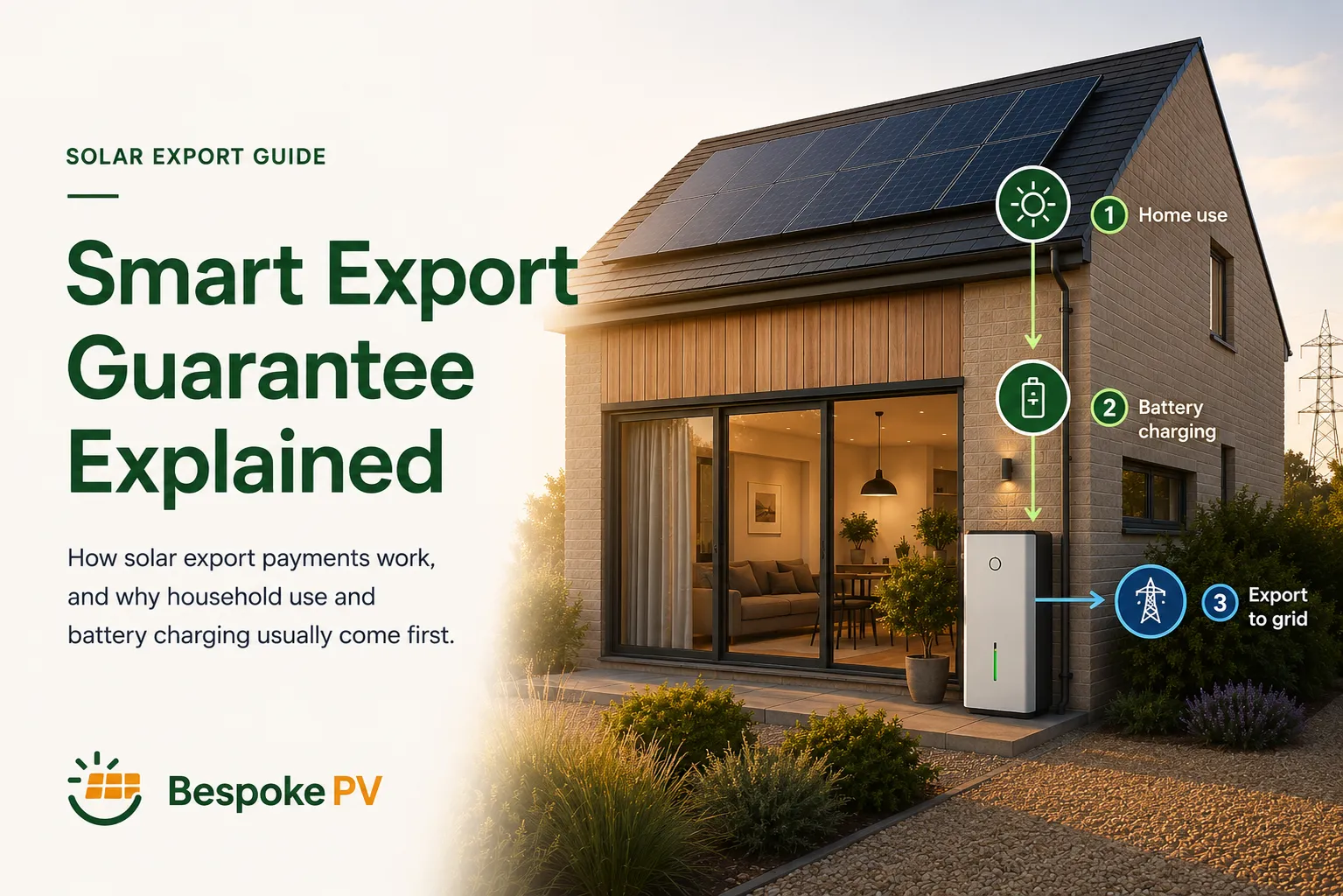
Solar generation is normally prioritised in a specific order.
Electricity generated by the solar panels is typically used:
Solar generation is often highest during midday hours when many households use less electricity.
Electricity demand often increases later in the evening when solar generation falls.
Summer months may produce significantly more surplus electricity than winter months.
Without battery storage, surplus electricity is usually exported back to the grid automatically.
Depending on the tariff arrangement, homeowners may receive export payments for this electricity through schemes such as the Smart Export Guarantee.
However, exported electricity is often financially less valuable than electricity used directly within the property.
Read our guide: Smart Export Guarantee Explained
Many homeowners initially focus heavily on export tariffs, but increasingly the real value comes from improving self-consumption and reducing imported electricity usage.
Battery storage, EV charging and smart energy management are all helping households retain more solar energy on-site.
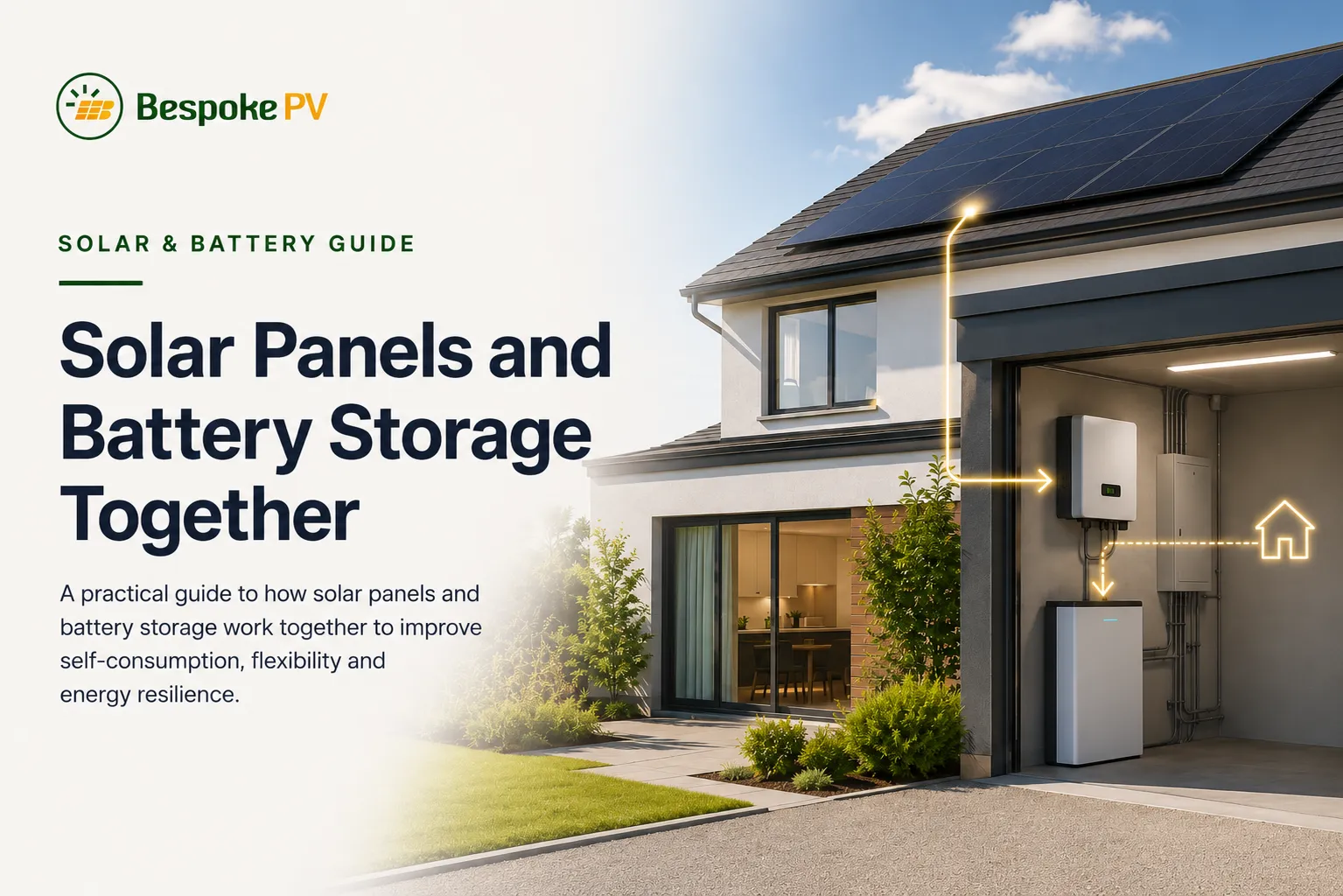
Battery storage changes how solar energy flows through the property.
Battery systems significantly change how excess solar energy is used.
Instead of exporting all surplus electricity immediately, battery storage allows excess generation to be stored for later use.
This may help:
Electricity prices are changing how homeowners think about solar energy.
Increasingly, households are prioritising using more generated electricity directly within the property rather than exporting it to the grid.
This is because imported electricity often costs substantially more than export tariffs pay.
As battery storage, EV charging and wider electrification increase, self-consumption is becoming increasingly important within long-term household energy planning.
Many homeowners initially assume exported electricity is the main benefit of solar PV, but this is often not the case.
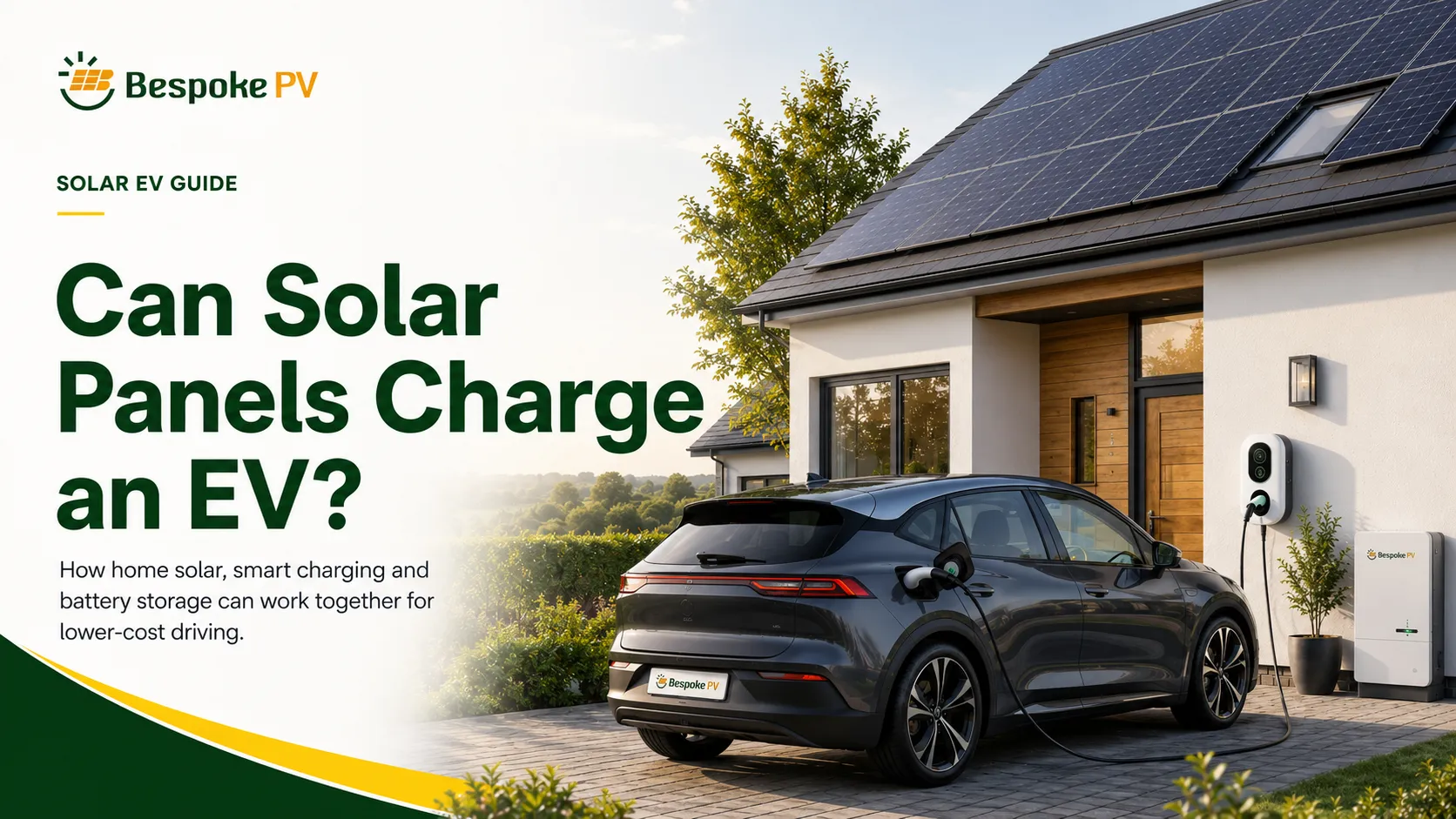
Yes. Solar generation can contribute toward electric vehicle charging.
Some smart EV chargers can prioritise surplus solar generation rather than importing electricity from the grid.
This may increase self-consumption while reducing exported electricity.
As EV adoption increases, many households are increasingly viewing solar PV, battery storage and EV charging as one integrated energy system.
Read our guide: Can Solar Panels Charge an EV?
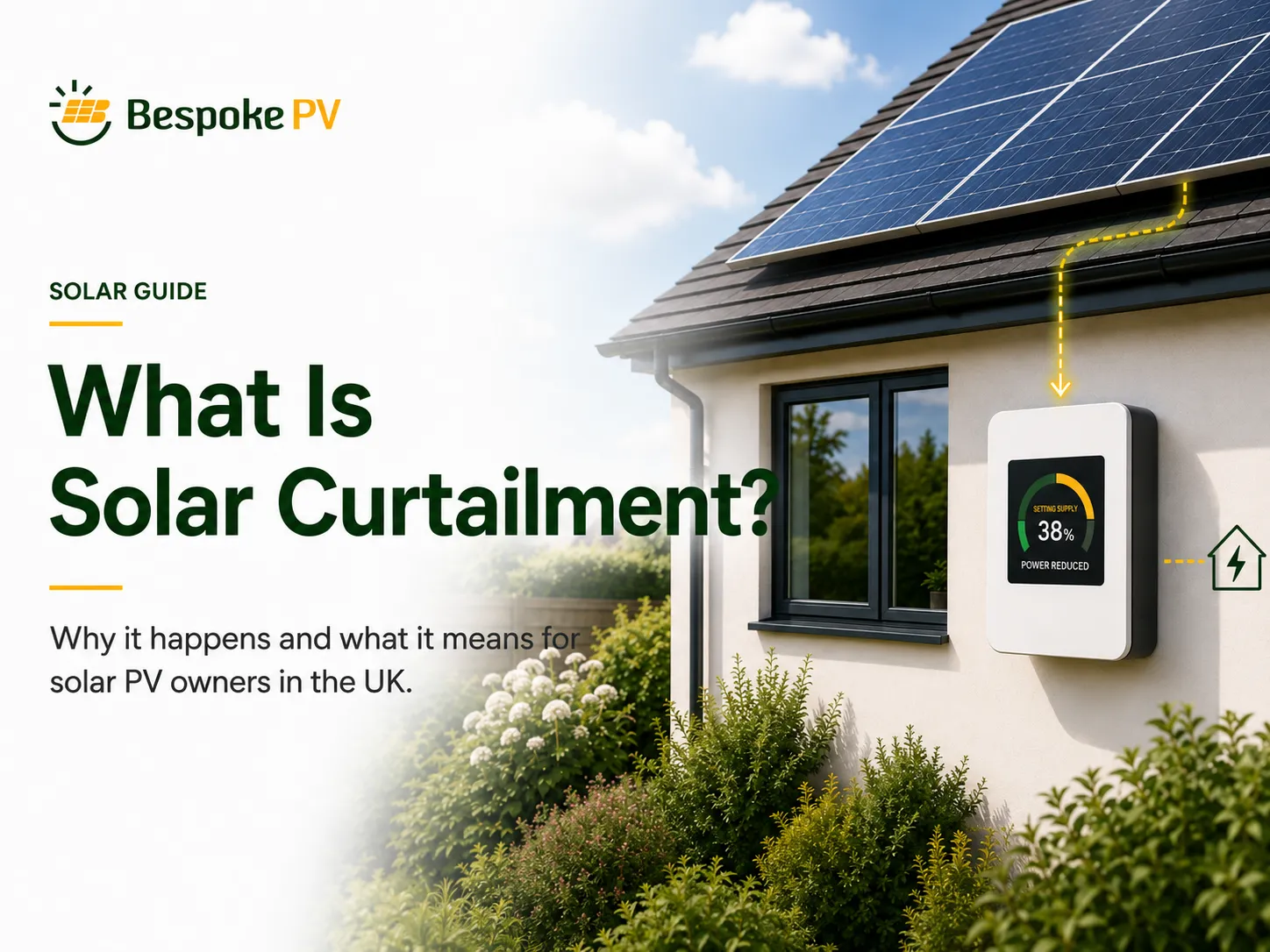
This is sometimes referred to as solar curtailment.
In some situations, generation may be intentionally reduced.
Certain systems may reduce output due to:
Modern solar PV systems are increasingly integrated with battery storage, smart EV chargers and time-of-use electricity tariffs.
These technologies can help households use more solar electricity directly within the property rather than exporting it immediately.
As electricity demand becomes more flexible, intelligent energy management is becoming increasingly important.
Solar generation and household electricity demand do not always occur at the same time.
Many homes generate the most solar electricity during the middle of the day while electricity demand often increases later in the evening.
This timing mismatch is one reason battery storage, smart EV charging and intelligent energy management are becoming increasingly important.
By shifting electricity usage toward periods of solar generation, households may improve self-consumption and reduce imported electricity.
Smart controls can help households use more solar electricity directly.
Some smart home technologies can respond automatically to surplus solar generation.
Solar PV is increasingly part of a wider household energy ecosystem.
As household electrification increases, retaining more solar energy on-site may become increasingly valuable.
As electricity prices rise and homes become increasingly electrified, surplus solar generation may become more strategically valuable over time.
Electric vehicles, heat pumps and battery systems are all increasing household electricity demand.
Because of this, many homeowners are now viewing excess solar energy as part of a wider long-term energy flexibility strategy rather than simply focusing on export payments alone.
Historically, many homeowners focused mainly on annual generation figures.
Today, rising electricity prices and wider electrification mean the timing of generation and how electricity is used have become increasingly important.
Battery storage, EV charging and smart energy management can all influence how valuable excess solar energy becomes over time.
Good design improves long-term energy optimisation and resilience.
A properly designed system should balance generation, storage and household usage.
Good solar PV system design should consider:
Explore more Bespoke PV guides covering battery storage, exports and smart energy usage.
Surplus electricity is usually exported to the grid unless battery storage is installed.
Yes. Battery storage systems can retain surplus generation for later use.
Often yes. Electricity used directly within the property is usually more valuable than exported electricity.
Yes. Smart EV charging systems can prioritise surplus solar generation.
Yes. Some systems may curtail generation due to export limits or grid constraints.
Explore related Bespoke PV articles and renewable energy insights.
Explore renewable energy systems designed and installed by Bespoke PV.
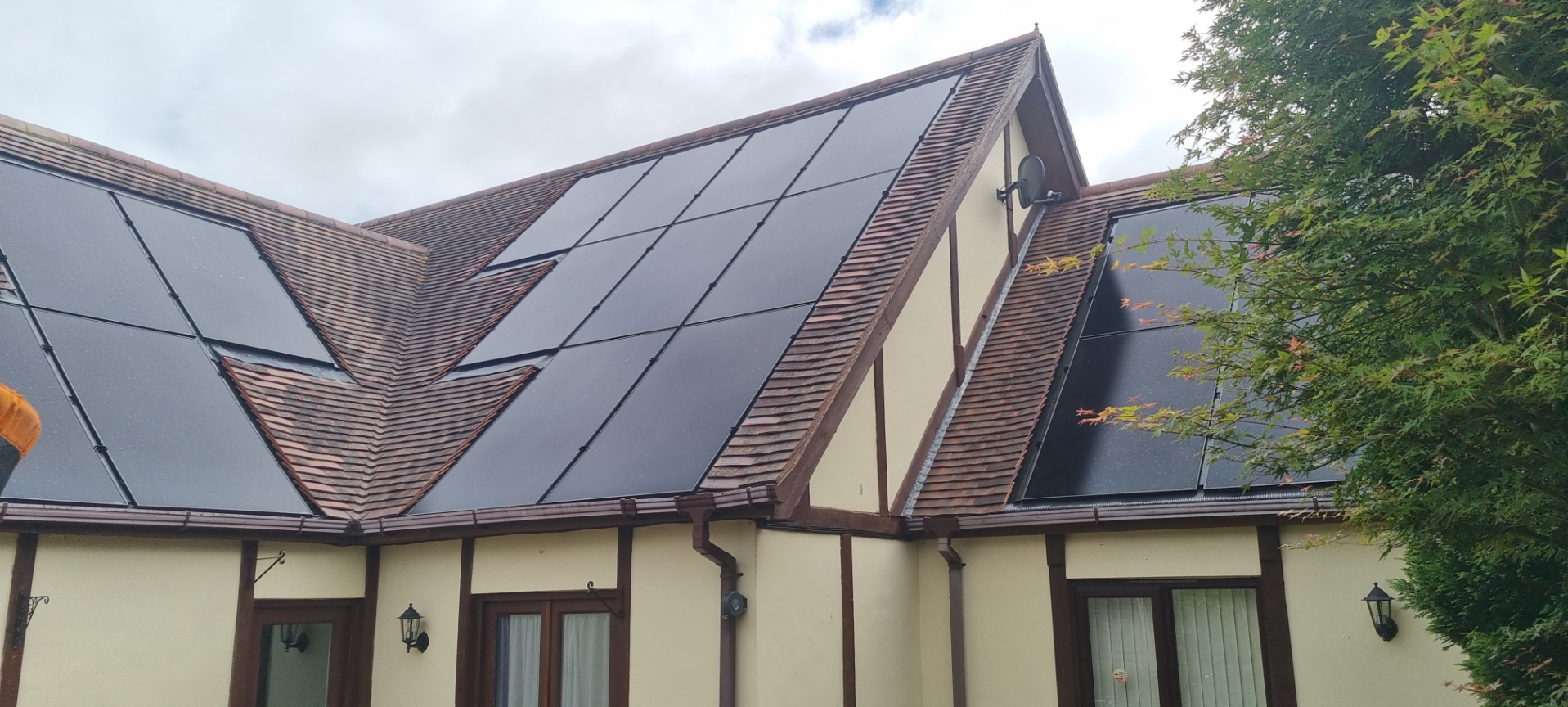

Bespoke PV designs solar PV, battery storage and EV charging systems across Hampshire, Dorset and the South Coast.
Bespoke solar PV, battery storage and EV charging systems for Southampton homes and businesses, designed around roof space, usage and future energy plans.
Solar panels in Southampton →Bespoke solar PV, battery storage and EV charging systems for homes and businesses across Winchester and Hampshire.
Solar panels in Winchester →Solar PV, battery storage and EV charging systems for homes and businesses across Portsmouth and the South Coast.
Solar panels in Portsmouth →Solar PV, battery storage and EV charging systems for homes and businesses across Bournemouth and the South Coast.
Solar panels in Bournemouth →Bespoke PV designs solar PV, battery storage and EV charging systems across Hampshire, Dorset, Wiltshire and the South Coast.
Contact Bespoke PV for tailored advice on solar PV, battery storage and smart energy management.