What Needs Power?
Selected essential circuits or the whole property?

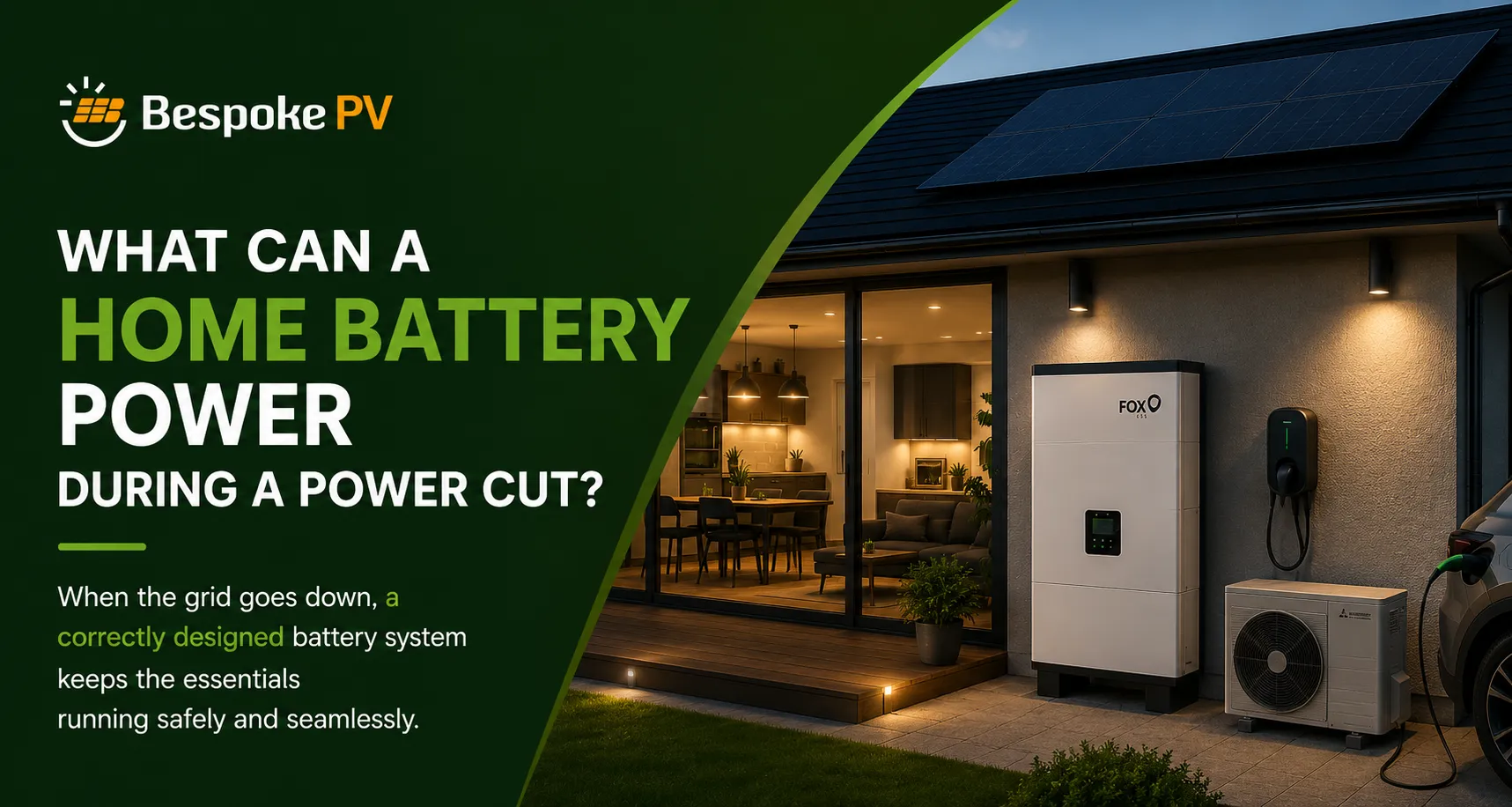
Many homeowners assume that installing battery storage automatically means the whole house will keep running during a power cut. In reality, backup power needs to be designed carefully, and there is a major difference between supporting critical loads and providing whole-home backup.
One of the most common misunderstandings about home battery storage is that every battery system provides backup power during a grid outage.
This is not always the case.
Many battery systems are designed primarily for solar self-consumption, smart tariff optimisation or reducing grid imports.
Backup power is a separate design requirement and should be discussed before the system is installed.
If backup capability is important, the battery, inverter, wiring arrangement and reserve settings all need to be specified accordingly.
Backup power should never be assumed simply because a battery has been installed.
Many battery systems are designed to reduce grid imports, store solar generation or take advantage of time-of-use tariffs, but they may still shut down during a power cut unless backup functionality has been specified.
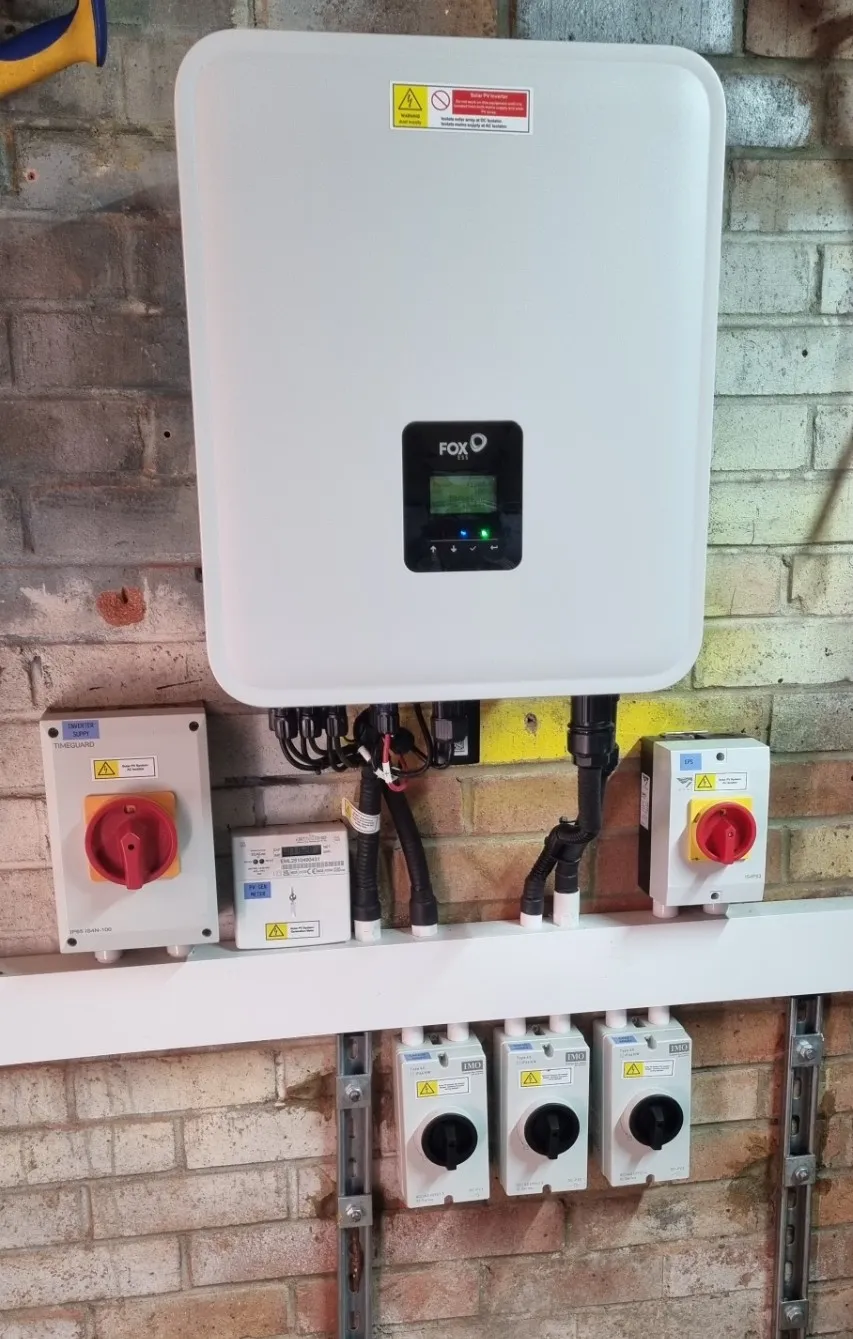
To provide backup power, the system may require suitable inverter capability, additional wiring, backup circuits, isolation arrangements and appropriate battery reserve settings.
This is why backup requirements should always be discussed before installation rather than treated as an optional feature later.
Selected essential circuits or the whole property?
Can the inverter support the loads that may run at the same time?
Is the battery capacity sufficient for the expected outage duration?
Should energy be held back specifically for emergencies?
Critical loads backup is designed to support selected essential circuits during a power cut.
Rather than attempting to power the entire property, the system supplies only the loads considered most important.
These might include lighting, refrigeration, internet equipment, heating controls, security systems or medical equipment.
Because fewer circuits are supported, critical loads backup can often provide longer runtime from the same battery capacity.
It can also reduce the inverter power requirement compared with whole-home backup.
Whole-home backup is designed to support most or all of the property's electrical circuits during a grid outage.
This can provide a more seamless experience because the homeowner does not need to think as carefully about which circuits are protected.
However, whole-home backup is much more demanding.
Modern homes can contain high-power loads such as electric ovens, hobs, showers, heat pumps, tumble dryers and EV chargers.
Supporting these loads requires careful design around inverter capacity, battery discharge capability, reserve energy and load management.
The right approach depends on what the system is expected to achieve.
Whole-home backup sounds attractive, but it can place significant demands on a battery system.
During normal operation, a home may have several high-power appliances running at the same time.
An electric hob, electric oven, kettle, dishwasher, washing machine, tumble dryer, electric shower or heat pump can quickly increase demand.
If the battery and inverter cannot supply enough power at that moment, the system may overload, shut down or require load management.
This is why whole-home backup should never be assumed simply because a battery is installed.
These appliances can significantly increase backup power requirements.
For many homeowners, critical loads backup provides the best balance between resilience and cost.
Rather than trying to run everything, the system is designed to keep the most important parts of the property operating.
This might mean keeping lights on, preserving fridge and freezer contents, maintaining internet access and allowing heating controls to function.
Because energy is focused on essential loads, the battery may last significantly longer during an outage.
This can be particularly useful where the goal is resilience rather than normal whole-home operation.
Critical loads vary between properties, but usually focus on essential services.
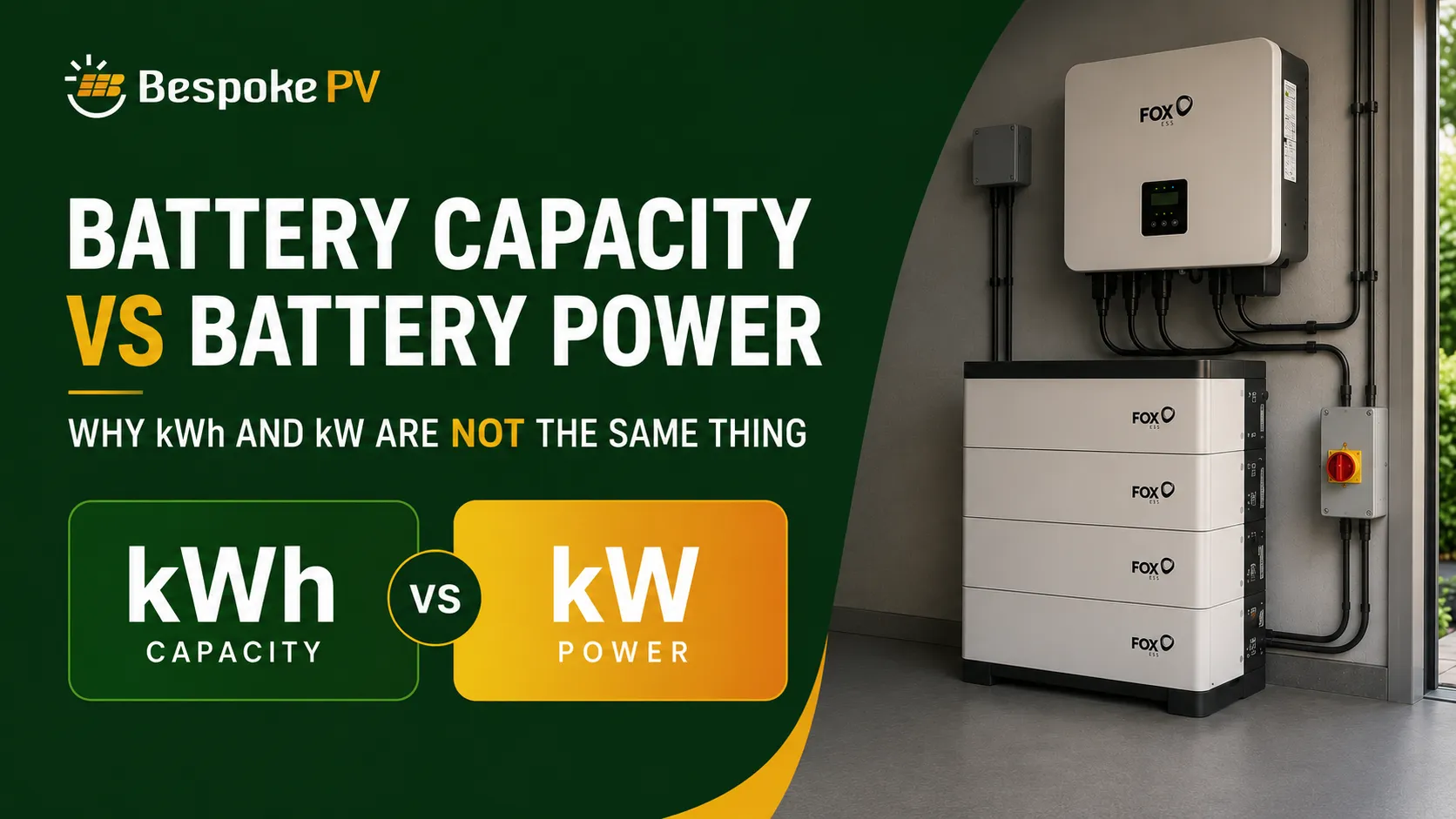
Backup design depends on both stored energy and power output.
Battery capacity, measured in kWh, determines how much energy is available.
Battery and inverter power, measured in kW, determines how much demand can be supported at any one time.
A battery may contain enough stored energy for several hours of essential loads, but the inverter must still be able to deliver sufficient power when those loads are running.
This is why kWh and kW should both be considered when designing backup power.
One of the main concerns with whole-home backup is whether the system can support normal household demand during an outage.
A smaller inverter may require homeowners to be much more careful about which appliances are used at the same time.
For example, cooking, heating, laundry and general household loads can quickly exceed the output capability of a smaller backup system.
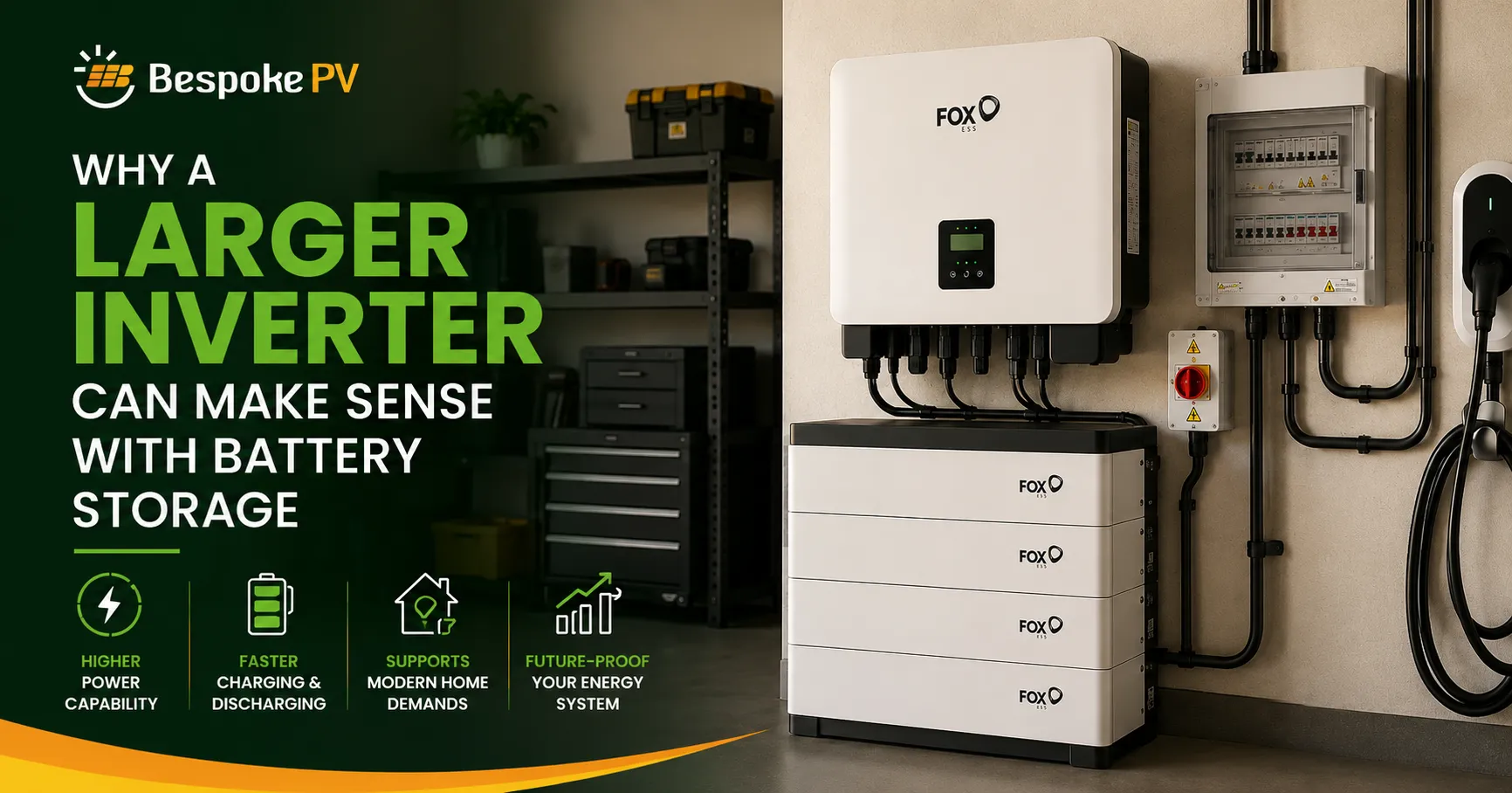
Where a sufficiently large battery is installed, specifying a larger inverter can help reduce these limitations by allowing more stored energy to be delivered to the home at once.
This does not mean the battery can power unlimited loads, but it can make the backup experience feel much closer to normal household operation.
In practical terms, a larger inverter can reduce the likelihood of nuisance overloads, reduce the need for strict load management and allow more appliances to operate simultaneously during a power cut.
However, the battery must also be capable of supporting the higher discharge rate. A larger inverter alone is not enough if the battery cannot deliver the required power.
Inverter capacity can significantly affect how backup power feels in real-world use.
If backup power is a key requirement, reserve capacity becomes very important.
A battery used purely for tariff optimisation may be discharged deeply each day to reduce electricity bills.
However, if the battery is almost empty when a power cut occurs, there may be little energy available for backup operation.
Many battery systems allow a minimum reserve state of charge to be maintained.
This means a chosen percentage of the battery is held back for emergency use rather than being used for normal tariff savings.
These objectives can sometimes conflict.
Battery backup systems may operate differently depending on the equipment and design.
Some systems provide an emergency power supply output for selected circuits, while others may be configured with automatic changeover equipment to support wider parts of the property.
There may also be a short interruption before backup power becomes available.
The exact behaviour depends on the inverter, battery system, wiring design and backup configuration.
For this reason, homeowners should understand what will happen during a power cut before choosing a backup design.
A battery designed for savings is not automatically a battery designed for resilience.
If backup power is important, the system should be designed around what needs to stay on, how long it needs to stay on for, and how much reserve energy should be kept available.
These decisions should be made before installation, not after the first power cut.
Backup duration depends heavily on what the battery is asked to power.
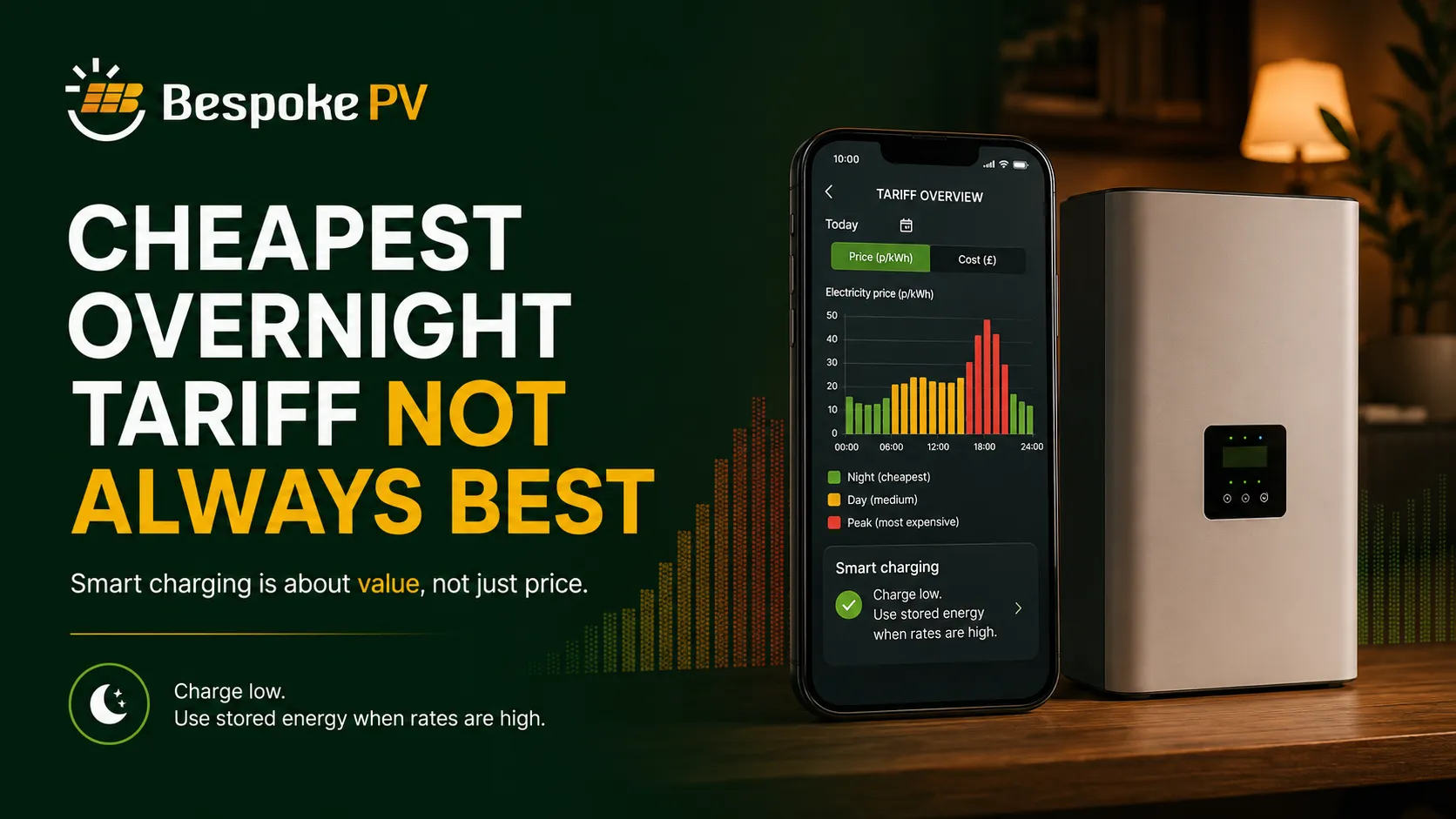
Many battery systems are used with time-of-use tariffs, charging during low-cost periods and discharging when electricity is more expensive.
This can be highly effective for reducing bills.
However, if the battery is also expected to provide backup power, the control strategy may need to change.
Maintaining a reserve level means less battery capacity is available for tariff optimisation.
The right balance depends on whether the homeowner prioritises maximum savings, backup resilience or a combination of both.
Whole-home backup does not always mean every appliance can be used as normal at the same time.
Even if a system is wired to support the whole property, high-demand appliances may need to be managed during an outage.
For example, running an electric shower, hob, oven, tumble dryer and heat pump simultaneously could exceed the inverter's output capability or drain the battery very quickly.
A well-designed whole-home backup system should therefore consider both automatic protection and homeowner behaviour during outages.
Whole-home backup can provide a more convenient experience during a power cut, but it does not always mean every appliance should be used normally.
High-demand appliances can quickly drain the battery or exceed the inverter's output capability.
During an outage, homeowners may need to avoid using multiple high-power appliances at the same time, such as electric showers, ovens, hobs, tumble dryers or EV chargers.
A well-designed system can provide resilience, but sensible load management can make the stored energy last much longer.
EV chargers can place very high demands on a backup system.
In many cases, EV charging may need to be excluded, limited or carefully controlled during backup operation.
Using stored home battery energy to charge an electric vehicle during a power cut could rapidly deplete the battery and reduce the energy available for essential household loads.
For this reason, EV charging should be considered separately when designing backup power.
Heat pumps can also influence backup design.
Some homeowners may want heating to continue during a power cut, particularly where heat pumps provide the primary heating source.
However, heat pump electrical demand varies depending on weather, system type, property heat loss and operating conditions.
If heat pump backup is required, the system should be designed with realistic power demand and expected runtime in mind.
Backup capability should be specified around real-world requirements.
A battery-only system can provide backup power if designed correctly, but it is limited to the energy already stored in the battery when the outage occurs.
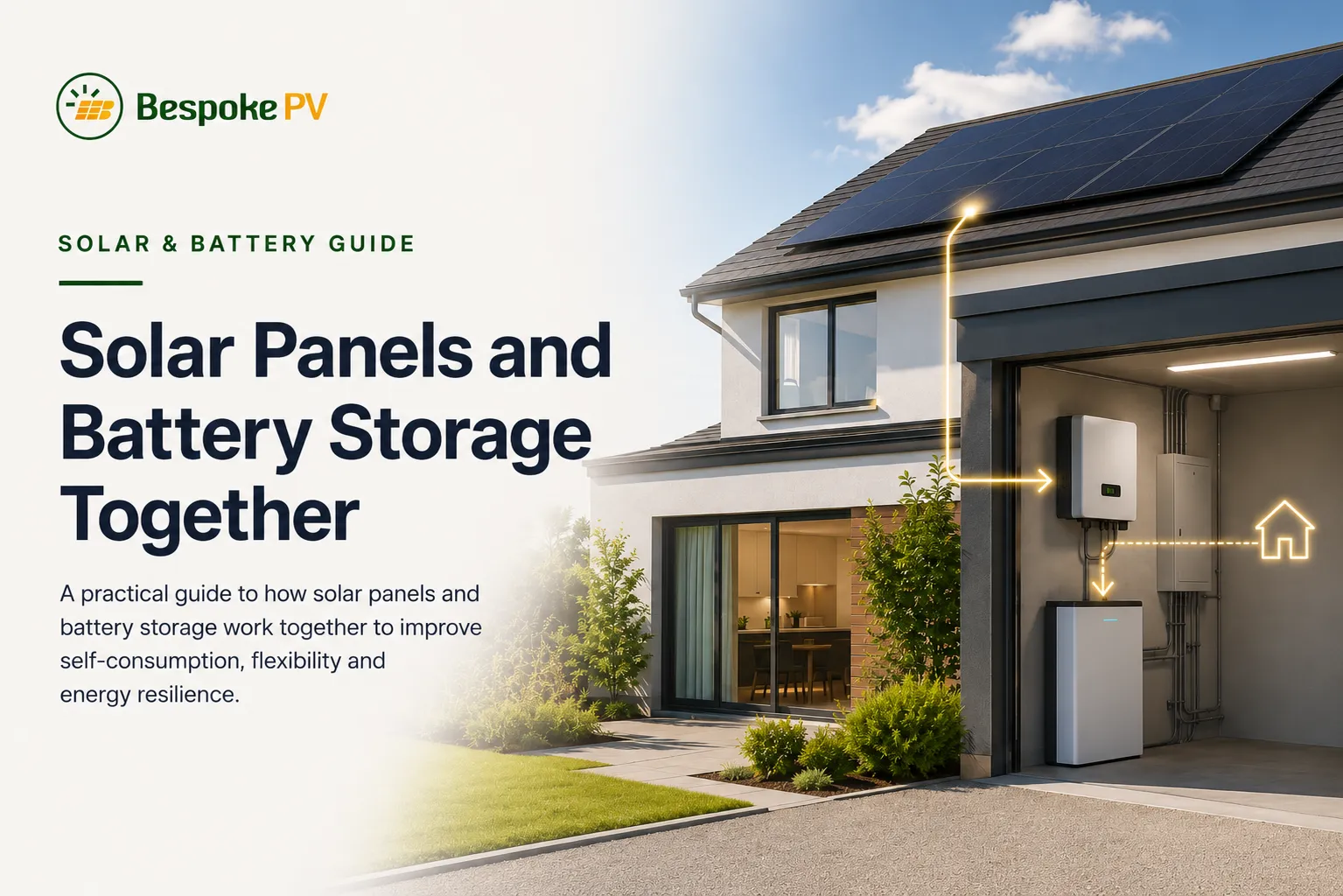
A solar and battery system may be able to provide additional energy during daylight hours, depending on system design, weather conditions and backup configuration.
However, solar generation during a power cut should not be assumed unless the system is specifically designed to operate in that way.
This is another reason why backup requirements should be discussed at the design stage.
There is no single best backup design for every home.
Critical loads backup may be the most practical choice for homeowners who want essential resilience at a sensible cost.
Whole-home backup may be appropriate for properties where greater convenience, larger loads or more comprehensive resilience are required.
The right answer depends on budget, property layout, electrical demand, outage expectations and how the battery system will be used day to day.
Backup power should be designed around realistic expectations rather than assumptions.
A battery system can reduce electricity bills, support smart tariff use and improve resilience, but each objective affects the design.
If backup power matters, the system must be specified around the loads that need to remain powered, the inverter capacity required, the battery reserve level and the expected duration of outages.
That is the difference between simply having a battery and having a properly designed backup power system.
Explore more Bespoke PV articles covering battery performance, inverter sizing, backup design and smart energy systems.
No. Many battery systems are designed for tariff optimisation or solar self-consumption and do not automatically provide backup power during a grid outage.
Critical loads backup supports selected essential circuits such as lighting, refrigeration, internet equipment, heating controls or medical equipment during a power cut.
Whole-home backup is designed to support most or all household circuits during a grid outage, subject to inverter capacity, battery size and system design.
Critical loads backup supports selected essential circuits, while whole-home backup is designed to support most or all electrical circuits in the property.
Yes. Whole-home backup usually requires greater inverter power, battery capacity and discharge capability because it may support larger household loads.
Critical loads backup focuses stored energy on essential circuits, which can reduce system requirements and help the battery last longer during an outage.
It depends on the battery capacity, inverter output, system design and household demand at the time of the outage.
Possibly, but high-demand appliances such as ovens, showers, tumble dryers, heat pumps and EV chargers require careful backup design.
Common critical loads include lighting, fridge, freezer, internet router, heating controls, security systems, medical equipment and selected socket circuits.
An electric shower is a very high-power load and may not be suitable for backup operation unless the system is specifically designed to support it.
EV charging is usually restricted, excluded or carefully controlled during backup operation because it can rapidly deplete the home battery.
Potentially, yes, but heat pump backup requires careful assessment of power demand, expected runtime, battery capacity and inverter capability.
The inverter determines how much power can be supplied at one time, which affects whether the system can support the required backup loads.
Battery capacity determines how much stored energy is available and influences how long backup loads can be supported.
Battery reserve capacity is a portion of stored energy intentionally kept available for backup power rather than being used for normal daily operation.
If backup power is important, maintaining reserve energy can help ensure power remains available when a grid outage occurs.
Yes. Energy kept in reserve cannot be used for normal tariff optimisation, so the system may import more electricity during peak periods.
Yes. Tariff optimisation often uses stored energy aggressively, while backup resilience may require keeping energy in reserve.
Yes, if it is designed for backup operation, but it will be limited to the energy stored in the battery when the outage occurs.
Potentially, but only if the solar and battery system is specifically designed to operate during grid outages.
No. Many solar PV systems shut down during grid outages unless they are designed with suitable backup capability.
Runtime depends on battery capacity, reserve level, the power demand of the critical loads and whether solar generation is available during the outage.
Whole-home runtime varies significantly because high-power appliances can drain a battery much faster than selected critical loads.
Not always. Whole-home backup can be useful, but it usually requires higher system capability and may cost more than critical loads backup.
Often, yes. Critical loads backup usually requires less inverter power, less battery capacity and simpler load planning than whole-home backup.
Sometimes, but it is usually better to specify backup requirements at the design stage to avoid additional complexity or limitations later.
Critical loads, whole-home requirements, inverter power, battery capacity, reserve settings, outage duration and future electrification should all be considered.
Yes. Battery power output affects how many appliances or circuits can be supported at the same time during an outage.
Yes. EV charging, heat pumps, electric cooking and electric hot water can all increase backup power requirements.
Yes. Backup power affects battery sizing, inverter selection, wiring design and reserve settings, so it should be considered before installation.
Yes. A larger inverter can support more simultaneous household demand, provided the battery has enough capacity and discharge capability.
Not on its own. The battery must also be large enough and capable of delivering the required discharge power.
Yes. A larger inverter can reduce the need for strict load management during outages, although high-demand appliances may still need to be used sensibly.
Explore related Bespoke PV articles and renewable energy insights.
Explore renewable energy systems designed and installed by Bespoke PV.
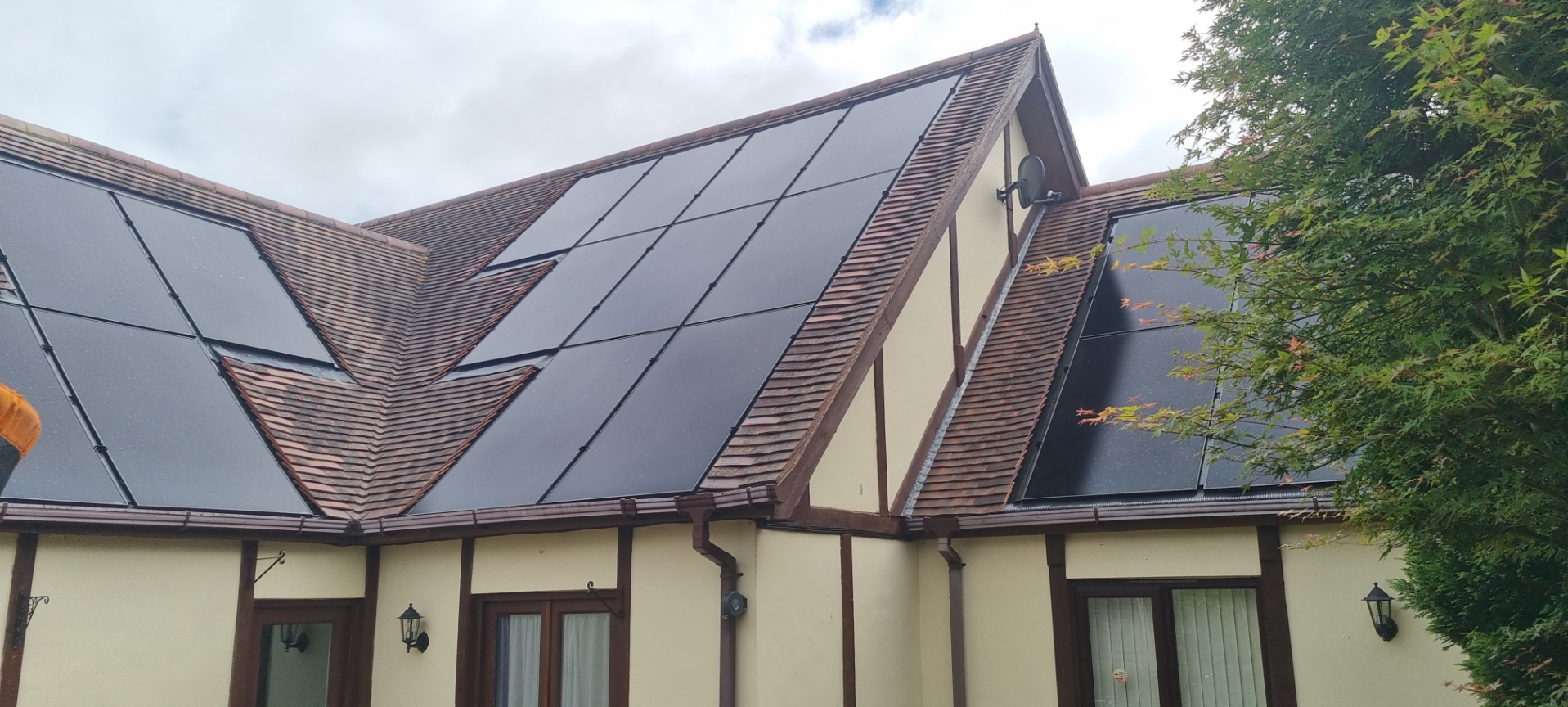
Bespoke PV designs solar PV, battery storage and EV charging systems across Hampshire, Dorset and the South Coast.
Bespoke solar PV, battery storage and EV charging systems for Southampton homes and businesses, designed around roof space, usage and future energy plans.
Solar panels in Southampton →Bespoke solar PV, battery storage and EV charging systems for homes and businesses across Winchester and Hampshire.
Solar panels in Winchester →Solar PV, battery storage and EV charging systems for homes and businesses across Portsmouth and the South Coast.
Solar panels in Portsmouth →Solar PV, battery storage and EV charging systems for homes and businesses across Bournemouth and the South Coast.
Solar panels in Bournemouth →Bespoke PV designs solar PV, battery storage and EV charging systems across Hampshire, Dorset, Wiltshire and the South Coast.
Speak with Bespoke PV about designing a battery storage system around tariff savings, backup power, resilience and future energy requirements.