
How to Design a Future-Ready Home Energy System
A modern renewable energy system is no longer just about installing solar panels and waiting for a payback period. For many homes, the bigger question is how electricity will be generated, stored, imported, exported, backed up and used over the next 10 to 20 years. Solar panels, battery storage, EV charging, heat pumps, smart tariffs, export tariffs and backup power should be planned together as one home energy system.
Key Takeaways
- Solar panels, battery storage, EV charging, heat pumps, tariffs and backup power should be planned together rather than treated as separate products.
- Battery capacity is only one part of system design; inverter power, charge rate, discharge rate and property limits also matter.
- Future-ready design should work for today's usage while allowing sensible expansion as household electricity demand changes.
- Smart import tariffs and export tariffs can significantly affect the best solar and battery strategy.
- Backup power must be deliberately designed into the system rather than assumed.
- A staged energy plan can reduce upfront cost while preserving future flexibility.
What Is a Future-Ready Home Energy System?
A future-ready home energy system is designed around how electricity flows through the property over time.
It considers how electricity is generated by solar panels, stored in battery storage, imported from the grid, exported back to the grid, used by household loads and kept available for backup power.
It also considers how the home may change in future.
A property that currently uses modest electricity may later add EV charging, a heat pump, electric cooking, electric hot water, air conditioning or backup power requirements. These changes can affect battery size, inverter capacity, tariff strategy, export value and electrical infrastructure.
A future-ready system is not necessarily the biggest or most expensive system available. It is a system designed around the property, the people living in it, their current usage, their likely future demand and the way energy markets are changing.
In This Guide
This cornerstone guide explains the main decisions involved in designing a future-ready home energy system.
- Why traditional solar design is no longer enough
- Why solar, batteries and tariffs should be designed together
- Why battery capacity and inverter power both matter
- How EV charging changes the energy strategy
- How heat pumps affect seasonal electricity demand
- How smart import tariffs and export tariffs affect battery design
- Why backup power must be deliberately designed in
- How DNO, main fuse and property limits affect future plans
- Why expansion-ready design is not automatic
- How staged energy planning can reduce cost while preserving flexibility
Visual Guide: A Future-Ready Home Energy System
Why Traditional Solar Design Is No Longer Enough
Traditional solar design often focused on one main question: how many panels can fit on the roof?
That question still matters, but it is no longer enough.
A home with solar panels alone behaves very differently from a home with solar panels, battery storage, an EV charger, a heat pump, electric cooking, smart tariffs and backup power requirements.
The design challenge has changed.
It is no longer just about generating electricity. It is about deciding when electricity should be used directly, when it should be stored, when it should be imported from the grid, when it should be exported, how much power the home may need at once, how the system will behave during power cuts and how the system can adapt as the home changes.
A system designed only around today's solar generation may become limiting later if the homeowner adds an EV, switches to a heat pump or wants battery backup.
That is why future-ready design starts with the whole property, not just the roof.
Traditional Solar Design vs Future-Ready Energy Design
Modern home energy design considers generation, storage, tariffs, electrification and resilience together.
Traditional Solar Design
- Focuses mainly on how many panels fit on the roof.
- Often evaluates simple payback only.
- Battery storage, EV charging and heat pumps may be considered later.
- Export is often treated as surplus electricity.
Future-Ready Energy Design
- Starts with how the home uses and will use electricity.
- Plans solar, batteries, tariffs and future loads together.
- Considers EV charging, heat pumps, backup power and expansion early.
- Treats import, storage and export as part of one energy strategy.
Start With the Home, Not the Equipment
The best renewable energy systems are not designed by choosing products first.
They are designed by understanding the home.
Before deciding on solar panels, battery capacity or inverter size, the key questions are how much electricity the property uses now, when electricity is used, whether demand is highest in the morning, daytime or evening, whether the household is likely to add an EV, whether a heat pump is planned and whether backup power is important.
It is also important to understand the customer's objective.
Some homeowners want the fastest financial payback. Others prioritise resilience, energy independence, future flexibility or reducing exposure to changing electricity prices.
A smaller home with modest usage and no future electrification plans may need a very different design from a larger home planning EV charging, a heat pump and whole-home backup.
A good design should reflect those differences.
Questions That Should Shape the Design
The right system design depends on current behaviour, future plans and the customer's priorities.
- How much electricity does the property use now?
- When is electricity used during the day?
- Is an EV likely in the next few years?
- Is a heat pump planned?
- Is electric cooking or electric hot water likely?
- Is backup power important?
- Is the goal payback, resilience, independence or flexibility?
- Will solar be installed now, later or expanded in future?
- Will smart import tariffs or export tariffs be used?
- Is future battery or inverter expansion likely?
Designing Around the Whole Home?
If you are planning solar panels, battery storage, EV charging, heat pumps or backup power, the best results usually come from considering the whole property from the outset. Bespoke PV can help assess current usage, future demand, tariff options, electrical infrastructure and expansion requirements before equipment is specified.
Solar, Batteries and Tariffs Should Be Designed Together
Solar panels and battery storage are often discussed separately, but they work best when designed together.
Solar panels generate electricity when daylight is available. A battery can store some of that electricity for later use. Smart tariffs can allow the battery to charge from the grid when electricity is cheaper. Export tariffs can influence whether solar energy should be used, stored or exported.
The best strategy depends on how these elements interact.
If a home has a strong flat export tariff, it may not make sense to oversize a battery purely to avoid exporting solar. The homeowner can still receive value from surplus generation.
If export rates vary by time of day, a battery may be useful not only for avoiding expensive imports but also for shifting solar export into higher-value periods.
If the import tariff has multiple low-cost windows during the day, the battery may not need to be large enough to cover the entire day from one overnight charge.
This is why solar, battery storage, import tariffs and export tariffs should be modelled together rather than treated as separate decisions.
Visual Guide: Should Solar Energy Be Used, Stored or Exported?
Battery Capacity Is Only Part of the Design
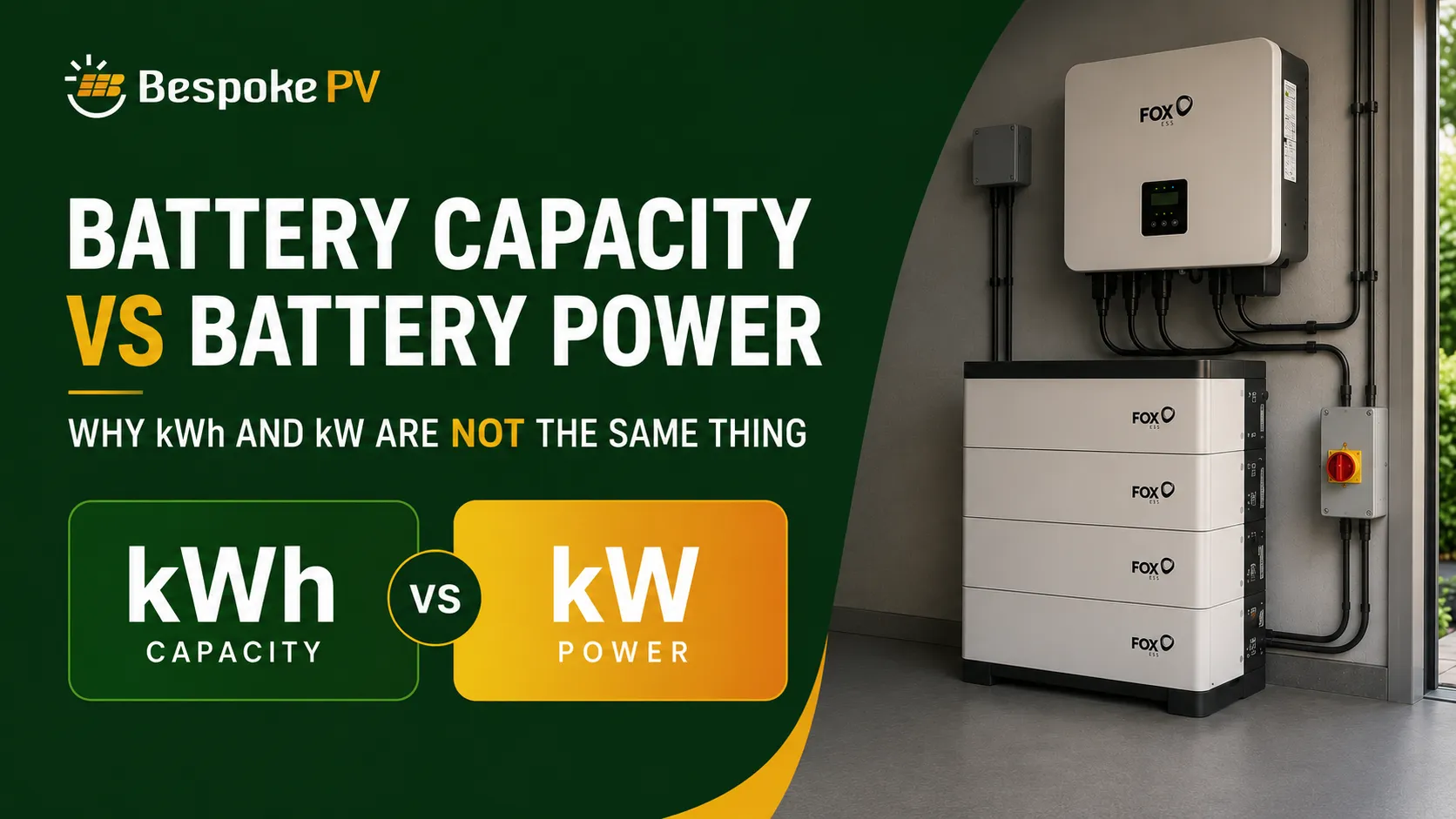
Battery capacity is measured in kilowatt-hours, or kWh. It tells you how much energy the battery can store.
But capacity alone does not tell you what the battery can actually power.
Battery power and inverter output, measured in kilowatts, or kW, determine how much energy can be delivered at one time.
This distinction matters.
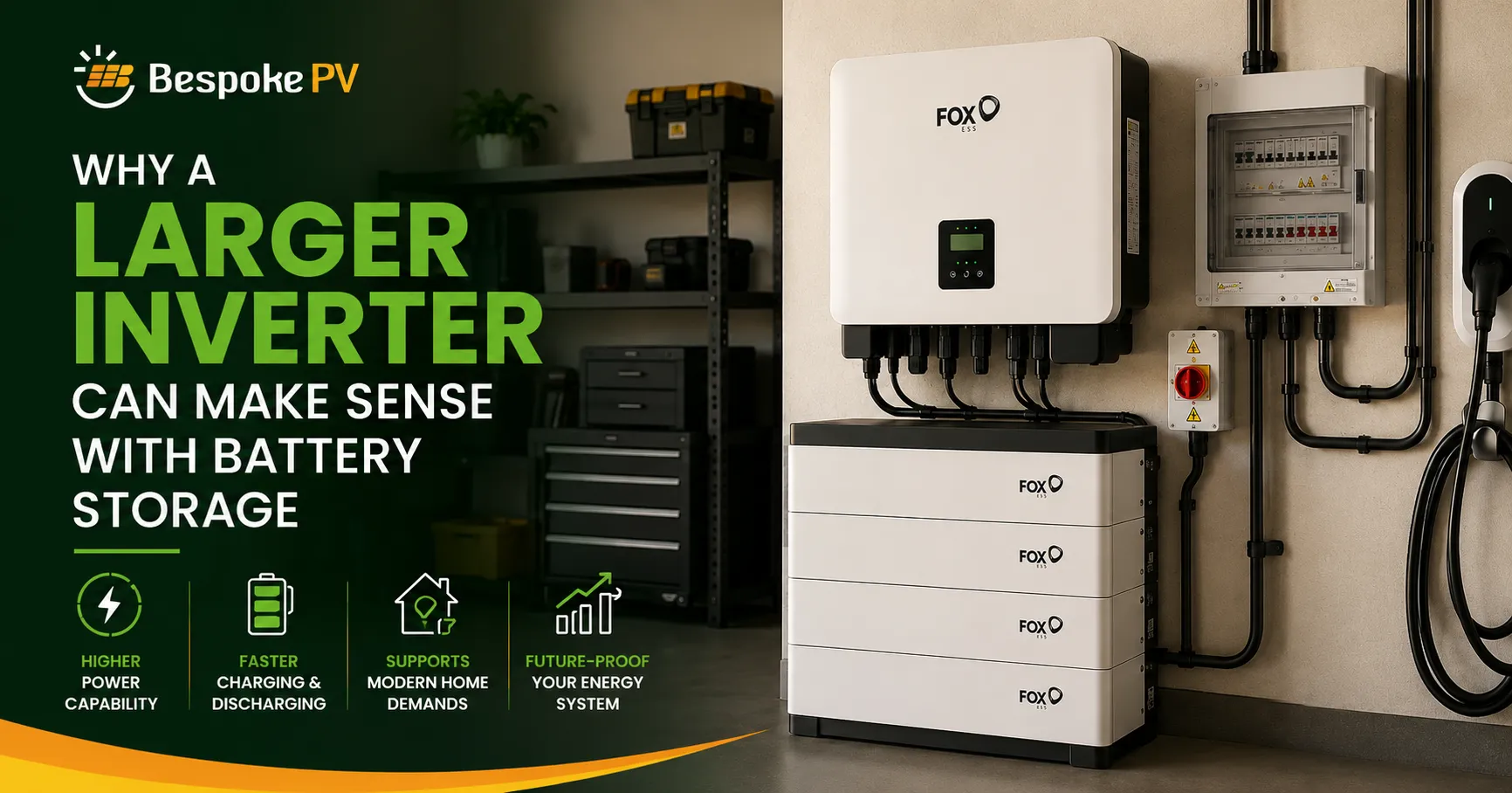
A large battery connected to a smaller inverter may store plenty of energy but still be limited during high-demand periods. The home may import from the grid if several appliances are running at the same time and the inverter cannot supply enough power.
For modern homes, this can be a major design issue.
Electric ovens, hobs, kettles, heat pumps, EV chargers, dishwashers, washing machines, tumble dryers and electric showers can all create significant power demand.
A future-ready system should therefore consider both how much energy the battery can store and how much power the system can deliver when the home needs it.
Battery Capacity vs Inverter Power
Both are important, but they solve different problems.
Battery Capacity
- Measured in kWh.
- Determines how much energy can be stored.
- Affects how long stored energy may last.
Inverter Power
- Measured in kW.
- Determines how much power can be delivered at once.
- Affects how many loads can run together.
Visual Guide: Battery Capacity vs Inverter Power
Bigger Is Not Always Better
It is easy to assume that a larger battery or larger solar array is always better.
That is not always true.
The best system is the one that matches the customer's objectives.
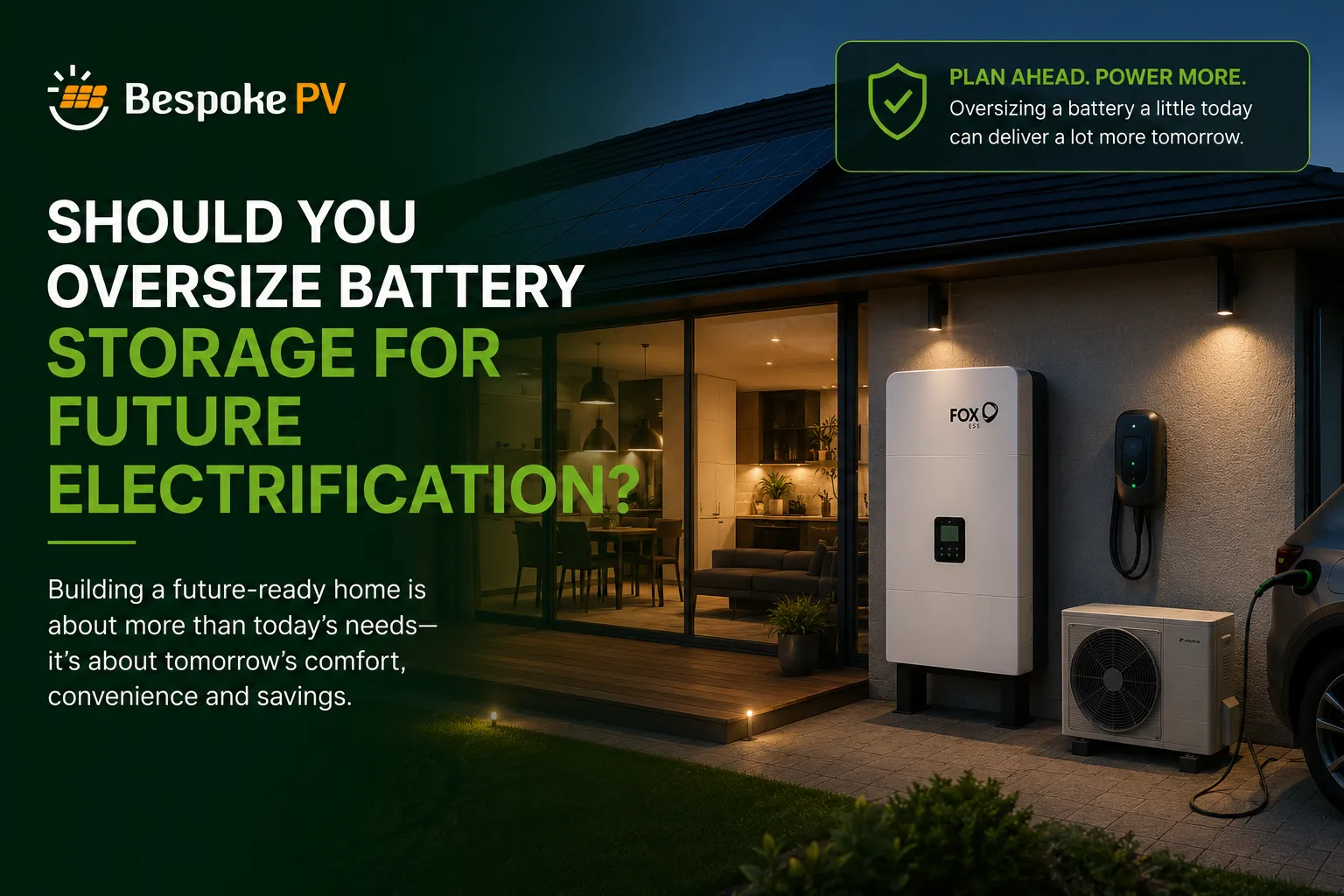
A larger battery may be valuable if it is used regularly, supports backup reserve, enables better tariff optimisation, stores more solar generation or prepares the home for future electrification.
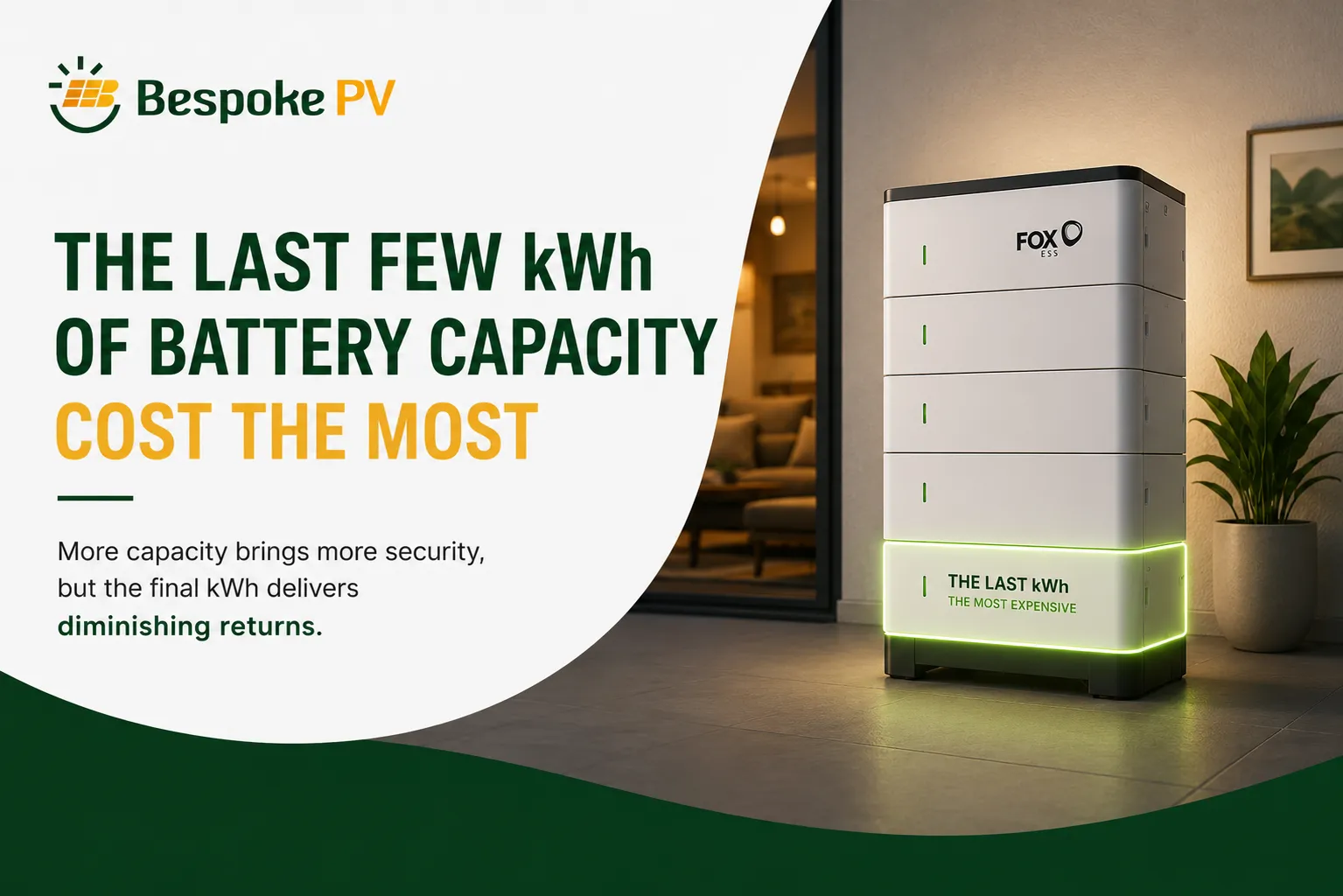
However, extra capacity that is rarely used may add cost without delivering proportionate value.
The same applies to solar panels. A larger solar array can produce more electricity, but the value depends on how much can be used, stored or exported at a worthwhile rate.
Future-ready design is not about maximising every component.
It is about balancing generation, storage, inverter capability, demand, tariffs, backup requirements and future expansion.
Key System Components and What They Influence
| Component | Design Question | Why It Matters |
|---|---|---|
| Solar panels | How much generation is realistic across the year? | Determines on-site production, self-consumption and export potential. |
| Battery storage | How much capacity, charge rate and discharge rate are needed? | Affects evening use, tariff strategy, backup reserve and future flexibility. |
| Inverter | How much power must move between solar, battery, grid and home? | Can become the bottleneck for demand support, charging speed, export and backup. |
| EV charging | When and how often will the vehicle charge? | Can significantly increase electricity use and may require load management. |
| Heat pump | How will winter demand change? | Can increase seasonal electricity use when solar generation is lower. |
| Backup power | Which loads need to stay on during outages? | Affects reserve settings, wiring, inverter power and battery capacity. |
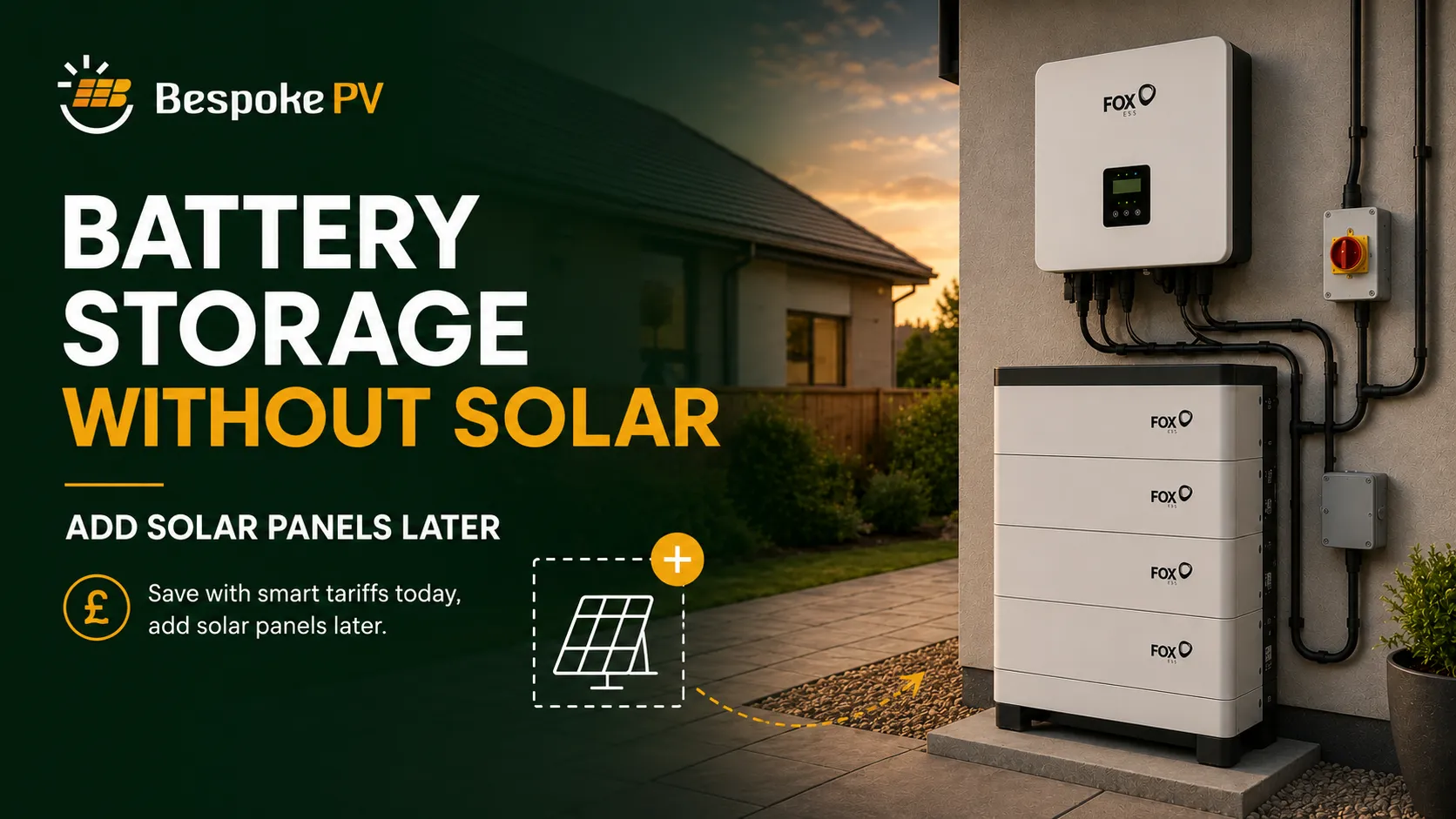
Battery Storage Without Solar Can Still Be Part of a Staged Plan
A home does not always need to install solar and battery storage at the same time.
In some cases, battery storage can be installed first and used with a smart tariff. The battery can charge from the grid during lower-cost periods and discharge when electricity is more expensive.
Solar panels can then be added later.
This staged approach can make sense where the homeowner wants to reduce peak-rate imports now but is not yet ready for solar panels.
However, battery-first design must be planned carefully.
If solar may be added later, the inverter choice, battery location, cable routes, DNO considerations and future expansion options should all be considered from the start.
A battery-only system that is not designed with future solar in mind may become harder or more expensive to adapt later.
EV Charging Changes the Energy Strategy
EV charging can significantly increase household electricity demand, but it does not automatically mean the home battery needs to be sized to charge the car.
Most EV batteries are much larger than typical home batteries. Trying to size a home battery to regularly charge an EV can make the system unnecessarily expensive.
In many homes, the EV is better charged directly from the grid using a suitable smart tariff, or from solar generation when available.
The home battery then has a different role. It may help manage household demand, reduce peak-rate imports, store surplus solar and support the property while the EV charging strategy is handled separately.
The key is coordination.
A future-ready system should consider when the EV is usually at home, how often it needs charging, whether solar generation will be available, whether the EV charger can be controlled intelligently and whether household loads need to be protected from peak-rate imports while the vehicle charges.
EV charging should not be treated as an isolated add-on. It should be part of the wider home energy design.
Heat Pumps Change Seasonal Electricity Demand
Heat pumps can also change the battery and solar calculation.
Unlike EV charging, which may often be scheduled flexibly, heating demand is strongly seasonal. Heat pump electricity use is usually higher in colder months, when solar generation is lower.
This means a system designed around summer solar performance may not tell the full story.
A future-ready design should consider winter behaviour.
Battery storage may help shift lower-cost electricity into more expensive periods, but it may not be practical or economical to size a battery to cover all heat pump demand during winter.
For heat pump homes, the design should consider winter electricity usage, heating patterns, smart tariff options, inverter output, battery charge rate, household peak demand and whether backup power is expected to support heating.
The right answer is rarely just to add more battery. It is about understanding the role of the battery within the heating strategy.
EV Charging vs Heat Pump Demand
EV charging and heat pumps both increase electricity demand, but they affect system design differently.
EV Charging
- Can significantly increase annual electricity use.
- Charging may be scheduled around smart tariffs or solar availability.
- Usually should not be treated as a load that the home battery must fully supply.
Heat Pumps
- Can significantly increase winter electricity use.
- Demand often rises when solar generation is lower.
- May affect battery strategy, inverter sizing and tariff planning.
Smart Tariffs Can Reduce or Increase Battery Requirements
Smart tariffs can change how large a battery needs to be.
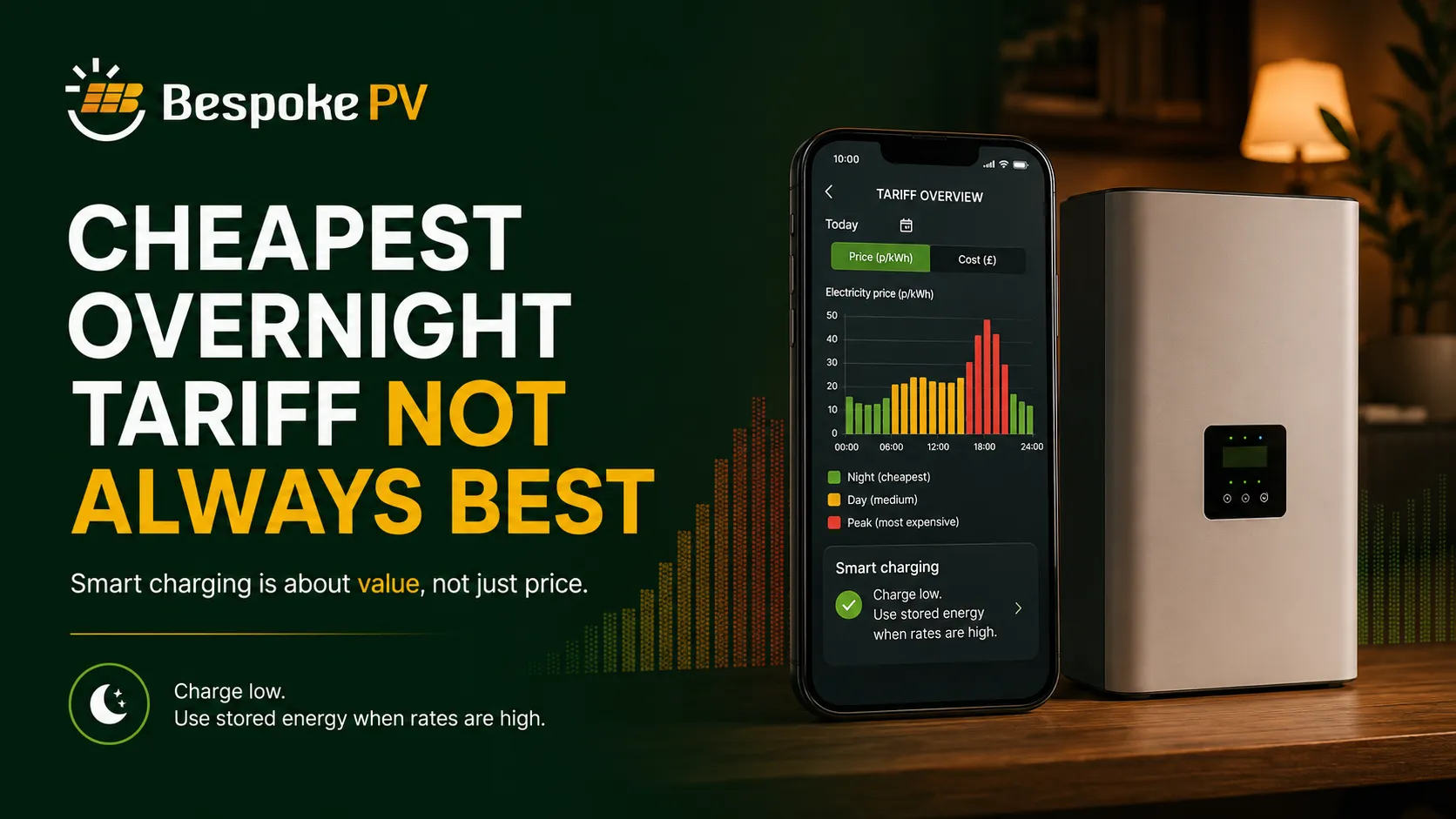
If a tariff has one low-cost overnight window, the battery may need to store enough energy to carry the property through a long period before the next cheap-rate opportunity.
If the tariff has several lower-cost windows spread throughout the day, the battery may be able to top up more than once. This can reduce the need for very large storage capacity.
Agile-style tariffs add another layer of complexity. They may create opportunities to charge when prices are low and discharge when prices are high. But they also require better automation, reliable control and a clear understanding of price risk.
A future-ready battery system should not be designed around one tariff only.
Tariffs change. Supplier products change. Export arrangements change. Customer usage changes.
The best system should give the homeowner options.
That means suitable battery capacity, suitable inverter output, reliable scheduling and enough flexibility to work under different tariff structures.
Export Tariffs Can Change Whether Extra Battery Capacity Is Worthwhile
When solar panels are installed, export tariffs become part of the battery sizing decision.
With a flat export tariff, surplus solar receives the same value whenever it is exported. If that rate is attractive, oversizing a battery simply to avoid export may not make sense.
With time-of-use or agile export tariffs, the battery may be able to store solar energy and export it later when the export value is higher.
That can make additional battery capacity more useful.
However, this depends on the difference between export rates, battery efficiency, inverter capacity, export limits and household demand.
A battery should not be sized only around self-consumption. It should be sized around the full value of the energy, whether that value comes from using it in the home, avoiding imports or exporting it at the right time.
Flat Export vs Time-of-Use Export
The export tariff can change the value of additional battery storage.
Flat Export Tariff
- Pays the same export rate regardless of time.
- May reduce the need to store every unit of surplus solar.
- Extra battery capacity may be harder to justify if export value is strong.
Time-of-Use Export Tariff
- Export value changes depending on time.
- Battery may store solar for higher-value export periods.
- Extra capacity may be useful if it captures enough additional value.
Backup Power Must Be Designed In
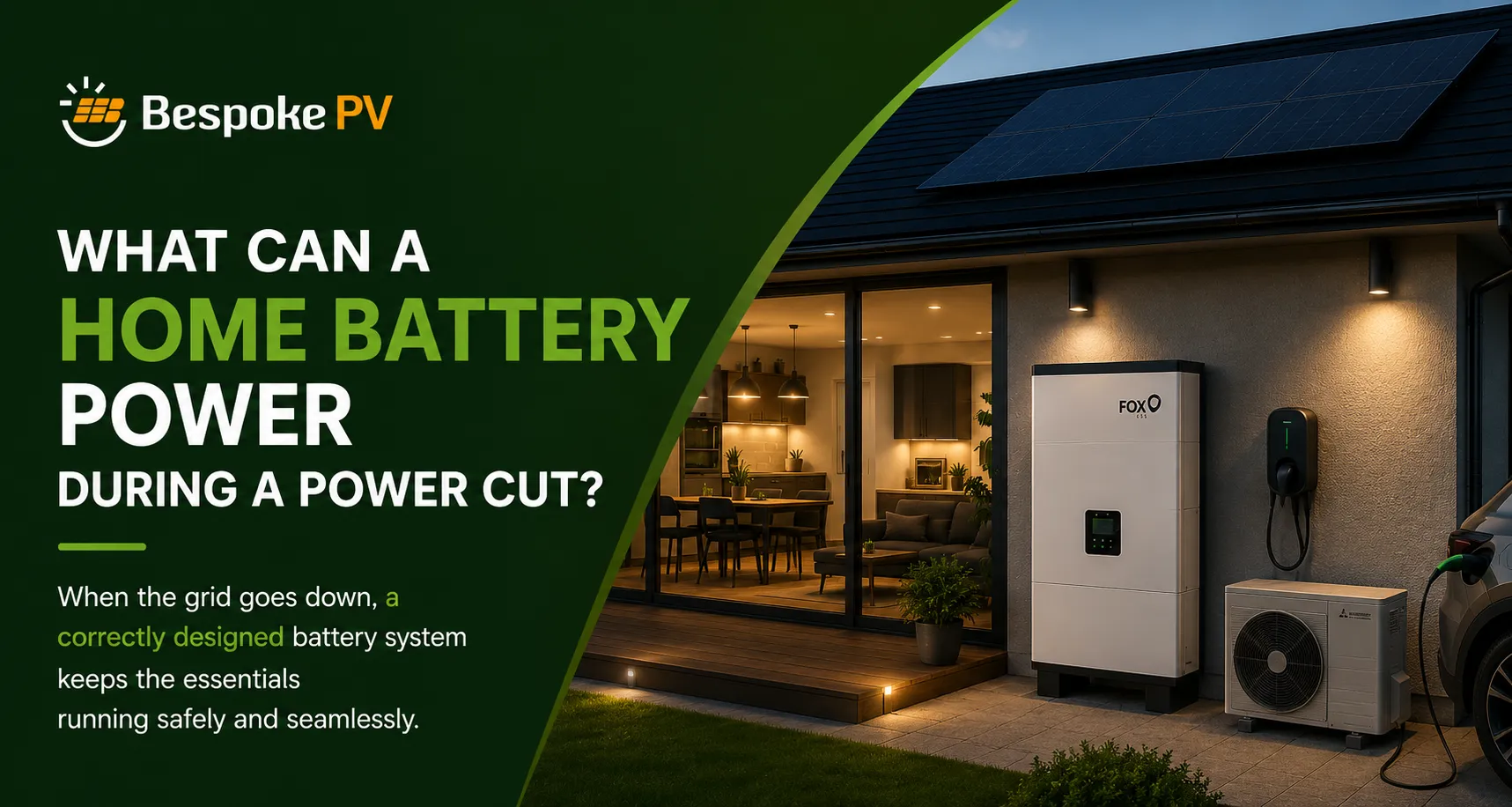
A battery does not automatically provide backup power during a power cut.
Many battery systems are designed for bill savings, solar self-consumption or smart tariff use. Backup functionality may require specific inverter capability, wiring design, reserve settings and changeover arrangements.
The homeowner also needs to decide what backup means.
There is a big difference between critical loads backup and whole-home backup.
Critical loads backup may keep essential circuits running, such as lights, fridge, freezer, router, heating controls, security equipment or selected sockets.
Whole-home backup aims to support most or all of the property, but it requires more careful design. High-power appliances can quickly exceed inverter output or drain stored energy.
Future-ready backup design should consider which circuits must stay powered, whether backup should be automatic, how much battery reserve should be kept, how long backup should last, whether solar should operate during an outage and whether future loads such as heat pumps or EV chargers should be supported or excluded.
If backup power matters, it should be discussed before installation, not added as an afterthought.
Visual Guide: Critical Loads Backup vs Whole-Home Backup
Critical Loads Backup vs Whole-Home Backup
Backup design should match the homeowner's expectations.
Critical Loads Backup
- Supports selected essential circuits.
- Usually needs less inverter power and battery capacity.
- Can provide longer runtime from the same battery.
Whole-Home Backup
- Supports most or all household circuits.
- Requires greater inverter output and battery capability.
- May still require sensible load management.
Reserve Capacity Changes the Economics
If a homeowner wants backup power, some battery capacity may need to be held in reserve.
That reserve is useful during power cuts, but it is not normally available for daily tariff savings.
This changes the financial calculation.
A battery sized purely for payback may use most of its stored energy each day. A battery designed for resilience may deliberately keep energy aside.
Neither approach is wrong. They simply serve different objectives.
A future-ready system should make this trade-off clear.
If the customer wants both strong tariff savings and meaningful backup reserve, a larger battery may be justified. But the reason for that extra capacity should be understood.
Local Control and Long-Term Resilience Matter
A future-ready system should not depend entirely on short-term software features or cloud services.
Cloud monitoring, smart scheduling and tariff automation can be useful, but the core system should remain reliable over the long term.
If internet connectivity fails, a cloud service changes, a manufacturer withdraws support or a third-party integration stops working, the homeowner should understand what happens.
Can the battery still operate locally? Can it follow a basic schedule? Can reserve settings still be maintained? Can the homeowner adjust key settings without relying entirely on remote services?
These questions matter because solar panels, batteries and inverters are long-term infrastructure.
A system should not only perform well on day one. It should remain usable, understandable and serviceable many years later.
Outdoor Installation and Equipment Location Should Be Considered Early
The physical location of equipment can affect the quality of the installation.
Battery systems, inverters, isolators, cabling and communication equipment all need suitable locations.
The design should consider weather exposure, ventilation, access for maintenance, cable routes, fire safety guidance, visual impact, expansion space, noise and proximity to the electrical intake.
If future expansion is likely, space should be allowed from the beginning.
A compact installation may look neat on day one but become restrictive later if there is no room for additional battery modules, new protection devices or future cable routes.
A future-ready system needs a physical layout that supports long-term use, not just immediate installation.
DNO, Main Fuse and Property Electrical Limits Matter
Future electrification can place greater demands on the property's electrical supply.
Solar inverters, battery inverters, EV chargers, heat pumps and export capability all interact with the electrical connection.
The property's main fuse, import capacity, export permissions, phase arrangement and DNO requirements may influence what can be installed and how it should be controlled.
This does not mean every property needs major upgrades.
It does mean these constraints should be understood early.
A system may need export limitation, load management, phased installation, DNO approval or careful coordination between devices.
Future-ready design is not just about choosing the right products. It is about making sure the property can support them safely and sensibly.
Expansion-Ready Design Is Not Automatic
Many systems are described as expandable, but real-world expansion depends on the details.
A genuinely expansion-ready system should consider maximum battery capacity supported by the inverter, compatible battery modules, manufacturer limits, firmware support, electrical protection, communication wiring, available wall or floor space, safe access, cable routes, DNO considerations and whether product ranges may change over time.
Adding another battery later should be practical, safe and commercially sensible.
A system should not be called future-ready simply because expansion is theoretically possible. Expansion should be designed in.
What Makes a System Expansion-Ready?
Future expansion should be practical, not merely possible in theory.
- Suitable inverter capacity
- Compatible battery platform
- Manufacturer-supported expansion limits
- Available wall or floor space
- Planned cable routes
- Suitable electrical protection
- Communication wiring and monitoring provision
- Safe access for future work
- DNO and export considerations
- Awareness that product ranges may change over time
Future-Ready in Theory vs Future-Ready in Practice
A genuinely expandable system needs more than a modular product brochure.
Future-Ready in Theory
- Battery range says extra modules can be added.
- Expansion may depend on compatibility, space and inverter limits.
- Upgrade may be possible but awkward or expensive.
Future-Ready in Practice
- Inverter, battery platform and layout are chosen with expansion in mind.
- Space, cabling and electrical protection are considered from day one.
- Future upgrade is more practical and commercially sensible.
The Cheapest Installation Can Become Expensive Later
A low-cost installation may appear attractive at first, but it can become expensive if it limits future options.
For example, a system may be cheaper because it uses a smaller inverter, a less expandable battery platform, minimal cabling, limited monitoring or a layout with no expansion space.
That may be fine for a simple installation with no future plans.
But for a homeowner expecting EV charging, solar expansion, battery expansion, backup power or a heat pump, the cheapest initial option may create future compromise.
Good design does not mean overspending. It means avoiding false economy.
Sometimes spending slightly more on the right inverter, battery platform or installation layout can protect the homeowner from bigger costs later.
A Future-Ready System Should Be Staged Intelligently
Not every homeowner needs to install everything at once.
A staged plan can be the best approach.
Stage one might be battery storage designed around current usage and a suitable smart tariff. Stage two might add solar panels. Stage three might add EV charging, heat pump integration, export optimisation or backup power.
The key is that each stage should be designed with the next stage in mind.
A staged plan can reduce upfront cost while still preserving flexibility.
This is especially useful where the homeowner knows change is coming but does not yet know the exact timing.
Visual Guide: Example Staged Home Energy Plan
Example Staged Home Energy Plan
| Stage | Possible Upgrade | Design Considerations |
|---|---|---|
| Stage 1 | Battery storage and smart tariff | Battery capacity, inverter output, charge rate, reserve settings and future solar compatibility |
| Stage 2 | Solar PV installation | Roof design, inverter architecture, battery charging, self-consumption and export strategy |
| Stage 3 | EV charging | Charging behaviour, tariff choice, solar availability, load management and electrical supply capacity |
| Stage 4 | Heat pump or electric hot water | Winter demand, tariff strategy, inverter power, battery reserve and property heat loss |
| Stage 5 | Backup power or battery expansion | Critical loads, whole-home backup, reserve capacity, changeover design and future module compatibility |
What Should Be Decided Before Installation?
Before choosing equipment, homeowners should understand their priorities.
The most important questions include whether the main goal is financial saving, resilience, future flexibility or energy independence, whether solar panels will be installed now or later, whether battery storage is needed now, whether an EV is likely, whether a heat pump is planned, whether backup power is important and whether high-power loads are expected to run from the battery.
It is also important to understand whether whole-home backup is required or only essential loads, whether smart tariffs will be used, whether export tariffs are part of the strategy, whether future expansion is likely, whether the property's electrical supply is suitable and where equipment will be installed.
The design should flow from these answers.
The Main Design Priorities
Financial Performance
Reducing imported electricity costs and improving long-term value.
Energy Resilience
Keeping selected loads or the wider home powered during outages.
Future Flexibility
Allowing EV charging, heat pumps, solar expansion or battery expansion later.
Operational Control
Using monitoring, tariffs and automation to manage energy intelligently.
Future-Ready Design Checklist
A cornerstone home energy design should leave the homeowner with clear answers to these questions.
- Current and future electricity demand has been assessed
- Solar generation, storage and export strategy have been considered together
- Battery capacity and inverter output have both been reviewed
- EV charging and heat pump plans have been discussed
- Backup expectations have been clarified
- Reserve capacity has been considered if resilience matters
- DNO, main fuse, import capacity and export permissions have been checked
- Equipment location and future expansion space have been planned
- Tariff flexibility has been considered rather than relying on one tariff only
- The homeowner understands what the system can and cannot do
Bespoke PV Insight
The strongest renewable energy systems are not simply those with the most panels or the largest batteries. They are the systems designed around how the property actually uses electricity now, how that demand is likely to change, and how the homeowner wants the system to perform over the long term.
For some homes, that means solar panels and a modest battery. For others, it means a larger inverter, higher battery discharge capability, backup reserve, EV charging integration, smart tariff planning and expansion space for future equipment.
The best design starts with the whole home.
The Role of Bespoke PV
At Bespoke PV, we do not see solar panels, batteries, EV chargers and backup systems as isolated products.
They are parts of a wider home energy system.
A good installation should work for the way the customer lives now, but it should also consider how the home may change.
That means thinking carefully about battery capacity, inverter power, solar generation, tariff strategy, backup requirements, future electrical loads, equipment location and expansion options.
The aim is not simply to install equipment.
The aim is to design an energy system that is efficient, resilient, practical and ready for the future.
Bespoke PV designs integrated solar, battery and home energy systems for properties across Hampshire, West Sussex and surrounding areas.
Conclusion: Future-Ready Means Designed, Not Just Installed
A future-ready home energy system is not defined by having the largest solar array, the biggest battery or the most expensive equipment.
It is defined by good design.
The system should match the property, the customer's objectives, current electricity usage, future plans and the changing energy market.
It should consider how electricity will be generated, stored, imported, exported, backed up and used.
It should avoid locking the homeowner into equipment that cannot adapt.
And it should provide a clear path from today's installation to tomorrow's energy needs.
The best renewable energy systems are not just installed for now.
They are designed for what comes next.
Related Home Energy Design Guides
Explore supporting Bespoke PV articles covering battery sizing, inverter power, smart tariffs, backup power, future electrification and integrated solar design.
Planning a Future-Ready Home Energy System?
Bespoke PV designs integrated solar, battery storage, EV charging and home energy systems around long-term performance, resilience and future flexibility. Whether you are considering solar panels for the first time, adding battery storage, preparing for EV charging, planning a heat pump or thinking about backup power, we can help design a system that works for the way your property uses electricity now and how it may change in future.
Every home behaves differently. Roof orientation, shading, occupancy patterns, electricity usage, battery integration, smart tariffs, export strategy, backup requirements and future expansion plans can all influence the most effective design.
If you are planning renewable energy upgrades, Bespoke PV can help you evaluate the best approach for your property, priorities and long-term energy goals.
How to Design a Future-Ready Home Energy System FAQs
Answers to common questions about this guide and related renewable energy planning.
What is a future-ready home energy system?
A future-ready home energy system is designed around how electricity is generated, stored, imported, exported, backed up and used over time.
Learn more about How to Design a Future-Ready Home Energy System →
Why should solar panels, batteries and EV charging be planned together?
They affect each other. Solar generation, battery storage, EV charging, tariffs and household demand work best when designed as one integrated system.
Learn more about How to Design a Future-Ready Home Energy System →
Is solar panel design still mainly about how many panels fit on the roof?
No. Roof space matters, but modern design should also consider battery storage, tariffs, EV charging, heat pumps, export strategy and future electricity demand.
Learn more about How to Design a Future-Ready Home Energy System →
What should be considered before designing a home energy system?
Current electricity usage, future demand, solar potential, battery requirements, inverter size, tariffs, export rates, backup needs and property electrical limits should all be considered.
Learn more about How to Design a Future-Ready Home Energy System →
Why is whole-home energy design better than choosing products separately?
Choosing products separately can create compatibility issues, limited expansion options and missed opportunities for better tariff, solar and battery performance.
Learn more about How to Design a Future-Ready Home Energy System →
Can I install battery storage before solar panels?
Yes. Battery storage can be installed first and used with smart tariffs, but the system should be designed so solar can be added later if planned.
Learn more about How to Design a Future-Ready Home Energy System →
Should I install solar and battery storage at the same time?
It can be beneficial, but it is not always necessary. The right approach depends on budget, roof suitability, tariff strategy and future plans.
Learn more about How to Design a Future-Ready Home Energy System →
What is a staged home energy plan?
A staged plan installs the right equipment in phases, such as battery storage first, solar later, then EV charging, heat pump integration or backup power.
Learn more about How to Design a Future-Ready Home Energy System →
Why should future EV charging be considered when designing solar and battery storage?
EV charging can significantly increase electricity demand and may affect tariff choice, solar usage, battery sizing and load management.
Learn more about How to Design a Future-Ready Home Energy System →
Does having an EV mean I need a much larger home battery?
Not necessarily. EVs are often charged directly from the grid or solar, while the home battery manages household demand, tariffs and solar storage.
Learn more about How to Design a Future-Ready Home Energy System →
Should a home battery be sized to charge an electric car?
Usually not. EV batteries are much larger than typical home batteries, so sizing a home battery to regularly charge an EV can be expensive.
Learn more about How to Design a Future-Ready Home Energy System →
How do heat pumps affect home energy design?
Heat pumps can increase winter electricity demand, changing the battery, solar, inverter and tariff strategy needed for the property.
Learn more about How to Design a Future-Ready Home Energy System →
Can solar panels power a heat pump?
Solar panels can contribute to heat pump electricity demand, but winter heating demand often occurs when solar generation is lower, so careful design is needed.
Learn more about How to Design a Future-Ready Home Energy System →
Why does winter energy demand matter?
Winter demand is important because heating loads are often higher while solar generation is lower, which affects battery sizing and tariff strategy.
Learn more about How to Design a Future-Ready Home Energy System →
What is the difference between battery capacity and battery power?
Battery capacity is how much energy is stored, measured in kWh. Battery power is how much energy can be delivered at once, measured in kW.
Learn more about How to Design a Future-Ready Home Energy System →
Why does inverter size matter in a future-ready energy system?
Inverter size affects how much stored solar or battery energy can be delivered to the home at one time.
Learn more about How to Design a Future-Ready Home Energy System →
Can a large battery still be limited by a small inverter?
Yes. A large battery may store plenty of energy, but a small inverter can limit how much of that energy the home can use at once.
Learn more about How to Design a Future-Ready Home Energy System →
Is the biggest battery always the best choice?
No. The best battery is the one that matches usage, tariff strategy, backup requirements, inverter power and future expansion plans.
Learn more about How to Design a Future-Ready Home Energy System →
Why can extra battery capacity deliver diminishing returns?
Extra capacity may only be used occasionally, so the final few kWh of storage can cost more than the savings they create.
Learn more about How to Design a Future-Ready Home Energy System →
When is a larger battery worth considering?
A larger battery may be worthwhile for high usage, backup reserve, future electrification, larger solar arrays, smart tariff use or timed export strategy.
Learn more about How to Design a Future-Ready Home Energy System →
How do smart tariffs affect battery design?
Smart tariffs affect when the battery should charge, how much energy it needs to store and how quickly it must charge or discharge.
Learn more about How to Design a Future-Ready Home Energy System →
Does a home battery need to cover the whole day’s electricity usage?
Not always. A battery may only need to cover the most expensive periods, especially if there are multiple low-cost charging windows.
Learn more about How to Design a Future-Ready Home Energy System →
Can multiple cheap-rate windows reduce the battery size needed?
Yes. If the battery can recharge more than once, it may not need to store enough energy for the entire day from a single overnight charge.
Learn more about How to Design a Future-Ready Home Energy System →
Are agile tariffs suitable for home batteries?
Agile tariffs can work well with batteries, but they require reliable control, automation and a willingness to accept variable pricing.
Learn more about How to Design a Future-Ready Home Energy System →
Why should a battery system not depend on one tariff only?
Tariffs can change, so a future-ready battery system should be flexible enough to work with different import and export tariff structures.
Learn more about How to Design a Future-Ready Home Energy System →
How do export tariffs affect solar and battery design?
Export tariffs affect whether surplus solar should be used in the home, stored in the battery or exported to the grid.
Learn more about How to Design a Future-Ready Home Energy System →
Does a flat export tariff reduce the need for battery storage?
Sometimes. If the flat export rate is attractive, it may not be worth oversizing a battery simply to avoid exporting solar.
Learn more about How to Design a Future-Ready Home Energy System →
Can time-of-use export tariffs justify more battery capacity?
Potentially, yes. If export rates are higher at certain times, a battery may store solar energy and export it later when it is worth more.
Learn more about How to Design a Future-Ready Home Energy System →
Should import and export tariffs be considered together?
Yes. Battery strategy should compare the value of using stored energy in the home against the value of exporting it.
Learn more about How to Design a Future-Ready Home Energy System →
Does battery storage automatically provide backup power?
No. Backup power must be designed into the system with suitable inverter capability, wiring, reserve settings and backup configuration.
Learn more about How to Design a Future-Ready Home Energy System →
What is critical loads backup?
Critical loads backup powers selected essential circuits during a power cut, such as lights, fridge, freezer, router and heating controls.
Learn more about How to Design a Future-Ready Home Energy System →
What is whole-home backup?
Whole-home backup is designed to support most or all of the property during an outage, but it requires greater battery and inverter capability.
Learn more about How to Design a Future-Ready Home Energy System →
Is whole-home backup always necessary?
No. Many homes are better served by critical loads backup, while others may justify whole-home backup depending on expectations and budget.
Learn more about How to Design a Future-Ready Home Energy System →
Why does backup reserve affect battery savings?
Energy held in reserve for power cuts is not normally available for daily tariff savings, so resilience and payback need to be balanced.
Learn more about How to Design a Future-Ready Home Energy System →
Can solar panels work during a power cut?
Only if the system is designed for solar operation during outages. Many standard solar PV systems shut down during grid failures for safety.
Learn more about How to Design a Future-Ready Home Energy System →
Why does local control matter for battery storage?
Local control can help the system remain usable if internet connectivity, cloud services or third-party automation are unavailable.
Learn more about How to Design a Future-Ready Home Energy System →
Should battery systems rely entirely on cloud services?
Ideally, no. Cloud features can be useful, but core settings and basic operation should remain reliable over the long term.
Learn more about How to Design a Future-Ready Home Energy System →
Why does equipment location matter?
Equipment location affects access, cable routes, ventilation, weather exposure, visual impact, future expansion and maintenance.
Learn more about How to Design a Future-Ready Home Energy System →
Should space for future battery expansion be planned from the start?
Yes. Future expansion can become difficult if there is no physical space, cable route or safe access for additional equipment.
Learn more about How to Design a Future-Ready Home Energy System →
What does expansion-ready battery design mean?
Expansion-ready design means the inverter, battery platform, wiring, space and electrical layout are chosen to make future upgrades practical.
Learn more about How to Design a Future-Ready Home Energy System →
Can every battery system be expanded later?
No. Expansion depends on manufacturer limits, battery compatibility, inverter capability, firmware support, installation space and electrical design.
Learn more about How to Design a Future-Ready Home Energy System →
Why should DNO requirements be considered early?
DNO requirements can affect solar export, battery inverter sizing, EV charging, heat pump plans and future system expansion.
Learn more about How to Design a Future-Ready Home Energy System →
Can the property main fuse affect system design?
Yes. The main fuse and available import capacity can affect EV charging, battery charging, heat pump operation and load management.
Learn more about How to Design a Future-Ready Home Energy System →
What is load management?
Load management controls or prioritises electrical loads so the property stays within safe supply, inverter or backup limits.
Learn more about How to Design a Future-Ready Home Energy System →
Why can the cheapest installation become expensive later?
A cheap installation may use equipment or layouts that limit future expansion, backup power, monitoring, inverter capability or tariff flexibility.
Learn more about How to Design a Future-Ready Home Energy System →
Is future-ready design always more expensive?
Not necessarily. It is about spending wisely on the right equipment, layout and flexibility rather than paying for unnecessary capacity.
Learn more about How to Design a Future-Ready Home Energy System →
Should I install everything at once?
Not always. A staged approach can reduce upfront cost while still preserving future options if the first stage is designed correctly.
Learn more about How to Design a Future-Ready Home Energy System →
What should I decide before installing solar and battery storage?
You should decide your priorities for savings, resilience, EV charging, heat pumps, backup power, smart tariffs, export strategy and future expansion.
Learn more about How to Design a Future-Ready Home Energy System →
What is the main benefit of a future-ready home energy system?
The main benefit is flexibility. The system can work for today’s needs while remaining adaptable as the property and energy market change.
Learn more about How to Design a Future-Ready Home Energy System →
Why choose Bespoke PV for future-ready home energy design?
Bespoke PV designs solar, battery and home energy systems around the property, customer objectives, future demand, tariffs, backup requirements and long-term flexibility.
Learn more about How to Design a Future-Ready Home Energy System →
In Summary
A future-ready home energy system should be designed around how electricity is generated, stored, imported, exported, backed up and used over time. The strongest systems are planned around the property, the household's objectives, current usage, future electrification and long-term flexibility rather than simply maximising equipment size or short-term payback.
Further Reading
Explore related Bespoke PV articles covering this topic in more detail.
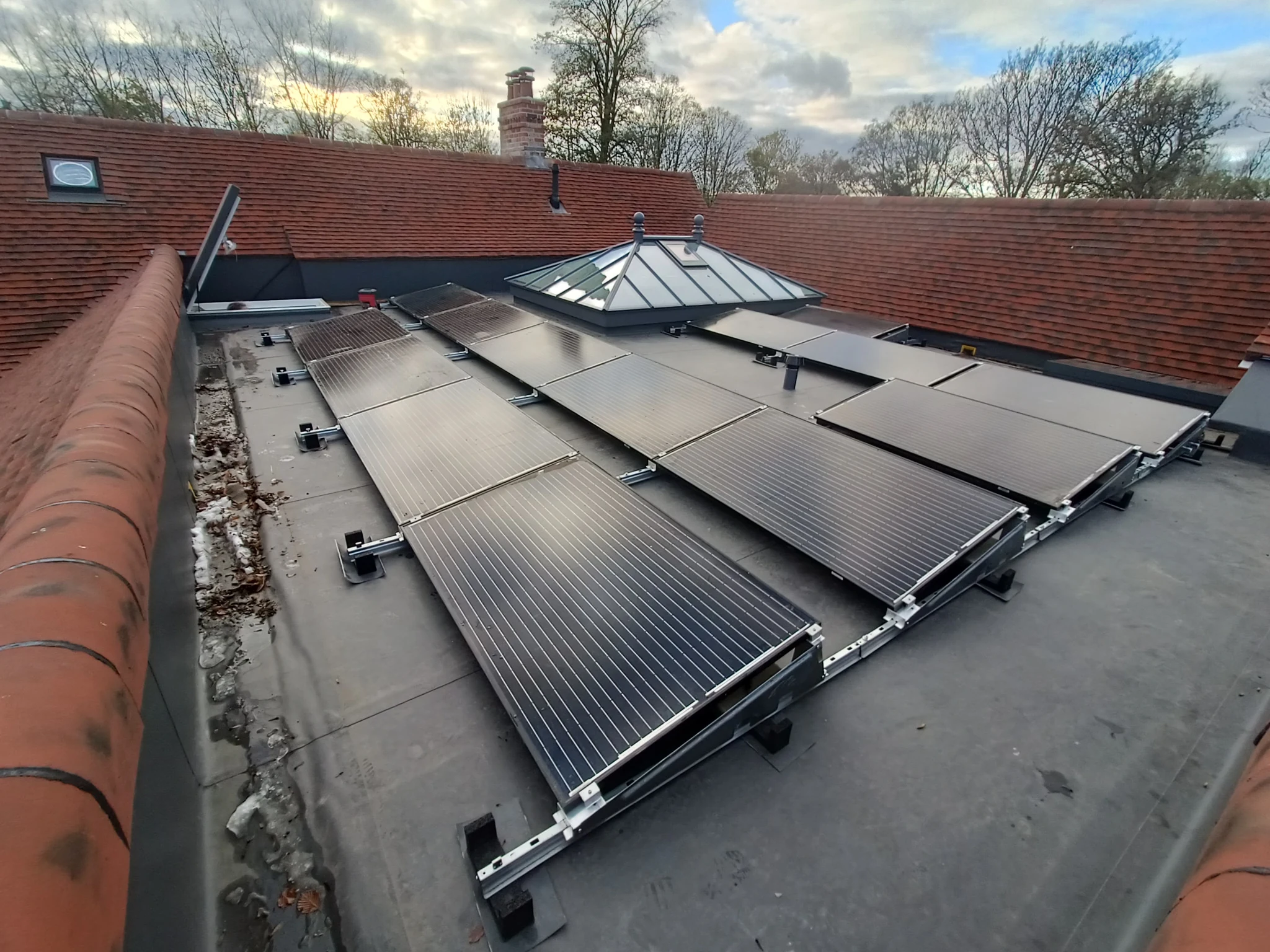
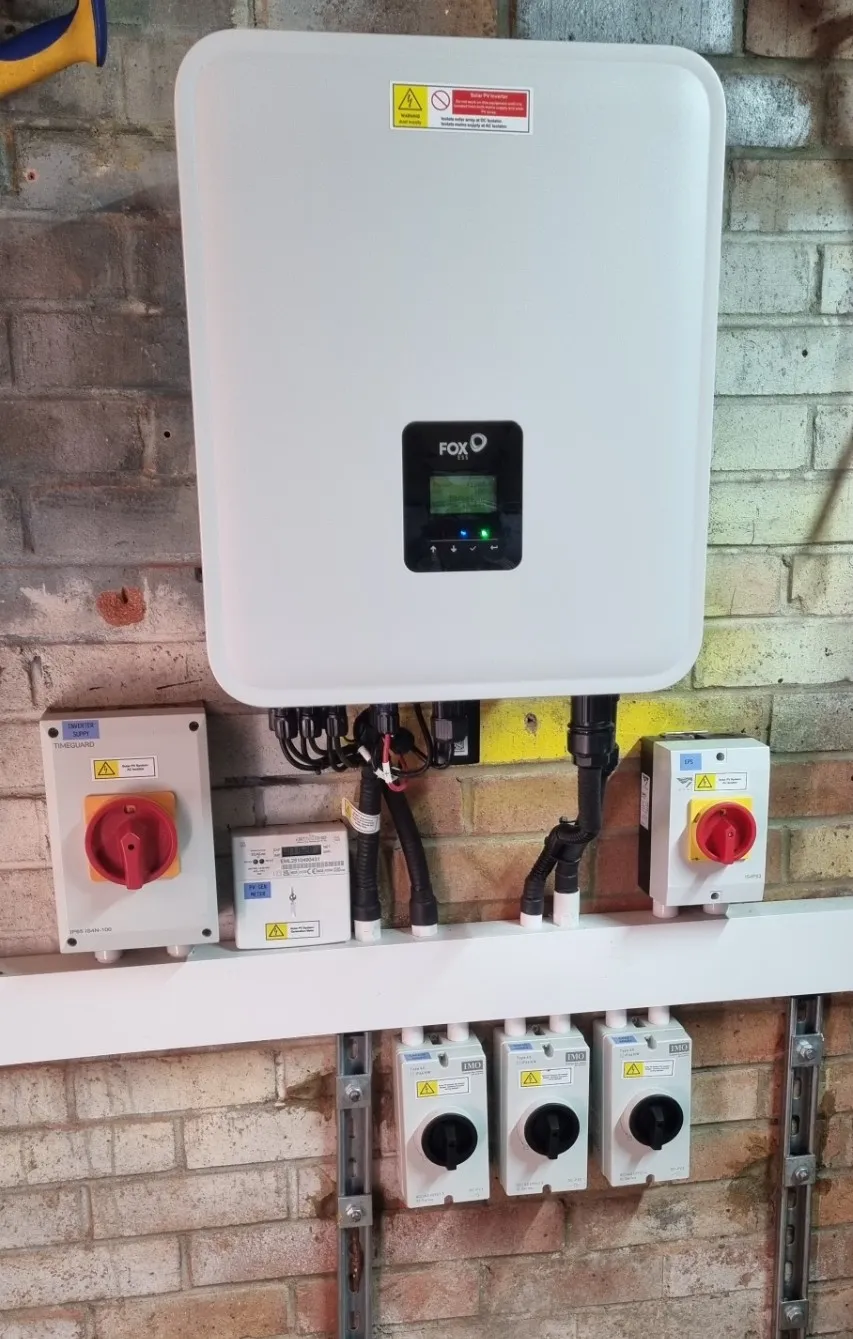
Related Installations
Explore renewable energy systems designed and installed by Bespoke PV.
Planning a renewable energy system?
Speak with Bespoke PV about solar PV, battery storage and long-term energy planning.