Reliability
Battery storage systems are expected to work daily for many years, so reliability and product quality are essential.

The best battery storage system is not simply the cheapest or largest battery available. It should be selected around your property, solar generation, energy usage, backup requirements and long-term support needs.
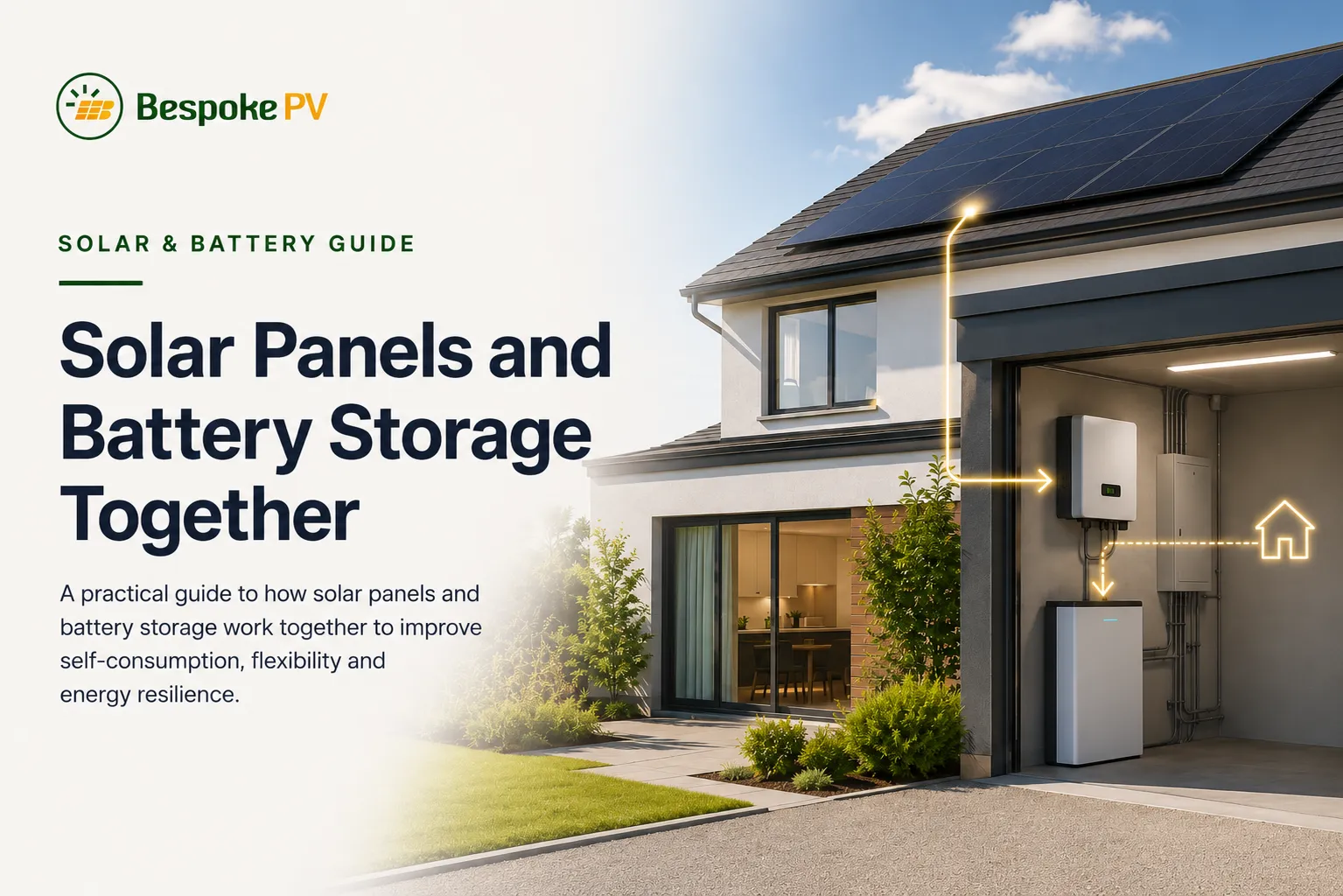
Battery storage is becoming one of the most important parts of modern solar PV systems.
As homes become increasingly electrified through EV charging, heat pumps, smart tariffs and wider electricity demand growth, battery systems are increasingly being viewed as long-term household infrastructure rather than optional add-ons.
A well-designed battery system may help homeowners reduce imported electricity, improve self-consumption and increase long-term operational flexibility.
However, not all battery systems are equal, and the right solution depends heavily on how the property actually uses electricity.
Battery storage systems are expected to work daily for many years, so reliability and product quality are essential.
A good monitoring platform helps you understand solar generation, battery charging, household usage and grid imports.
Installer knowledge, manufacturer support and warranty handling all matter over the life of the system.
The best battery system is not necessarily the one with the largest storage capacity or lowest upfront cost.
Good systems should balance battery sizing, monitoring capability, future expandability, inverter compatibility, software quality, backup functionality and long-term manufacturer support.
Modern battery systems increasingly rely on intelligent software platforms, firmware updates, cloud monitoring and wider smart energy integration.
As a result, installer capability and long-term ecosystem reliability are becoming increasingly important within battery storage selection.
Battery selection increasingly involves much more than simple storage capacity.
Battery storage systems vary significantly in capability and long-term flexibility.
We often find that the best battery system is the one that fits the customer’s actual energy profile, not necessarily the system with the biggest headline storage figure.
Good design should consider solar generation, future usage, available space, monitoring and long-term support.
Battery capacity is usually measured in kilowatt-hours and refers to how much electricity the battery can store.
A larger battery can store more electricity, but that does not automatically make it the best option.
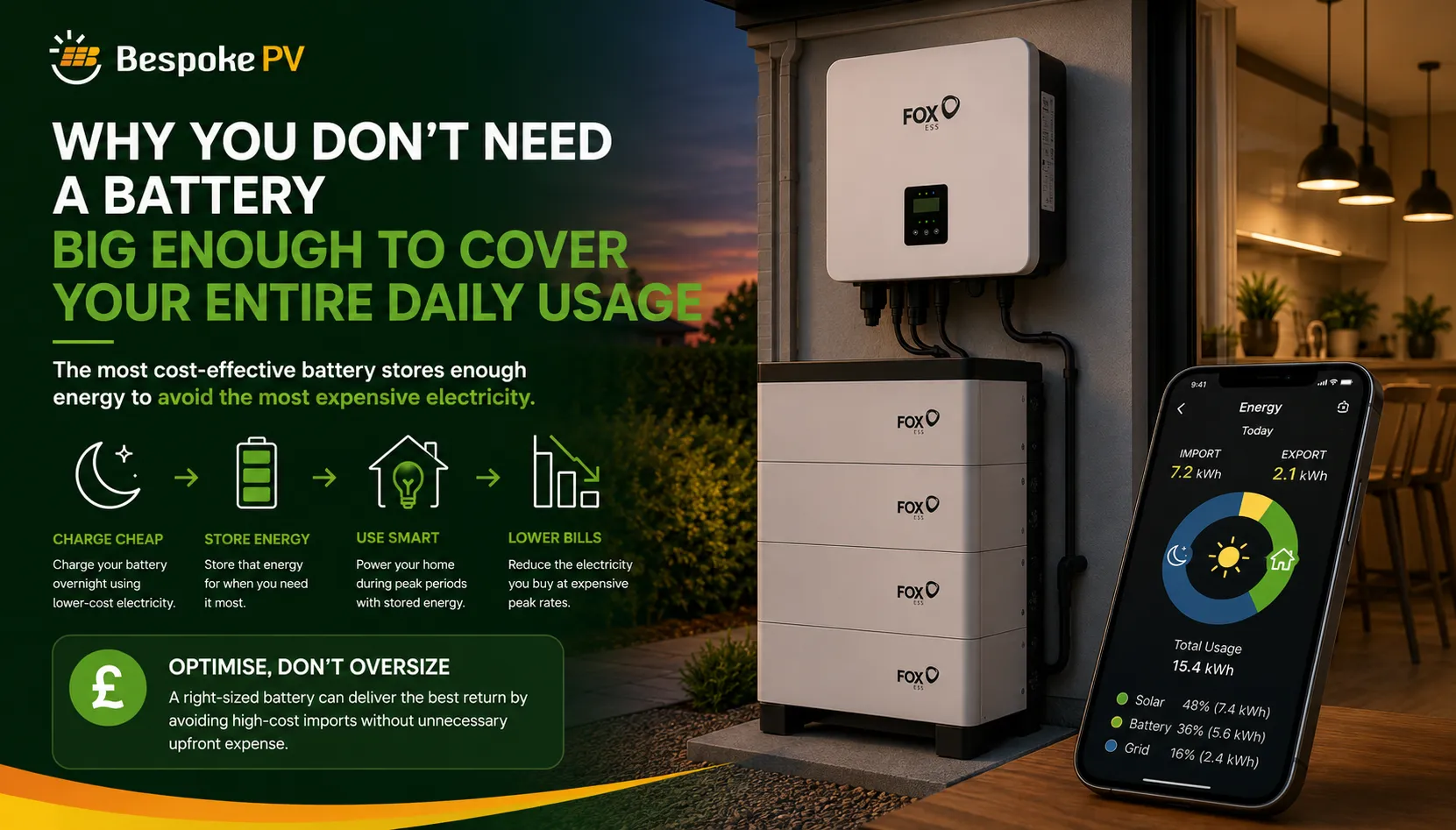
Oversized batteries may increase upfront costs without necessarily improving long-term system performance.
The right battery size depends on solar generation levels, daily electricity usage, evening demand patterns, EV charging plans, heating electrification and backup requirements.
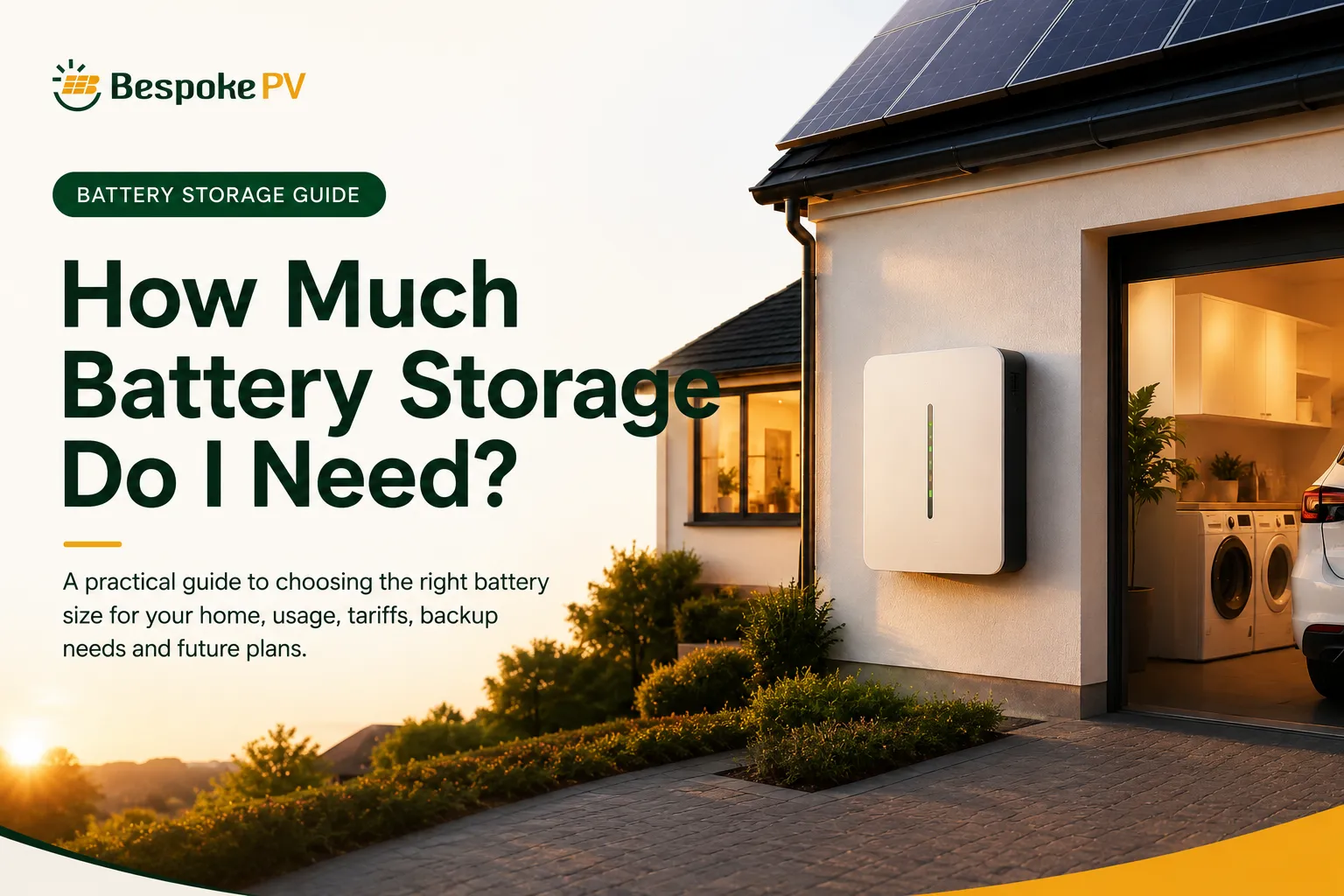
Read our guide: How Much Battery Storage Do I Need?
Bigger storage capacity is not always better.
Modern battery systems increasingly rely on intelligent monitoring and software integration.
A good monitoring platform helps homeowners understand solar generation, battery charging, household electricity usage, grid imports and tariff behaviour.
Monitoring also helps identify faults, underperformance or unusual system behaviour earlier.
As homes become more software-driven and electrified, monitoring quality is becoming increasingly important within overall system performance.
Read our guide: How Do Solar Inverters Work?
Battery storage is only as useful as your ability to understand and manage it.
Modern monitoring systems provide detailed visibility into household energy behaviour.
When comparing battery systems, homeowners should look beyond headline warranty length alone.
Warranty structures may include cycle limits, capacity retention guarantees, usage restrictions and software conditions.
Long-term manufacturer stability is also becoming increasingly important as battery systems become more software-driven.
Recent industry events have highlighted the importance of long-term support, firmware continuity and installer capability.
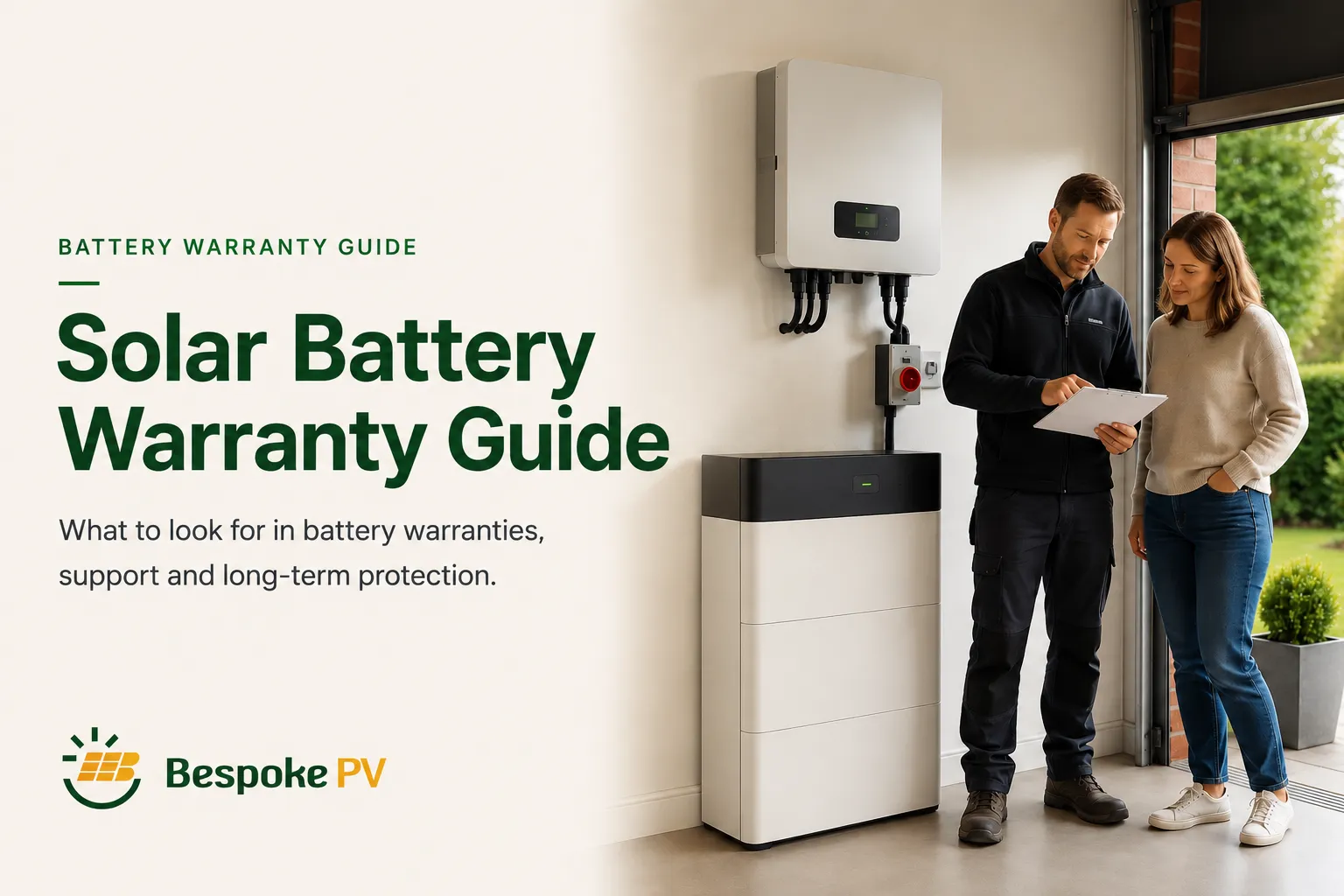
Read our guide: Solar Battery Warranty Guide and GivEnergy Administration: What It Means for Homeowners
Not all warranties provide the same long-term confidence.
Not every battery system provides backup functionality by default.
If backup power is important, the system should be designed around that requirement from the beginning.
Backup-capable systems may support essential household circuits during outages depending on inverter design, battery sizing and electrical configuration.
As electricity becomes increasingly central to daily life, energy resilience and backup capability are becoming more important considerations for many homeowners.
Read our guide: What Happens During a Power Cut?
Backup capability should be planned from the beginning of the project.
Backup functionality depends on several technical design factors.
Electric vehicles are significantly increasing household electricity demand.
Many homeowners are now planning battery systems around future EV charging rather than current electricity usage alone.
Battery storage may help support intelligent EV charging strategies, improve self-consumption and reduce imported electricity during peak pricing periods.
As transport electrification continues increasing, battery storage is becoming increasingly important within wider household energy planning.
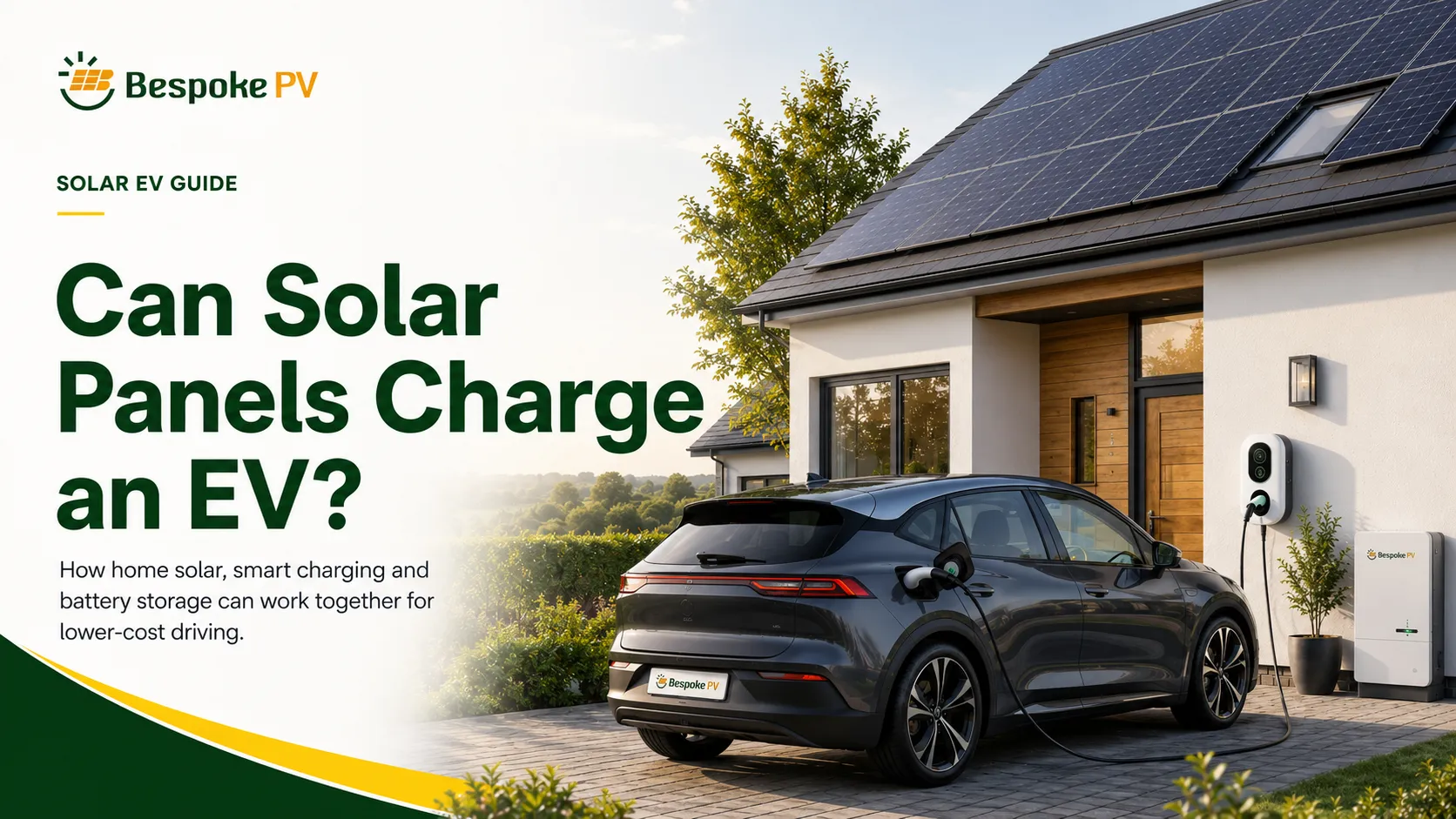
Read our guide: Can Solar Panels Charge an EV?
Modern energy systems increasingly operate together.
Heat pumps are another major factor increasing household electricity usage.
As more homes adopt electrified heating systems, battery storage may become increasingly important for managing energy demand and improving self-consumption.
Many homeowners are now planning solar PV, battery storage, EV charging and heating systems together rather than independently.
This wider electrification trend is significantly changing how modern renewable energy systems are designed.
Read our guide: Can Solar Panels Power a Heat Pump?
Battery systems may improve long-term operational flexibility and resilience.
Battery storage increasingly supports EV charging and electrified heating.
Modern systems allow homeowners to manage electricity more intelligently.
A battery system should be designed as part of the whole property energy setup, not treated as a standalone product.
Professionally designed systems should consider solar generation profiles, household electricity usage, monitoring systems, electrical integration, future EV charging, heat pump compatibility and long-term scalability.
As homes become increasingly electrified, intelligent system design and long-term flexibility are becoming more important than ever.
This is one reason professional installer expertise matters significantly within battery storage selection.
Battery storage increasingly forms part of wider infrastructure planning.
Bespoke PV designs solar PV and battery storage systems around real property usage, future plans and long-term support requirements.
Professionally designed systems should balance battery sizing, monitoring quality, inverter compatibility, backup requirements, future electrification and operational flexibility.
The strongest systems are usually those designed around long-term energy evolution rather than short-term specification comparisons alone.
As household electrification continues increasing, intelligent battery system planning is becoming more important than ever.
Integrated energy systems benefit from careful long-term planning.
Every property has different electricity usage patterns and long-term goals.
Explore more Bespoke PV guides covering battery sizing, electrification and long-term energy resilience.
The best system depends on your property, electricity usage, solar generation, backup requirements and long-term support needs.
No. Battery capacity should match your usage and generation profile rather than simply being as large as possible.
Yes. Warranty terms, manufacturer support and installer support are important considerations.
Some systems can support backup functionality, but this depends on the equipment and installation design.
Some systems allow expansion, although compatibility depends on the manufacturer and system design.
Explore related Bespoke PV articles and renewable energy insights.
Explore renewable energy systems designed and installed by Bespoke PV.
Bespoke PV designs solar PV, battery storage and EV charging systems across Hampshire, Dorset and the South Coast.
Bespoke solar PV, battery storage and EV charging systems for Southampton homes and businesses, designed around roof space, usage and future energy plans.
Solar panels in Southampton →Bespoke solar PV, battery storage and EV charging systems for homes and businesses across Winchester and Hampshire.
Solar panels in Winchester →Solar PV, battery storage and EV charging systems for homes and businesses across Portsmouth and the South Coast.
Solar panels in Portsmouth →Solar PV, battery storage and EV charging systems for homes and businesses across Bournemouth and the South Coast.
Solar panels in Bournemouth →Bespoke PV designs solar PV, battery storage and EV charging systems across Hampshire, Dorset, Wiltshire and the South Coast.
Speak with Bespoke PV about battery sizing, backup power and long-term energy resilience.