Warehouses
Large roof areas can provide strong potential for commercial solar generation.

Commercial solar PV can help businesses reduce imported electricity, improve long-term energy resilience and support wider sustainability planning.
Electricity costs have become a major operational concern for many organisations.
Commercial solar PV allows businesses to generate renewable electricity on-site, reducing reliance on imported grid electricity during daytime operating hours.
For businesses with suitable roof space and consistent electricity demand, solar panels can form part of a long-term energy cost and resilience strategy.
As energy markets continue evolving, more organisations are beginning to view commercial solar as long-term infrastructure rather than a simple short-term energy-saving measure.
Large roof areas can provide strong potential for commercial solar generation.
Daytime electricity demand often aligns well with solar PV output.
High operational electricity usage can make solar PV especially valuable.
Commercial electricity pricing has become increasingly unpredictable in recent years.
Global instability, infrastructure pressures, supply constraints and wider electrification trends have all increased focus on operational energy resilience.
Many businesses are therefore exploring solar PV as a way to improve long-term electricity cost predictability while reducing dependence on imported grid electricity.
This shift is becoming increasingly important as EV charging, electrified heating and operational electricity demand continue increasing across commercial sectors.
Commercial energy planning increasingly involves long-term infrastructure thinking.
Commercial organisations are increasingly considering wider long-term energy planning.
Businesses are increasingly viewing solar PV as long-term infrastructure rather than a simple energy-saving product.
Future EV charging, battery storage, rising energy costs and sustainability goals are all changing how commercial solar projects are planned.
Commercial solar suitability depends on several important factors.
Roof size, structural condition, daytime electricity demand, operational hours, future site plans, grid connection capacity and roof access all influence overall project viability.
Buildings with strong daytime electricity demand often align particularly well with solar generation because much of the generated electricity may be used directly on-site.
Every commercial property therefore requires careful assessment rather than relying on generic package assumptions.
Every commercial site has different operational energy requirements.
A commercial solar project should be designed around the building, usage profile and long-term business objectives.
Commercial solar projects often involve significantly different planning considerations.
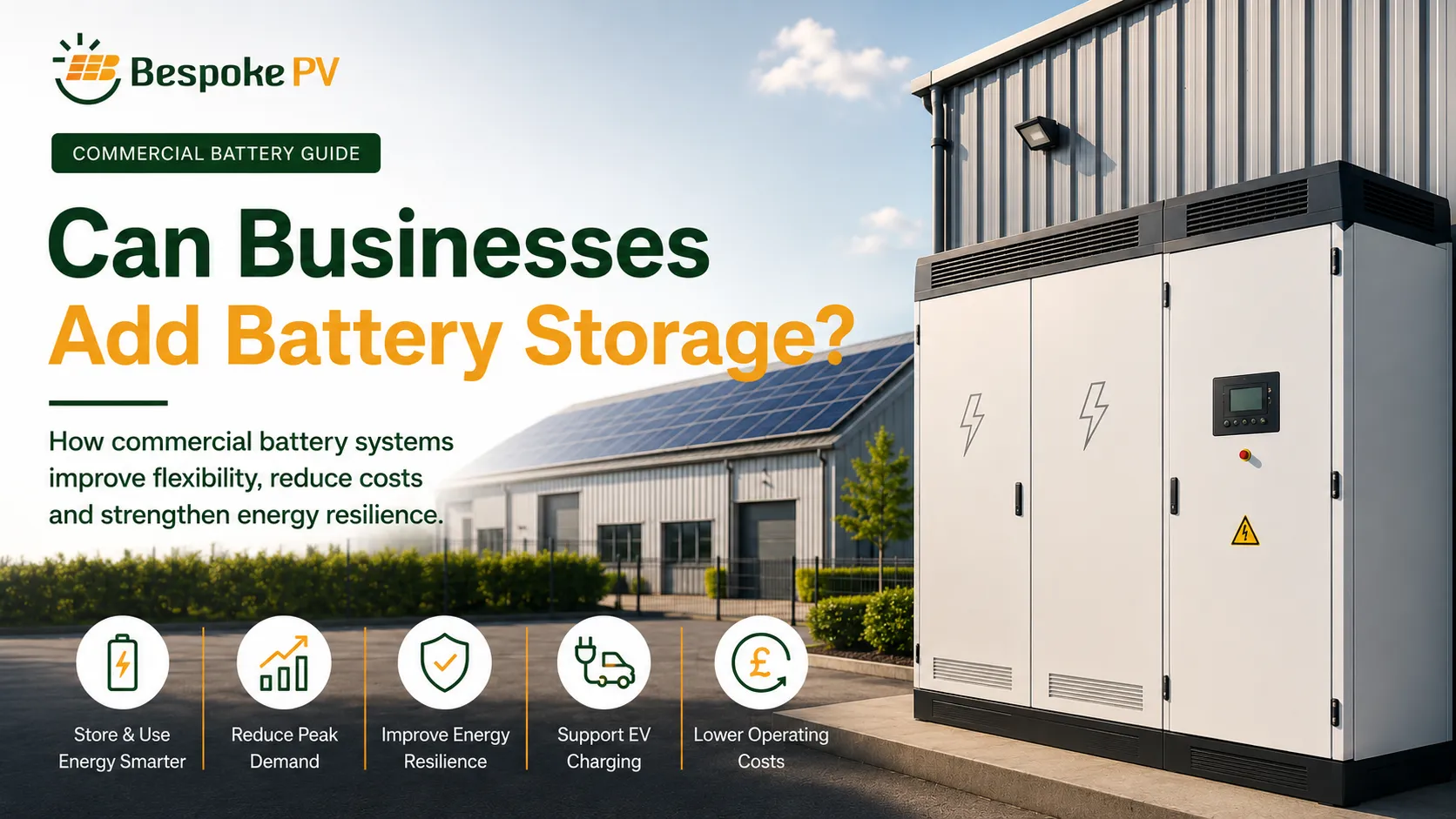
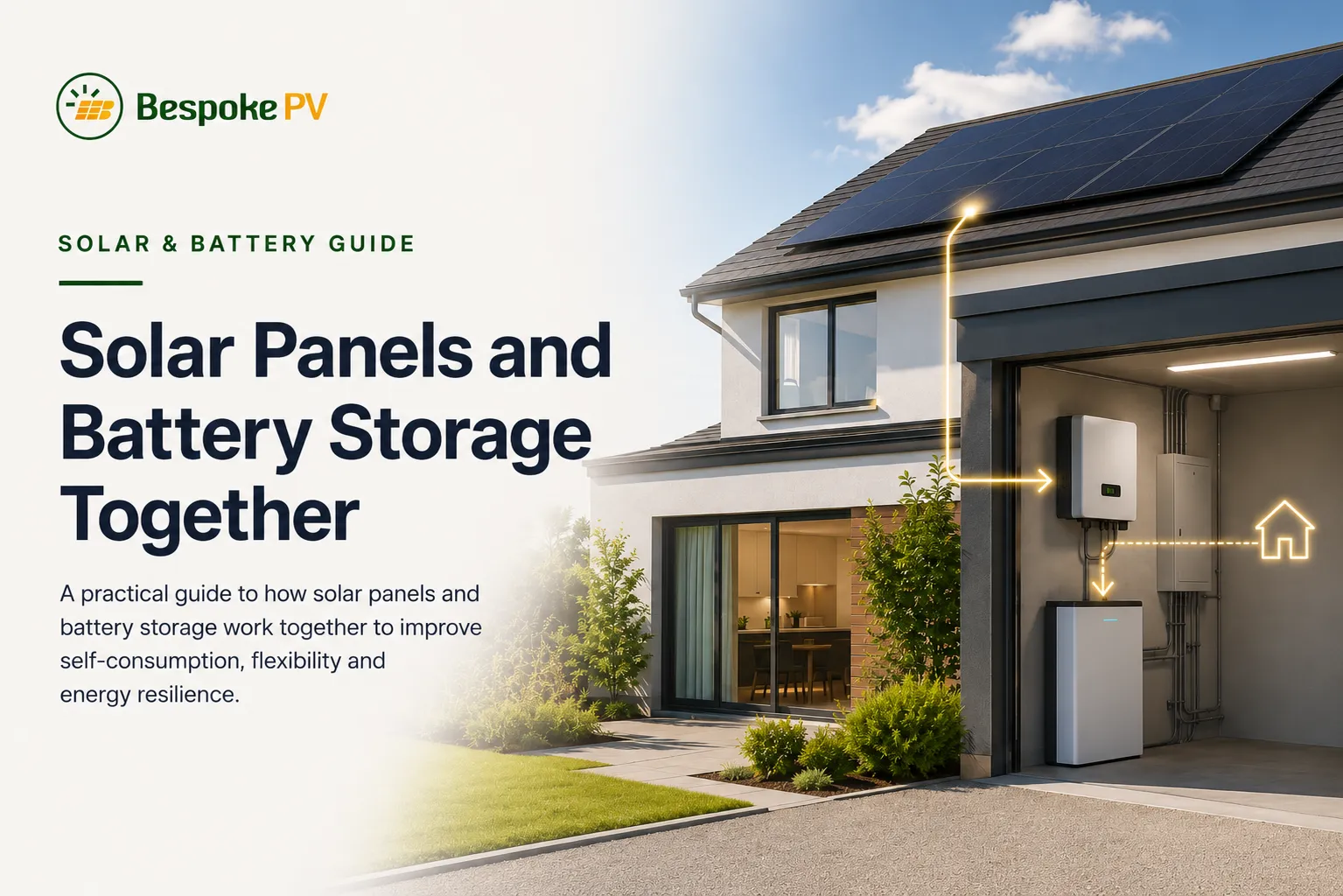
Commercial battery storage is becoming increasingly important alongside solar PV.
Battery systems may help businesses improve self-consumption, reduce imported electricity during peak pricing periods, support operational flexibility and prepare for wider electrification.
Battery systems may also support load management strategies and intelligent tariff optimisation.
As commercial energy systems become increasingly software-driven, intelligent monitoring and long-term system management are becoming more important than ever.
Read our guide: Can Businesses Add Battery Storage?
Battery storage significantly changes how commercial electricity can be managed.
Many businesses are increasingly planning for workplace EV charging, fleet electrification and visitor charging infrastructure.
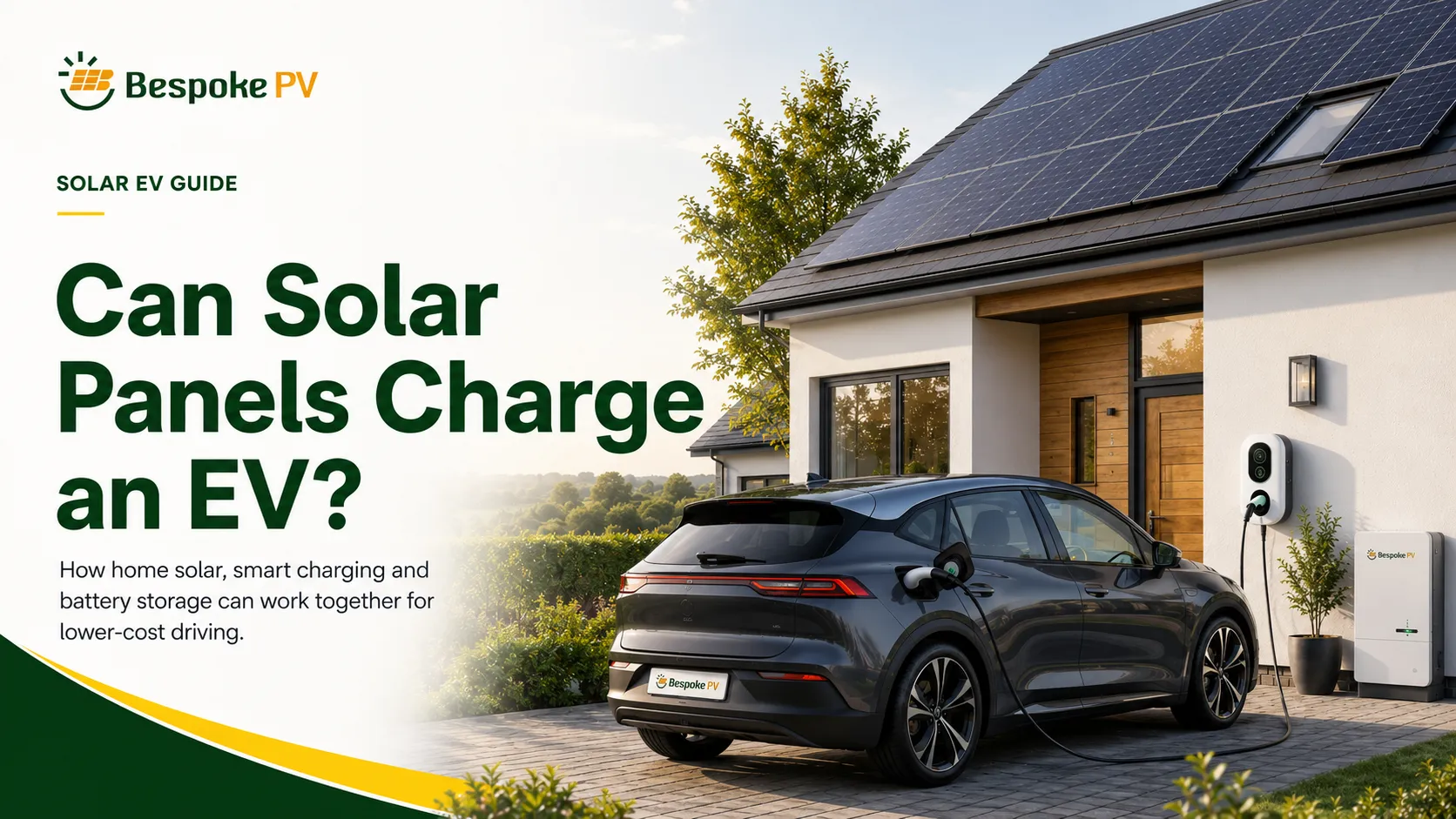
Commercial solar PV is often designed alongside EV charging systems because daytime solar generation may align well with workplace charging demand.
This integration is becoming increasingly important as businesses prepare for wider transport electrification.
Battery storage and intelligent monitoring systems may also help businesses manage charging demand more effectively.
Read our guide: Can Solar Panels Charge an EV?
Businesses are increasingly preparing for electric vehicles.
Integrated systems may support wider business electrification strategies.
Modern commercial energy systems increasingly rely on intelligent monitoring, software optimisation and integrated infrastructure planning.
Many organisations now combine solar PV, battery storage, EV charging, building management systems and smart tariffs together.
This wider energy ecosystem increasingly requires coordinated long-term planning rather than isolated technology decisions.
Operational flexibility, resilience and scalability are becoming increasingly important within modern commercial energy strategy.
Reducing long-term dependence on imported electricity may improve resilience.
Businesses are preparing for EV charging and electrified operations.
Renewable electricity increasingly supports wider ESG and sustainability objectives.
For many organisations, commercial solar is about much more than simple electricity bill reduction.
Businesses are increasingly considering energy resilience, ESG objectives, future electrification, operational predictability and long-term infrastructure strategy.
As electricity demand continues increasing, organisations may benefit from greater control over how electricity is generated, stored and managed.
This broader strategic perspective is becoming increasingly important across many industries.
Commercial energy planning increasingly involves broader operational thinking.
Commercial solar projects may involve additional grid connection and infrastructure planning compared with residential systems.
Larger systems may require DNO approvals, export assessments, electrical upgrades or infrastructure coordination depending on site requirements.
Battery storage, EV charging and future expansion plans may also influence how the electrical infrastructure should be designed.
This is one reason professional assessment and coordinated engineering are so important for commercial projects.
Every business has different operational energy requirements.
Commercial solar PV systems should be designed around real operational requirements, not generic package sizes.
Commercial properties are increasingly becoming part of wider electrified infrastructure networks.
Fleet electrification, battery storage, electrified heating, operational resilience and energy management systems are all influencing how businesses plan energy strategy.
The strongest commercial solar systems are usually those designed around long-term operational flexibility rather than short-term installation convenience alone.
As electricity becomes increasingly central to business operations, intelligent energy planning is becoming more important than ever.
Integrated commercial energy systems benefit from careful long-term planning.
Bespoke PV designs commercial solar and battery systems focused on long-term resilience, electrification and operational flexibility.
Explore more Bespoke PV guides covering battery storage, EV charging and long-term commercial energy planning.
For many businesses with suitable roof space and daytime electricity demand, solar PV can reduce imported electricity and support long-term energy planning.
Yes. Commercial battery storage may improve self-consumption, flexibility and resilience depending on the site.
Renewable electricity generation can support sustainability reporting and carbon reduction objectives.
Requirements depend on system size, building type, location and local planning considerations.
Yes. Bespoke PV provides commercial solar PV and battery storage assessments across Hampshire and the South Coast.
Explore related Bespoke PV articles and renewable energy insights.

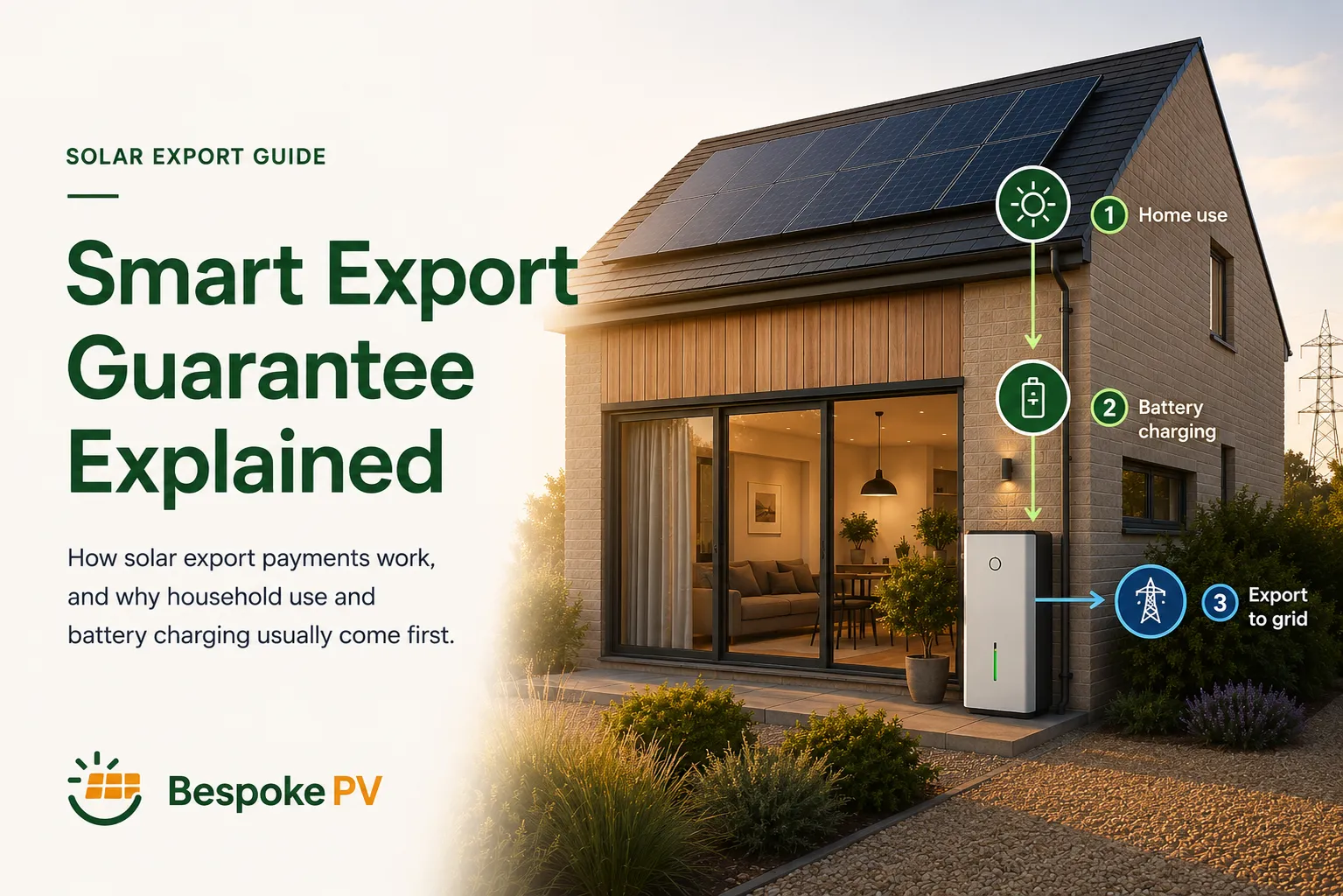
Explore renewable energy systems designed and installed by Bespoke PV.
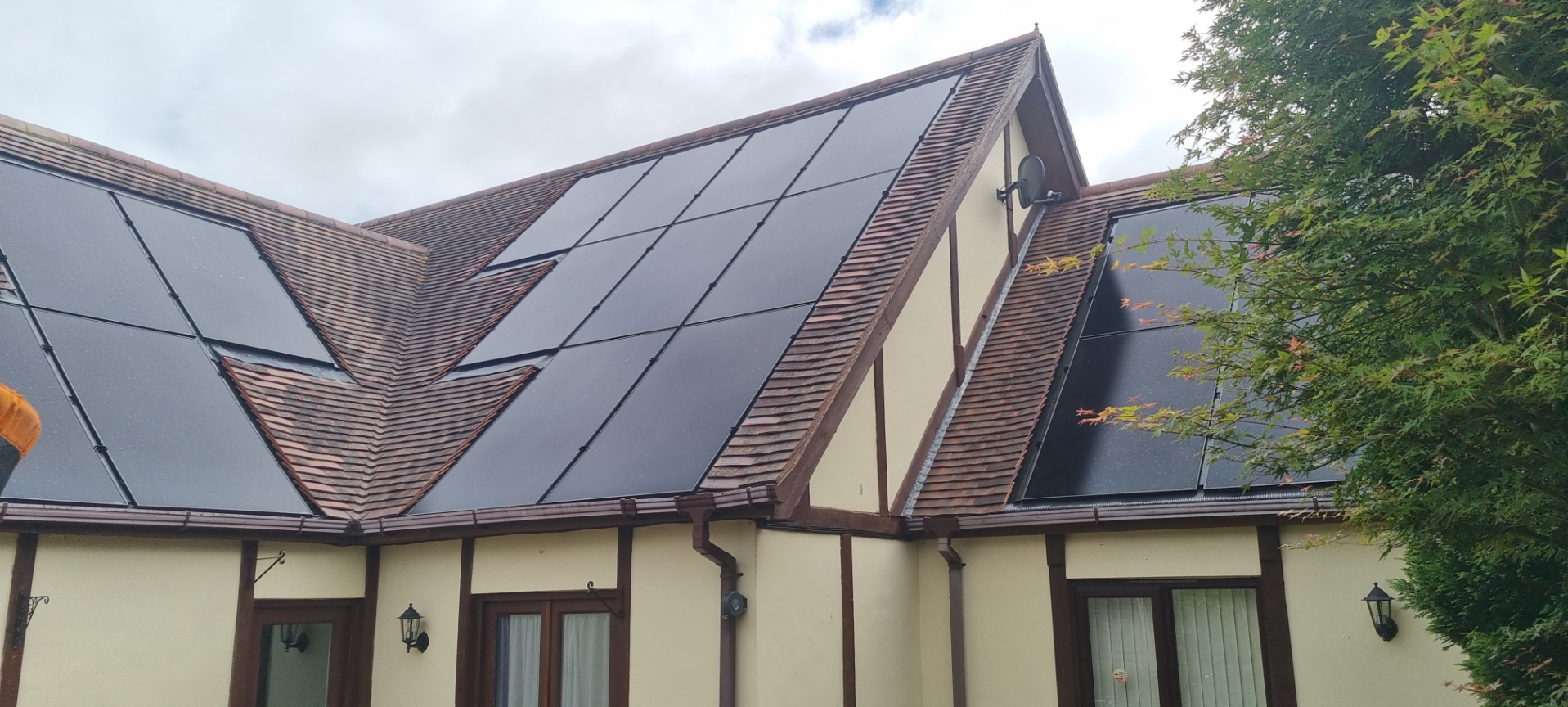

Bespoke PV designs solar PV, battery storage and EV charging systems across Hampshire, Dorset and the South Coast.
Bespoke solar PV, battery storage and EV charging systems for Southampton homes and businesses, designed around roof space, usage and future energy plans.
Solar panels in Southampton →Bespoke solar PV, battery storage and EV charging systems for homes and businesses across Winchester and Hampshire.
Solar panels in Winchester →Solar PV, battery storage and EV charging systems for homes and businesses across Portsmouth and the South Coast.
Solar panels in Portsmouth →Solar PV, battery storage and EV charging systems for homes and businesses across Bournemouth and the South Coast.
Solar panels in Bournemouth →Bespoke PV designs solar PV, battery storage and EV charging systems across Hampshire, Dorset, Wiltshire and the South Coast.
Contact Bespoke PV for tailored commercial solar and battery storage guidance.