Warranty Support
Customers naturally want reassurance regarding warranty handling and future support availability.

News surrounding GivEnergy entering administration has understandably raised concerns for many homeowners considering battery storage or already operating GivEnergy systems.
Battery storage systems are increasingly becoming central to modern solar PV installations.
Homeowners are no longer simply buying solar panels.
They are increasingly investing in long-term energy infrastructure involving battery storage, monitoring platforms, smart tariff integration, EV charging and backup functionality.
Because of this, manufacturer stability, software reliability and long-term support are becoming increasingly important considerations within the renewable energy industry.
Customers naturally want reassurance regarding warranty handling and future support availability.
Battery systems increasingly rely on cloud-based monitoring and software ecosystems.
Some homeowners planned future battery expansion or wider energy integration.
Historically, solar panels themselves were relatively simple standalone products.
Modern battery storage systems are much more software-driven and interconnected.
Many systems now depend on cloud monitoring services, firmware updates, smart tariff integration, mobile applications, remote diagnostics and software optimisation.
This means long-term manufacturer stability can become an important factor when choosing battery storage technology.
Increasingly, battery systems operate more like intelligent digital energy platforms rather than simple electrical hardware.
Software stability is becoming increasingly important within home energy systems.
Modern home battery systems increasingly depend on digital infrastructure.
Events like this reinforce why battery storage should never be selected on headline price alone.
Long-term support, installer capability, software quality, monitoring reliability and manufacturer stability all matter significantly over the lifetime of the system.
As homes become increasingly electrified, battery systems are becoming central infrastructure components within many properties.
Electric vehicles, heat pumps, smart tariffs and wider home electrification all increase reliance on intelligent energy management systems.
This means homeowners increasingly depend on software support, firmware updates, remote monitoring and manufacturer ecosystems for day-to-day operation.
Long-term platform continuity therefore becomes far more important than it was during earlier generations of solar technology.
Modern energy systems are becoming increasingly software-driven.
Existing system owners should avoid panic decisions.
Many battery systems continue operating normally regardless of wider corporate events.
However, customers may wish to retain installation documentation, keep warranty information accessible, review monitoring access, maintain installer contact details and ensure firmware settings are documented.
Long-term outcomes may depend on future support arrangements, restructuring activity or acquisition outcomes.
Good documentation and installer relationships therefore become increasingly valuable during periods of uncertainty.
Good system documentation can help support long-term continuity.
Preparation and documentation may help reduce future uncertainty.
Professional installer support is increasingly important within modern energy systems.
A strong installer relationship may help homeowners navigate troubleshooting, monitoring issues, future upgrades, battery expansion planning and alternative product integration.
Increasingly, homeowners are recognising that installer capability may be just as important as the hardware itself.
As systems become more interconnected and software-driven, ongoing technical support and intelligent system design become increasingly valuable.
Battery storage should be viewed as long-term infrastructure.
For homeowners considering battery storage, this situation highlights the importance of taking a broader long-term view.
When comparing systems, considerations should include manufacturer stability, installer expertise, monitoring quality, backup functionality, warranty structure and future expansion capability.
Increasingly, battery systems should be evaluated as long-term infrastructure rather than standalone consumer products.
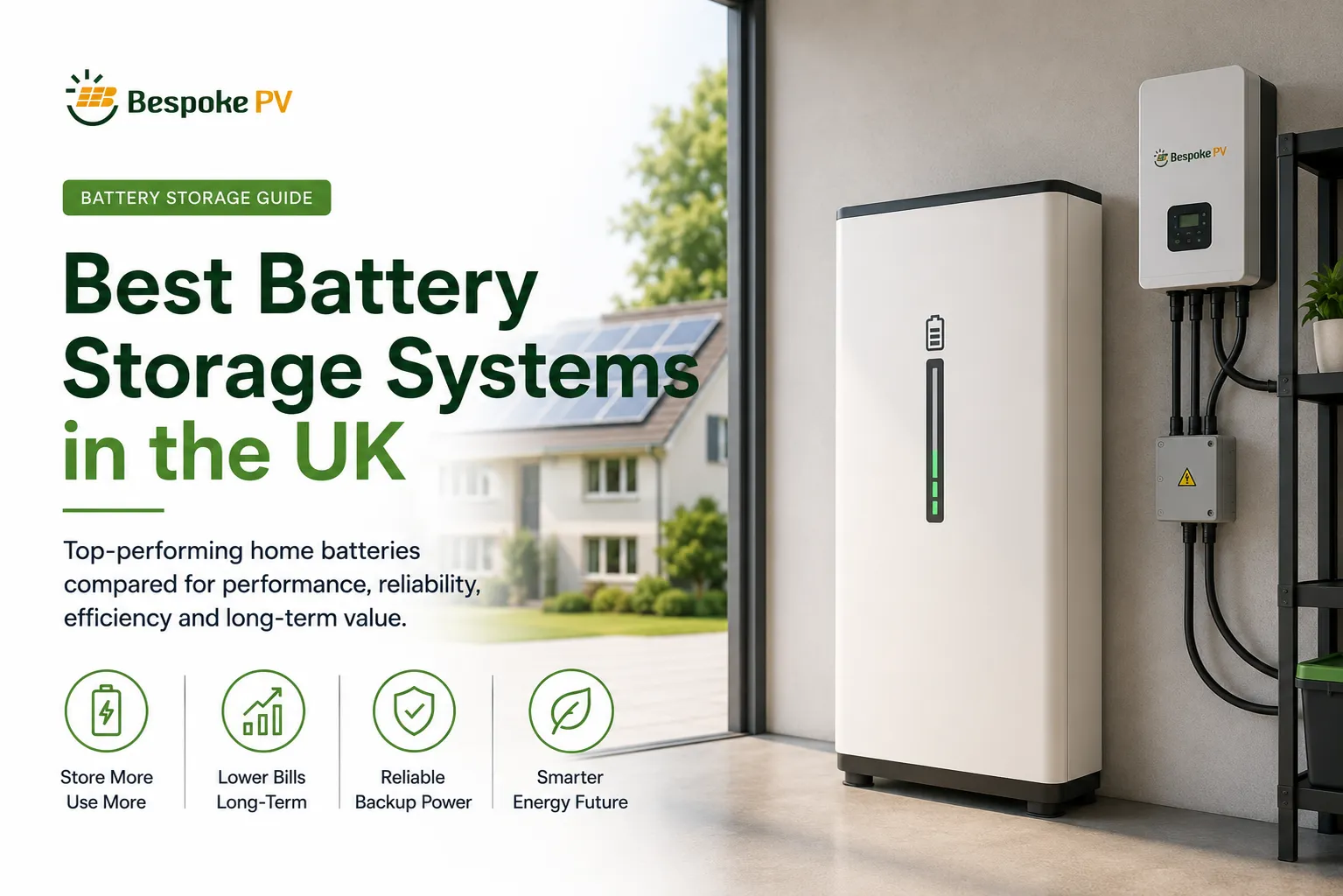
Read our guide: Best Battery Storage Systems UK
Long-term support is becoming increasingly important within battery storage selection.
Battery selection increasingly involves much more than storage capacity alone.
Despite isolated industry challenges, demand for solar PV and battery storage remains strong across the UK.
Rising electricity costs, EV adoption, heat pump growth, energy resilience concerns and wider electrification trends continue driving battery storage adoption.
Many homeowners now view battery systems as part of wider household energy planning rather than standalone technology purchases.
The overall market continues evolving rapidly as homes become increasingly electrified and software-driven.
Electric vehicles and heat pumps are significantly increasing household electricity demand.
Many homeowners are therefore integrating battery storage alongside solar PV, EV charging and electrified heating systems.
This creates greater dependence on intelligent monitoring, software optimisation and smart tariff integration.
Battery systems increasingly act as the operational centre of wider home energy ecosystems.
Read our guides: Can Solar Panels Charge an EV? and Can Solar Panels Power a Heat Pump?
Modern energy systems are becoming increasingly interconnected.
Increasingly, solar and battery systems are about more than simple payback calculations.
Homeowners are now thinking more broadly about energy independence, future electricity pricing, grid resilience, backup capability and future EV charging.
Battery storage increasingly forms part of wider long-term infrastructure planning rather than simple energy cost reduction.
This means future flexibility, operational resilience and software reliability are becoming major considerations within system design.
Read our article: Why Solar Payback Is the Wrong Question
Battery storage increasingly forms part of wider home energy infrastructure.
Modern battery systems increasingly support wider household electrification.
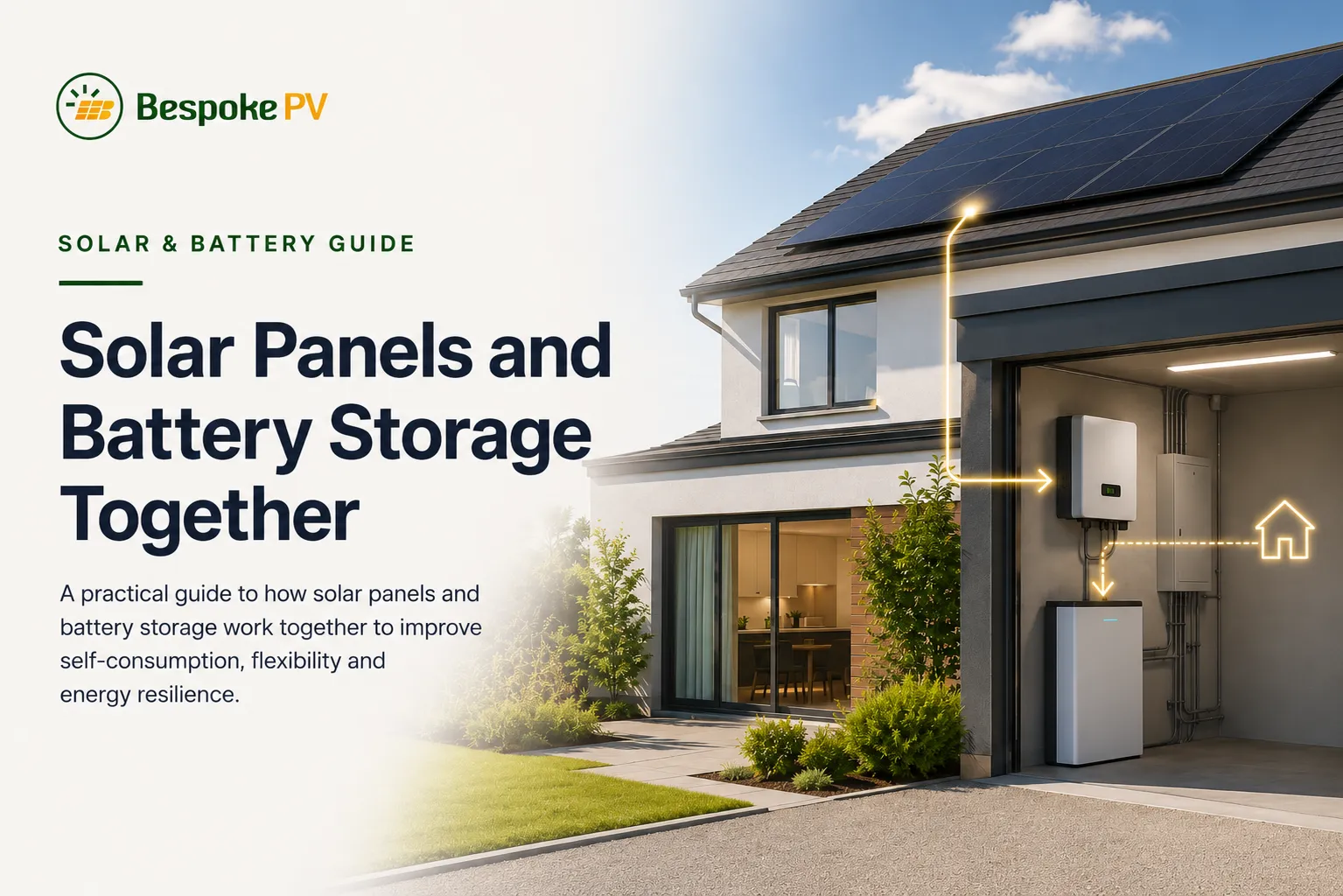
Modern battery storage systems require careful integration with solar PV, monitoring platforms, electrical infrastructure, EV charging and future electrification plans.
The strongest systems are usually those designed around long-term flexibility, resilience and future household energy demand rather than short-term cost alone.
As homes become increasingly software-driven and electrified, professional installer capability and long-term support are becoming increasingly valuable.
This is why professionally coordinated energy system design matters more than ever.
Professionally supported systems often provide stronger long-term reliability.
Bespoke PV designs battery and solar systems focused on long-term resilience, flexibility and intelligent energy management.
Explore more Bespoke PV guides covering battery storage, software-driven energy systems and long-term electrification planning.
Not necessarily. Many systems continue operating normally, although long-term support arrangements may evolve.
Modern battery systems rely heavily on software, monitoring platforms and long-term support infrastructure.
Yes. Installer expertise and long-term support are increasingly important considerations.
Yes. Many systems now rely on monitoring platforms, firmware updates and smart tariff integration.
Yes. Demand continues increasing as households adopt EV charging, heat pumps and wider electrification.
Explore related Bespoke PV articles and renewable energy insights.
Explore renewable energy systems designed and installed by Bespoke PV.

Bespoke PV designs solar PV, battery storage and EV charging systems across Hampshire, Dorset and the South Coast.
Bespoke solar PV, battery storage and EV charging systems for Southampton homes and businesses, designed around roof space, usage and future energy plans.
Solar panels in Southampton →Bespoke solar PV, battery storage and EV charging systems for homes and businesses across Winchester and Hampshire.
Solar panels in Winchester →Solar PV, battery storage and EV charging systems for homes and businesses across Portsmouth and the South Coast.
Solar panels in Portsmouth →Solar PV, battery storage and EV charging systems for homes and businesses across Bournemouth and the South Coast.
Solar panels in Bournemouth →Bespoke PV designs solar PV, battery storage and EV charging systems across Hampshire, Dorset, Wiltshire and the South Coast.
Speak with Bespoke PV about battery storage, manufacturer support and long-term system resilience.