Moving House
Some homeowners wish to retain their solar investment when relocating.

In some situations, solar panels can be removed from one property and reinstalled elsewhere. However, there are important technical, financial and practical considerations before doing so.
Yes.
Solar panels themselves can often be physically removed and reused provided they remain in good condition.
However, relocating a solar PV system is usually far more complicated than simply moving the panels.
The new property may require a different roof layout, new mounting systems, electrical redesign, updated inverter configuration, battery integration changes and new DNO approval or notification.
Modern solar systems are increasingly integrated energy ecosystems rather than simple panel installations, which makes relocation planning more complex than many homeowners initially expect.
Some homeowners wish to retain their solar investment when relocating.
A new property may offer better roof orientation or more usable roof space.
Relocation may be considered alongside battery storage or EV charging upgrades.
Many solar systems are designed specifically around the original property.
Roof layout, shading behaviour, inverter sizing, battery configuration, monitoring systems and electrical infrastructure are all tailored to the original installation.
As homes become increasingly electrified through EV charging, battery storage and heat pumps, solar systems are becoming much more integrated with wider household energy infrastructure.
This means relocating a system often involves partial redesign rather than simple equipment transfer.
Relocation often involves more than simply moving the panels themselves.
The new property may require significant system redesign.
Some components may be reusable while others may need replacing depending on the age and design of the original system.
Potentially reusable components may include solar panels, some inverter systems, battery storage systems, electrical cabling and monitoring equipment.
However, mounting systems are often roof-specific and may not be reusable on the new property.
Older equipment may also be incompatible with newer monitoring platforms, hybrid inverters or battery technologies.
Relocation is not always the best long-term option.
The new property may have very different roof characteristics.
Solar system suitability depends on roof orientation, roof pitch, available roof area, structural condition, shading levels and roof covering type.
In some situations, the new roof may actually allow a more effective solar system design than the original property.
Good system performance depends heavily on tailoring the installation to the building itself rather than simply reusing equipment wherever possible.
Every roof creates different solar design opportunities and limitations.
Roof suitability strongly influences long-term solar performance.
Relocating solar panels is technically possible, but it is not always the most cost-effective option.
Older systems may benefit more from redesigning or upgrading the installation at the new property rather than simply transferring existing equipment.
Sometimes, but not always.
Inverter reuse depends on system age, compatibility with the new layout, battery storage requirements, monitoring compatibility and future expansion plans.
Some homeowners choose to upgrade to a newer hybrid inverter during relocation, particularly if adding battery storage or EV charging.
Modern inverters increasingly act as intelligent energy management systems rather than simple electricity converters.
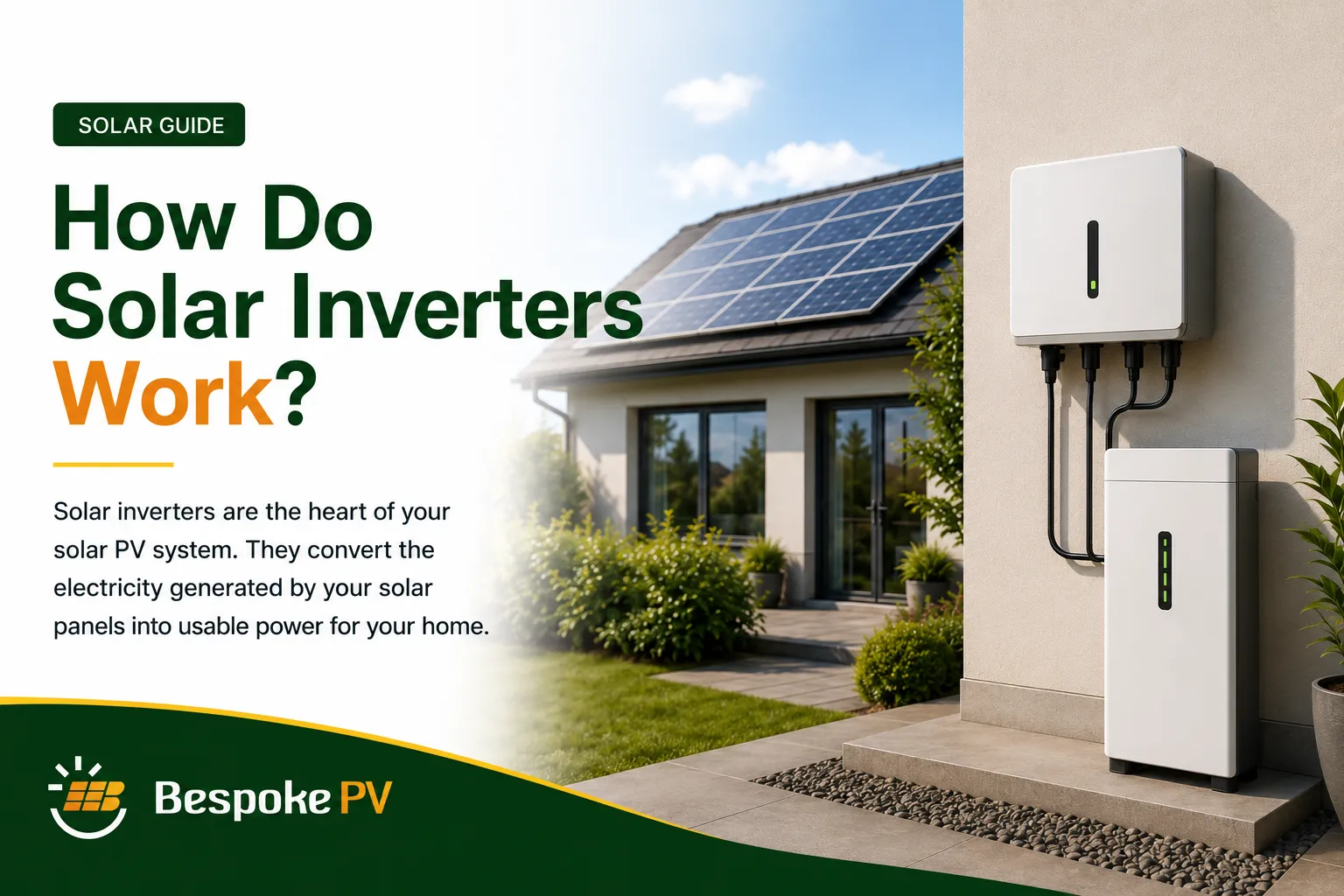
Read our guide: How Do Solar Inverters Work?
Modern inverter technology increasingly supports wider home electrification.
Relocation often creates an opportunity to modernise the system.
This depends heavily on system age and long-term goals.
Factors to consider include panel efficiency, warranty status, inverter age, battery compatibility, installation costs and performance improvements available from newer technology.
In some situations, investing in a newer system for the new property may provide better long-term value than relocating older equipment.
Technology, monitoring systems and battery integration capabilities have improved significantly in recent years.
Modern solar systems are increasingly more sophisticated.
Battery systems can sometimes be moved alongside solar panels, although compatibility and configuration should be assessed carefully.
Important considerations include battery age, hybrid inverter compatibility, software and monitoring setup, backup power configuration and electrical standards.
As homes increasingly adopt integrated energy systems, software compatibility and long-term manufacturer support are becoming increasingly important.
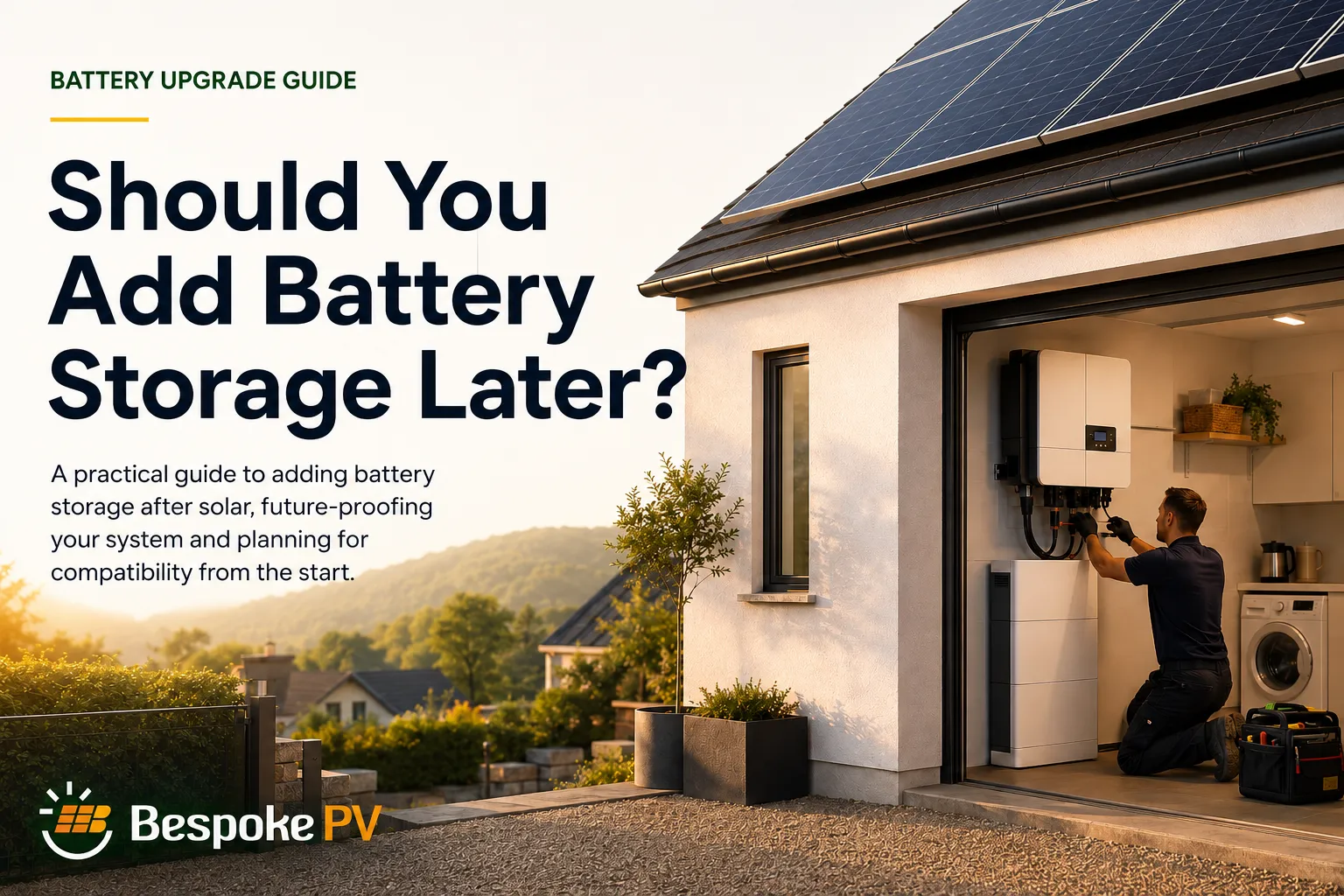
Read our guide: Should You Add Battery Storage Later?
Battery relocation may involve more complexity than panel relocation alone.
Battery systems increasingly rely on integrated software and monitoring.
Older systems receiving Feed-in Tariff (FiT) payments may have additional considerations when relocating equipment.
Export arrangements, metering and eligibility rules can vary depending on the original installation date, tariff structure, system size and whether equipment is modified or replaced.
This should be assessed carefully before relocation takes place because some legacy arrangements may not transfer easily.
Modern Smart Export Guarantee (SEG) arrangements may also involve updated metering and export configuration requirements.
Moving house can provide an opportunity to modernise the energy system.
Some homeowners choose to add battery storage, upgrade the inverter, increase panel capacity, integrate EV charging or improve monitoring systems during relocation.
Modern solar systems increasingly focus on long-term energy flexibility, resilience and intelligent energy management rather than electricity generation alone.
Relocation may therefore become part of a wider household electrification strategy.
Some homeowners benefit more from redesign than direct transfer.
Electric vehicles and heat pumps are increasing household electricity demand significantly.
Many homeowners now design solar systems around future electrification rather than current electricity usage alone.
Relocation may therefore involve reconsidering inverter sizing, battery capacity, monitoring systems, electrical infrastructure and long-term scalability.
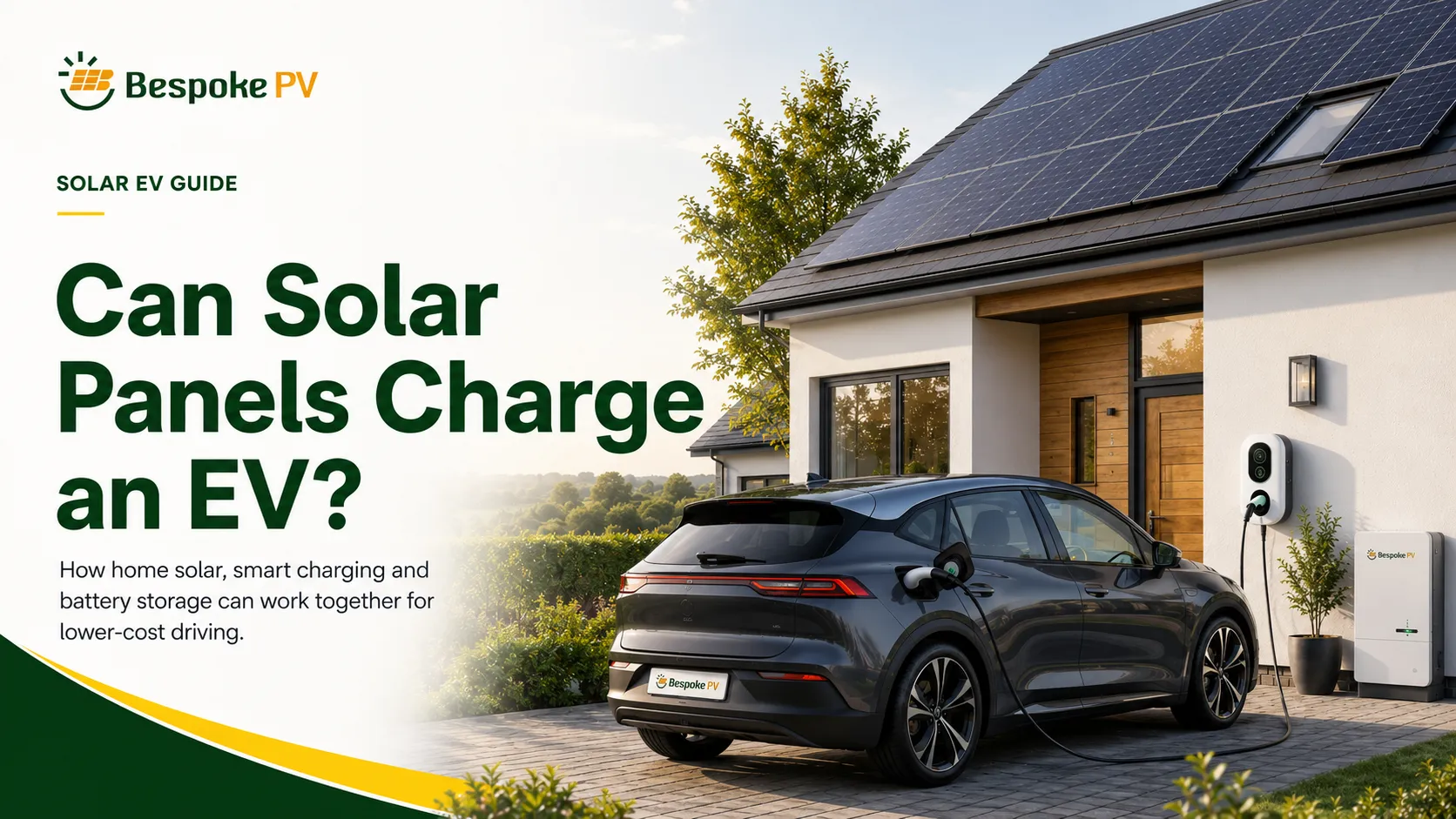
Read our guides: Can Solar Panels Charge an EV? and Can Solar Panels Power a Heat Pump?
Professional assessment helps determine whether relocation is genuinely worthwhile.
Every property and solar system is different.
Solar PV systems are increasingly becoming part of wider household infrastructure.
Battery storage, EV charging, smart tariffs and electrified heating are all influencing how modern systems are designed.
Relocating a solar system should therefore consider not only current equipment reuse, but also future energy flexibility, operational resilience and long-term household electricity demand.
The strongest systems are usually those designed around long-term property requirements rather than short-term installation convenience.
Professionally coordinated systems support long-term energy flexibility.
Bespoke PV designs solar PV and battery systems around long-term performance, future flexibility and real-world energy usage.
Explore more Bespoke PV guides covering batteries, electrification and long-term energy planning.
Yes, although relocation involves technical, structural and electrical considerations.
Not always. Mounting systems are often specific to the original roof type and layout.
Sometimes, although newer systems may provide better efficiency and long-term value.
In some cases, yes, depending on system compatibility and configuration.
Potentially. Older Feed-in Tariff arrangements may require careful assessment before relocation.
Explore related Bespoke PV articles and renewable energy insights.
Explore renewable energy systems designed and installed by Bespoke PV.

Bespoke PV designs solar PV, battery storage and EV charging systems across Hampshire, Dorset and the South Coast.
Bespoke solar PV, battery storage and EV charging systems for Southampton homes and businesses, designed around roof space, usage and future energy plans.
Solar panels in Southampton →Bespoke solar PV, battery storage and EV charging systems for homes and businesses across Winchester and Hampshire.
Solar panels in Winchester →Solar PV, battery storage and EV charging systems for homes and businesses across Portsmouth and the South Coast.
Solar panels in Portsmouth →Solar PV, battery storage and EV charging systems for homes and businesses across Bournemouth and the South Coast.
Solar panels in Bournemouth →Bespoke PV designs solar PV, battery storage and EV charging systems across Hampshire, Dorset, Wiltshire and the South Coast.
Speak with Bespoke PV about solar PV design, relocation considerations and future energy planning.