Electricity Usage
Higher household electricity demand may justify larger storage capacity.

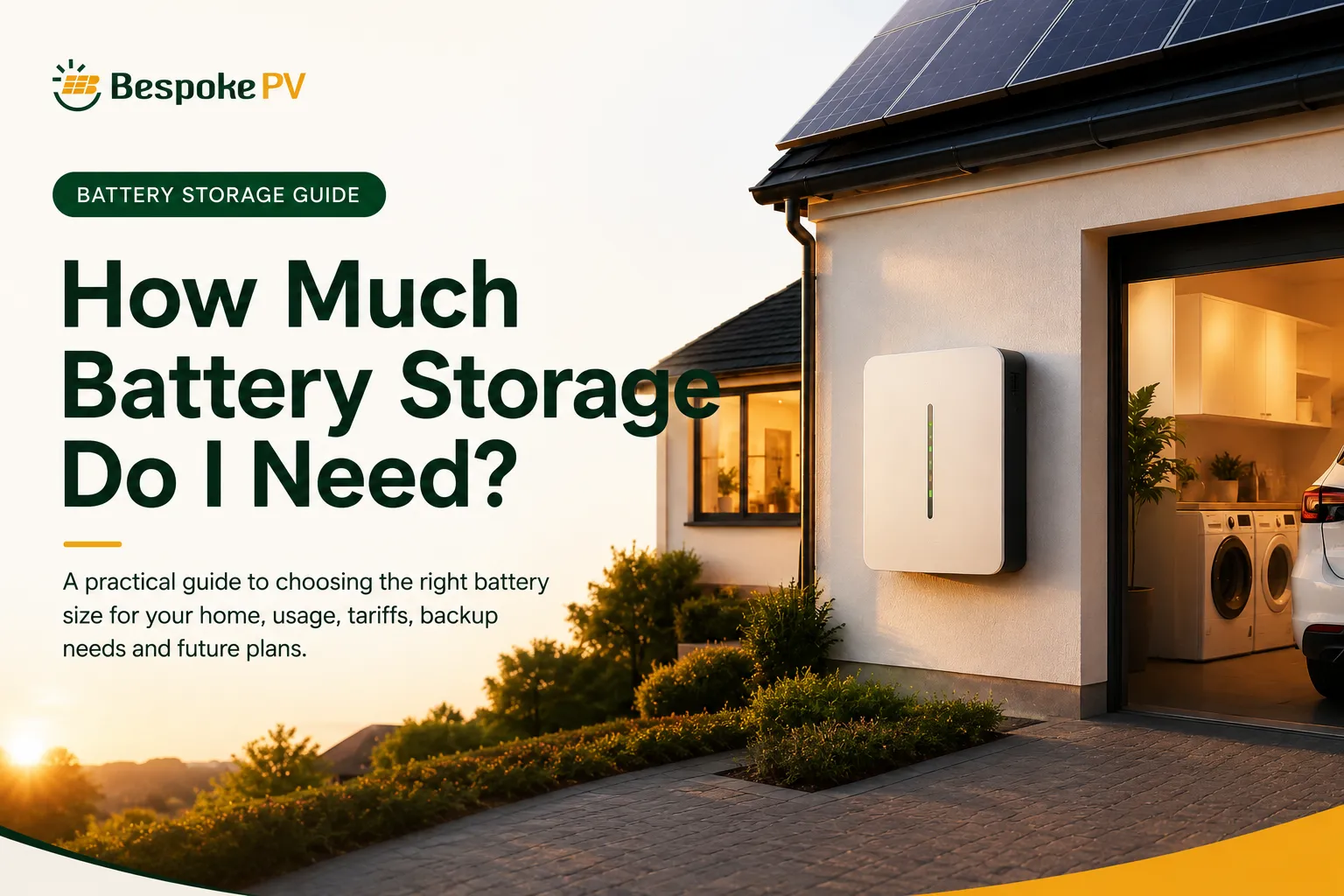
The right battery size depends on your solar generation, electricity usage, future plans and how you want the system to operate.
Battery storage systems are designed to store surplus electricity generated by solar panels so it can be used later.
However, choosing the right battery size is important.
A battery that is too small may empty quickly during the evening, while an oversized system may add unnecessary cost without significantly improving performance.
The best battery size depends on how your property actually uses electricity.
Higher household electricity demand may justify larger storage capacity.
Battery size should be balanced against expected solar generation levels.
EV charging and heat pumps may increase future electricity requirements.
Battery systems are often most valuable during evening periods when solar generation has reduced but household electricity demand continues.
Properties with higher evening usage may benefit more from battery storage.
Increasingly, homeowners are planning battery storage around future electricity demand rather than current usage alone.
Future EV charging, heat pumps and wider electrification can significantly change long-term battery requirements.
Battery systems should be viewed realistically.
Some homeowners assume battery systems are designed to run the entire property indefinitely.
In reality, battery systems are usually designed to support key household electricity usage over defined periods.
Battery systems should be sized carefully.
A very large battery may not provide proportionally better performance if solar generation is insufficient to charge it consistently.
Well-balanced systems often perform more efficiently than oversized installations.
EV ownership may affect long-term battery requirements.
Electric vehicles can significantly increase household electricity demand.
Read our guide: Can Solar Panels Charge an EV?
Electrified heating changes household energy demand.
Heat pumps increase electricity usage, particularly during colder months.
Read our guide: Can Solar Panels Power a Heat Pump?
Some homeowners prefer to expand battery capacity gradually.
Some battery systems allow additional storage modules to be added later.
Read our guide: Should You Add Battery Storage Later?
Battery sizing should always be tailored to the property.
Bespoke PV designs solar PV and battery systems around real property usage, long-term flexibility and future resilience.
Not always. Battery size should match property usage and solar generation realistically.
Some systems allow future expansion, depending on the manufacturer and system design.
Yes. Future EV charging demand may influence battery storage recommendations.
Explore related Bespoke PV articles and renewable energy insights.
Explore renewable energy systems designed and installed by Bespoke PV.
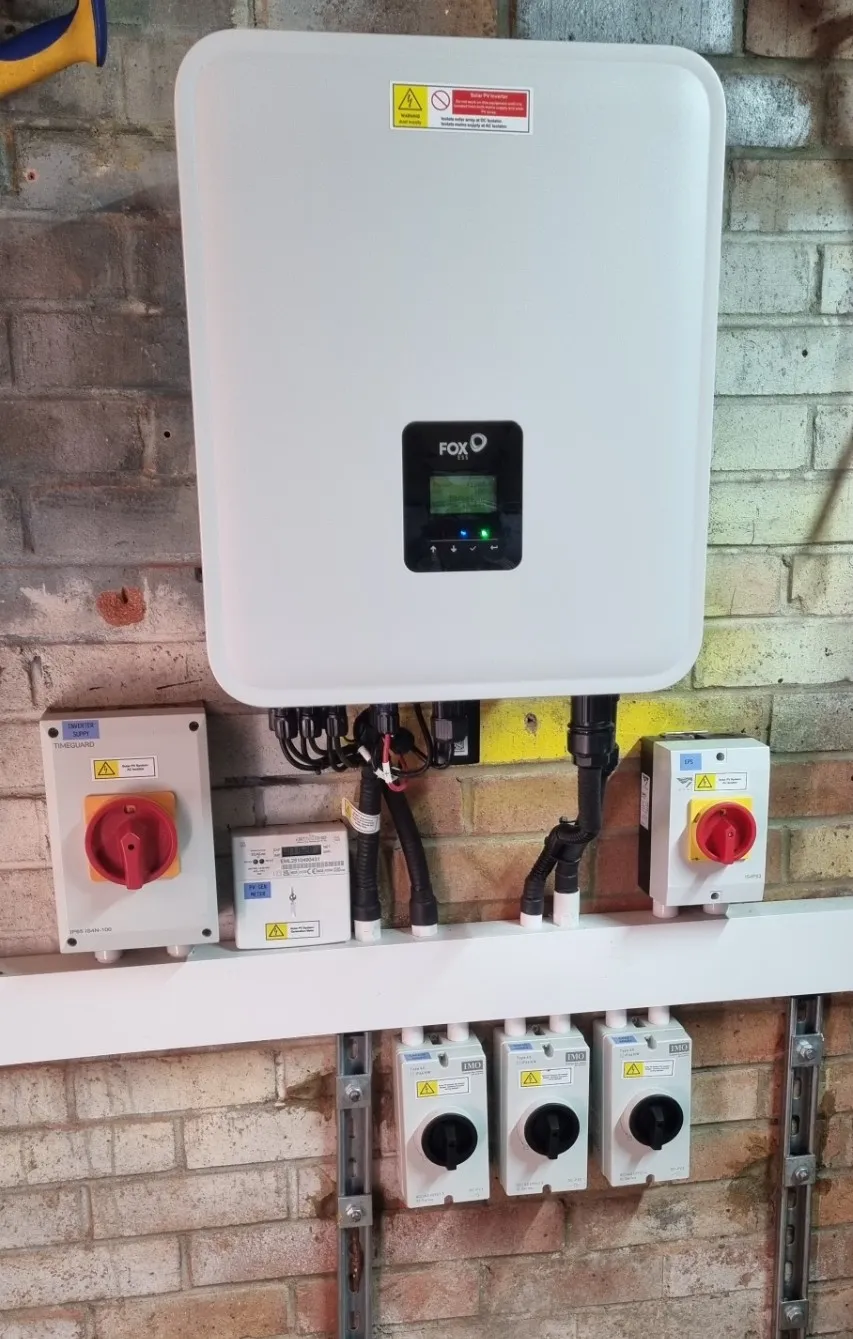
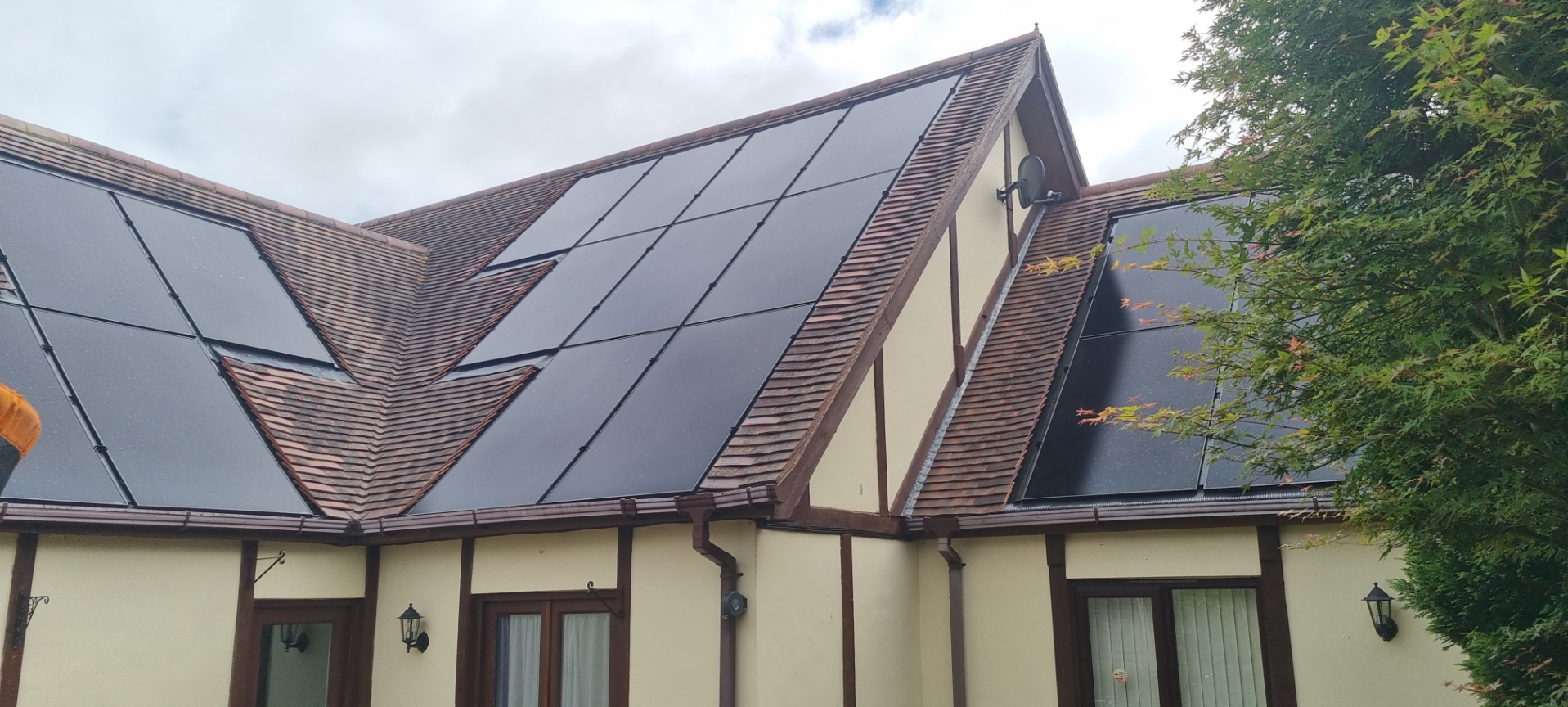
Bespoke PV designs solar PV, battery storage and EV charging systems across Hampshire, Dorset and the South Coast.
Bespoke solar PV, battery storage and EV charging systems for Southampton homes and businesses, designed around roof space, usage and future energy plans.
Solar panels in Southampton →Bespoke solar PV, battery storage and EV charging systems for homes and businesses across Winchester and Hampshire.
Solar panels in Winchester →Solar PV, battery storage and EV charging systems for homes and businesses across Portsmouth and the South Coast.
Solar panels in Portsmouth →Solar PV, battery storage and EV charging systems for homes and businesses across Bournemouth and the South Coast.
Solar panels in Bournemouth →Bespoke PV designs solar PV, battery storage and EV charging systems across Hampshire, Dorset, Wiltshire and the South Coast.
Speak with Bespoke PV about battery storage options for your property.