Why energy design should start with discovery
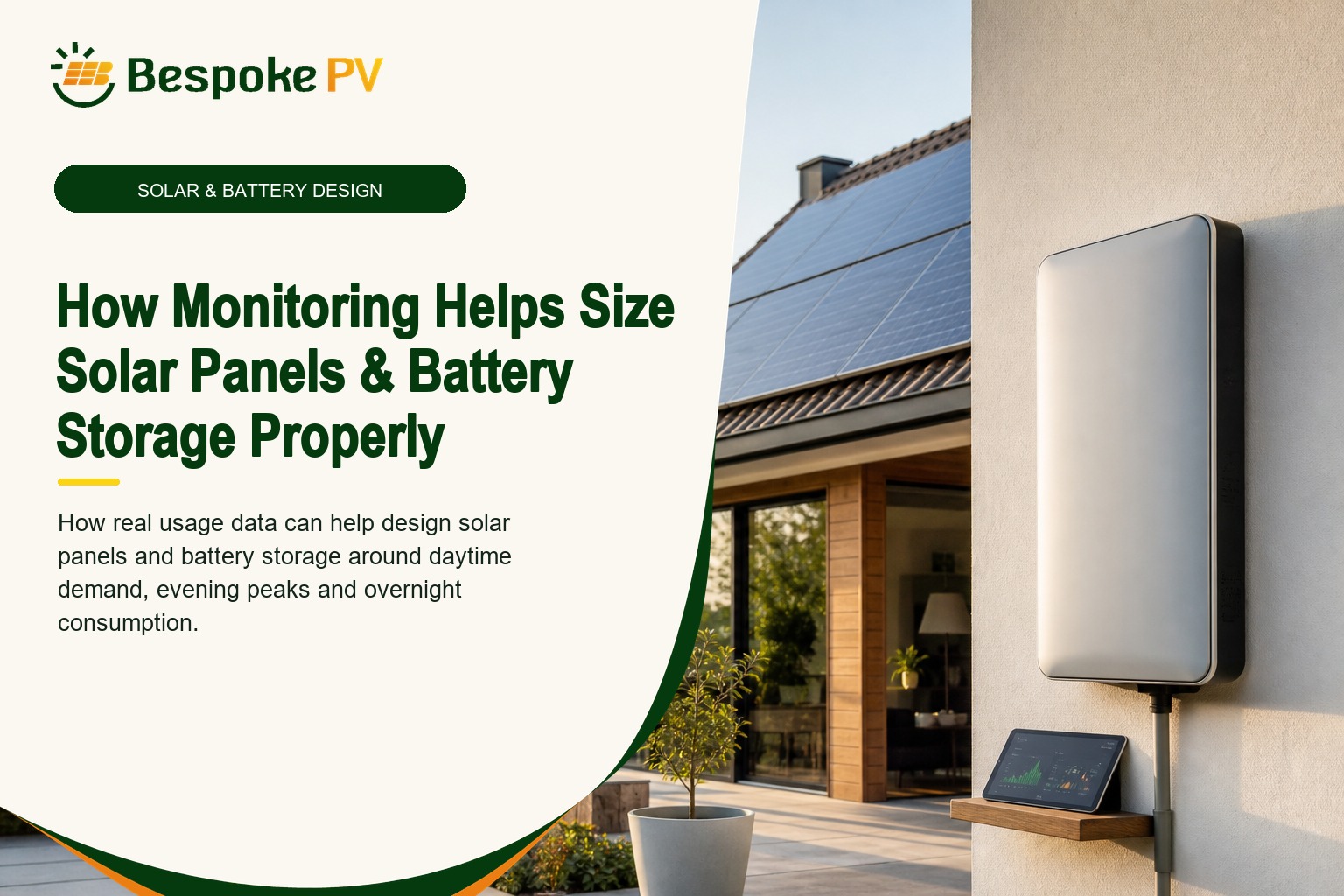
Why energy design should start with discovery is a useful starting point because it challenges the assumption that a renewable energy system can be designed from a bill and a roof measurement alone. Monitoring gives the homeowner and installer a clearer view of when electricity is used, how demand changes through the day and which parts of the property are shaping the load.
For a simple home, a high-level estimate may be enough to begin a conversation. For a larger home, a property with EV charging, or a home considering battery storage, the detail matters. It can influence array size, battery capacity, inverter power, cable routes, equipment location and future expansion.
The aim is not to make the process more complicated than it needs to be. The aim is to avoid designing around assumptions that later prove wrong.
Step 1: understand current energy usage
Step 1: understand current energy usage should be considered before specifications are fixed. The most useful questions are usually when the home uses power, how high the demand peaks are, and whether the load is predictable or irregular.
A property with a steady base load behaves differently from one with sharp evening peaks. A home with daytime occupancy behaves differently from one that exports most of its solar generation. A household with an EV that charges overnight behaves differently from one that can charge during the day.
These differences are not minor details. They can determine whether the chosen battery feels useful, whether solar self-consumption is strong, and whether future upgrades are straightforward.
Step 2: review the whole property
Step 2: review the whole property is where monitoring becomes practical. A graph can show whether demand rises in the morning, drops during the day, spikes in the evening or continues through the night. It can also reveal unexpected behaviour, such as a large load starting after midnight or import occurring during sunny periods.
For Bespoke PV, this type of information supports a more consultative design conversation. It helps explain why two homes with similar annual consumption may need different systems. It also gives the homeowner confidence that the recommendation is based on the property rather than a generic template.
The best result is a system that performs well in real life, not just one that looks impressive in a headline quote.
Step 3: identify solar opportunities
Step 3: identify solar opportunities often brings the most important design trade-offs into view. It may show that the home would benefit from a battery, but only if inverter output is suitable. It may show that more solar panels would generate useful energy, or it may show that export would rise without a better self-consumption strategy.
It can also highlight whether the home’s energy use is likely to change. Planned EVs, heat pumps, pool upgrades, annex use or home offices can all change the electrical brief. A system designed only around today’s behaviour may be less suitable in two or three years.
This is why monitoring should be combined with a conversation about future plans.
Step 4: consider battery storage
Step 4: consider battery storage needs careful interpretation. A single day can be misleading because weather, occupancy and usage vary. A week can reveal useful patterns, but it may not represent seasonal loads such as swimming pools, electric heating, guest accommodation or workshop use.
Rather than treating monitoring as a perfect answer, it should be treated as evidence. It helps the survey focus on the right questions and makes it easier to compare options. Where the data is incomplete, the design should say so clearly and allow sensible margins for future changes.
This kind of transparency is especially important for high-value homes where aesthetics, disruption and long-term flexibility matter.
Step 5: plan EV charging
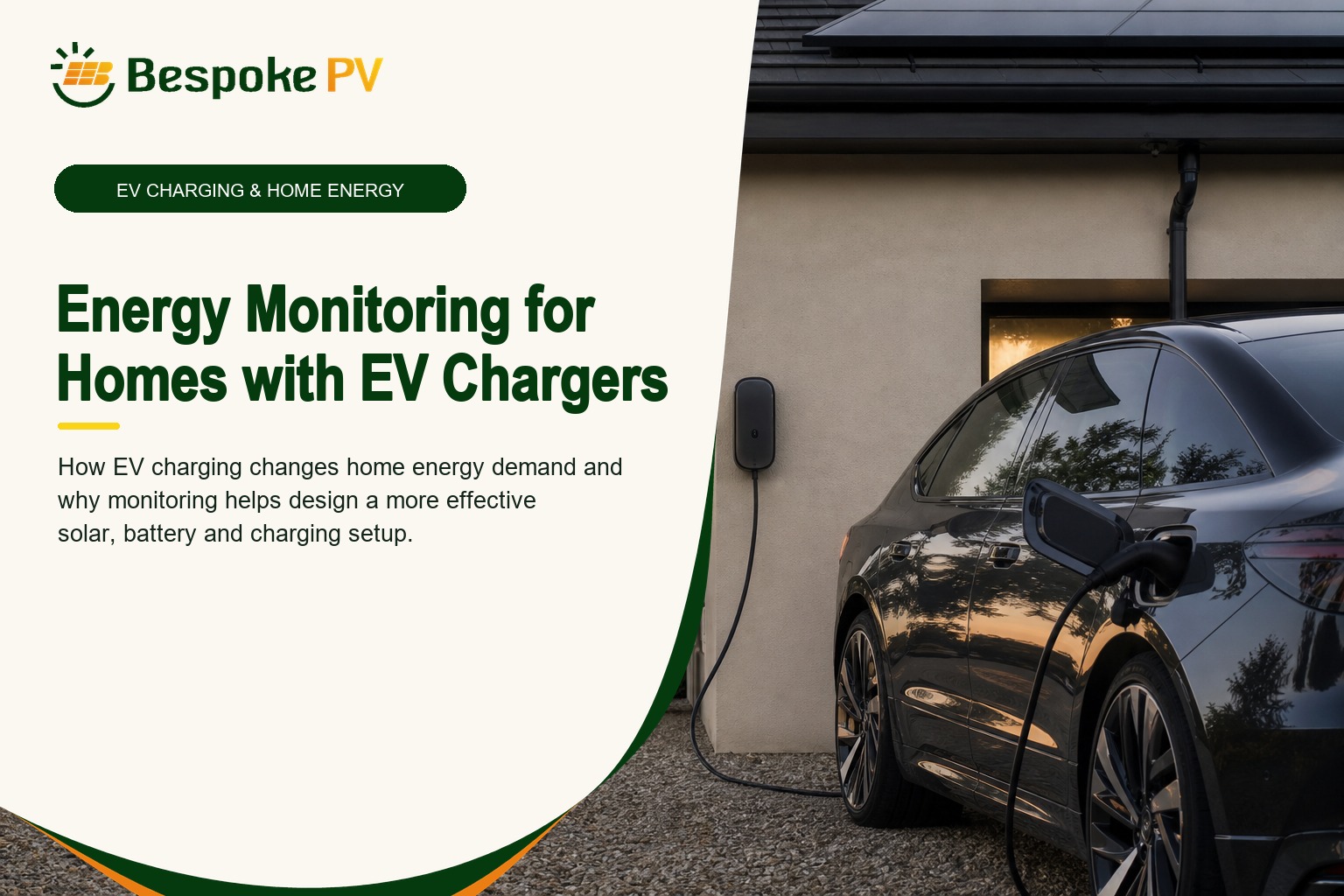
Step 5: plan EV charging is also a customer-experience issue. Homeowners are more likely to trust a design when they can see the reasoning. Monitoring makes that reasoning visible: it can show why one battery size is recommended, why a certain roof is preferred, or why an EV charger should be configured in a particular way.
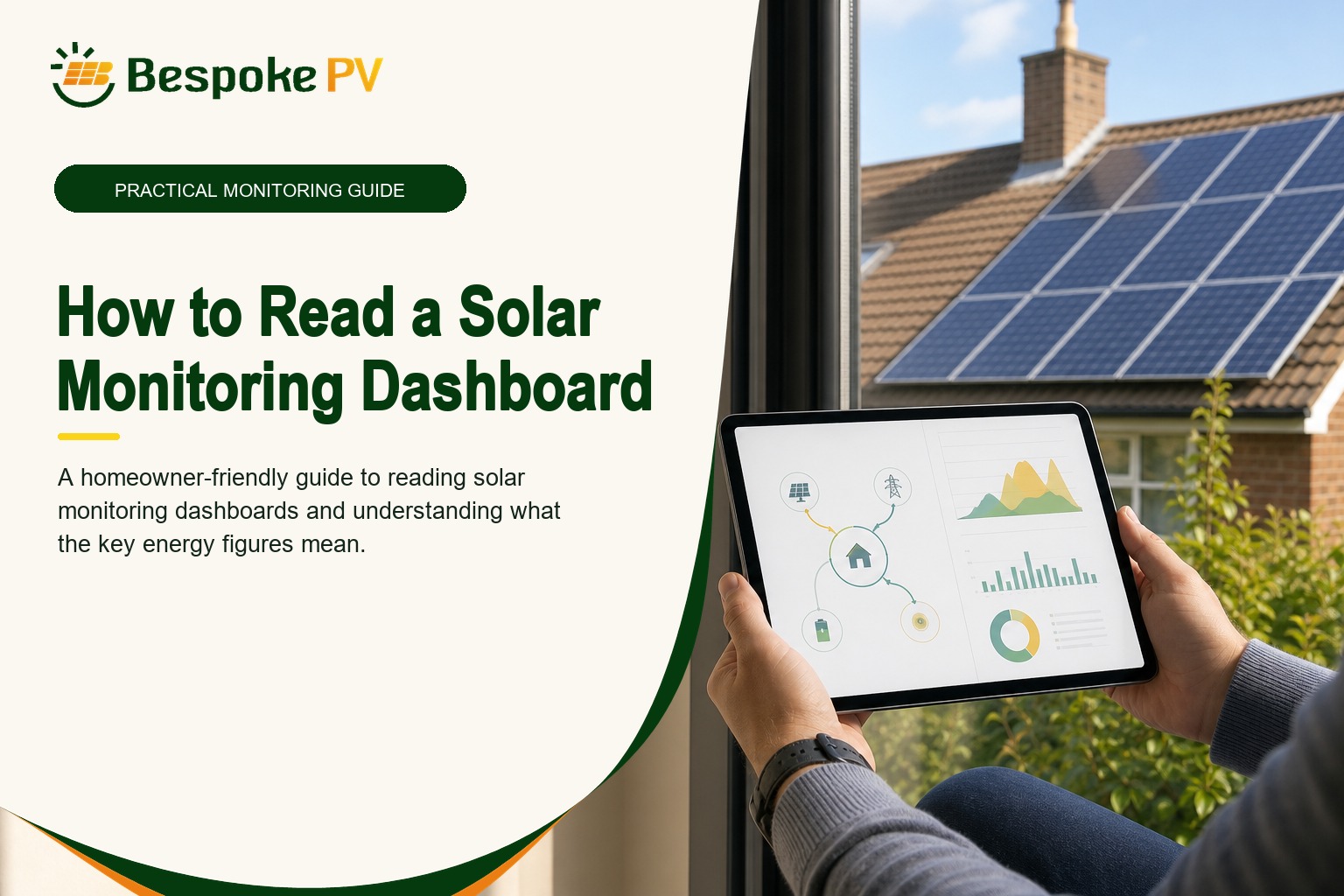
It can also prevent disappointment after installation. If the homeowner understands the difference between generation, self-consumption, import and export, the monitoring dashboard becomes a useful tool rather than a source of confusion.
A well-explained system is easier to live with and easier to optimise.
Step 6: consider future electrification
Step 6: consider future electrification should include both technical and practical constraints. Energy data may point to a desirable outcome, but the final design still depends on roof suitability, shading, DNO requirements, cable routes, consumer units, equipment locations and the customer’s priorities.
Monitoring might suggest that more solar would be useful, but the most visible roof may not be aesthetically acceptable. It might suggest battery storage, but the battery needs a suitable location. It might suggest daytime EV charging, but the vehicle may not usually be at home during the day.
This is why the design process should join data with site knowledge.
Step 7: turn data into a practical design
Step 7: turn data into a practical design helps keep the system future-ready. The question is not only what the home uses today, but how the energy profile may change over the next decade. EVs, heat pumps, battery upgrades, smart tariffs, home offices, annex occupation and pool use can all change the picture.
A good design does not need to install every possible component immediately. It can still plan cable routes, inverter strategy, battery location and consumer unit arrangements so that later upgrades are less disruptive.
Monitoring provides the starting evidence; future planning provides the direction.
When a Bespoke Energy Review is especially useful
When a Bespoke Energy Review is especially useful brings the article back to the core principle: the best solar, battery and EV charging systems are designed around how the home actually behaves. Monitoring does not replace professional judgement, but it makes that judgement better informed.
For larger homes, country properties and households with complex loads, this is particularly valuable. It reduces guesswork, improves the quality of the design conversation and helps the final system match the property rather than an average customer profile.
That is the difference between a product-led installation and a bespoke home energy design.
A practical example of monitoring-led design
A practical way to use this topic is to turn it into a design conversation rather than a yes-or-no answer. The monitoring data should be reviewed alongside the property layout, roof options, cable routes, existing consumer units, battery location options and future plans. That is especially important for larger homes, where the main house is often only one part of the energy picture.
For example, a homeowner may see one issue in isolation: a high bill, a confusing solar app, a new EV charger or a battery that does not behave as expected. A monitoring-led review looks for the pattern behind that issue. It asks whether the behaviour is consistent, seasonal, linked to a particular part of the property or caused by a new load.
This approach supports better decisions. It can show when a bigger system is justified, when a smaller but better-targeted system is more appropriate, or when the first step should be improving visibility before adding more equipment.
Common mistakes to avoid
The main risk is treating monitoring data as either unnecessary or absolute. It is not unnecessary, because it can reveal patterns that a bill cannot show. It is also not absolute, because monitoring still needs interpretation and must be combined with survey findings.
A second risk is focusing only on headline energy use. Peak demand, timing, base load and future changes often matter just as much as total kWh. A home that uses a lot of energy at the wrong time may need a very different design from a home with the same annual usage but a better match to daylight generation.
The best outcome is a design that explains its assumptions. Where the data is clear, it should shape the specification. Where the data is incomplete, the proposal should say what has been assumed and what could change if the homeowner adds an EV, heat pump, battery, pool equipment or additional outbuilding load later.